The Arch Everyone Invented
Step stone inward, course by course, and you get a roof. Neolithic Ireland found it, Bronze Age Sardinia found it, the Classic Maya found it — and all three stopped dead at the same five metres, because none of them ever cut the one wedge-shaped stone that breaks the ceiling.
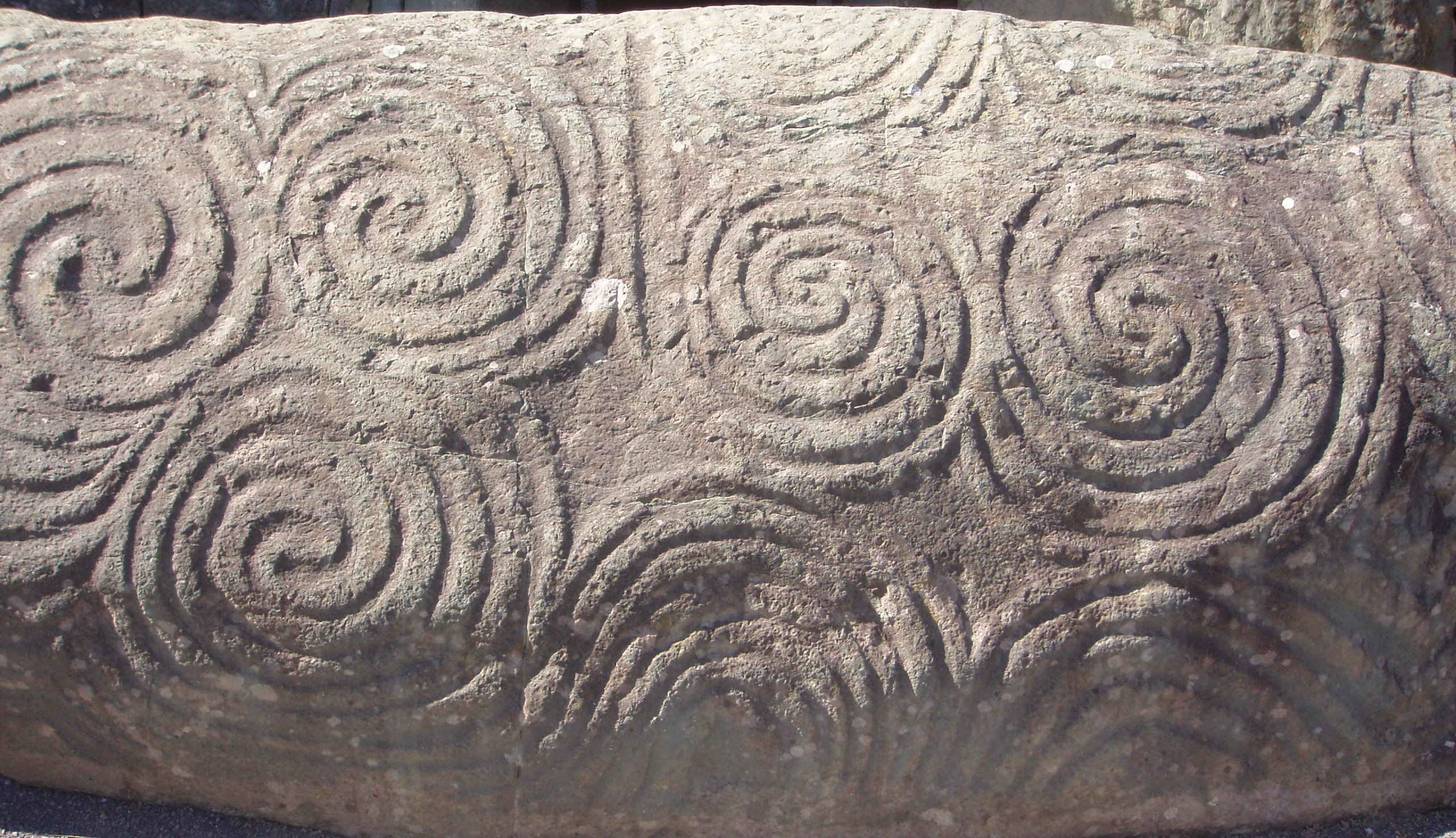
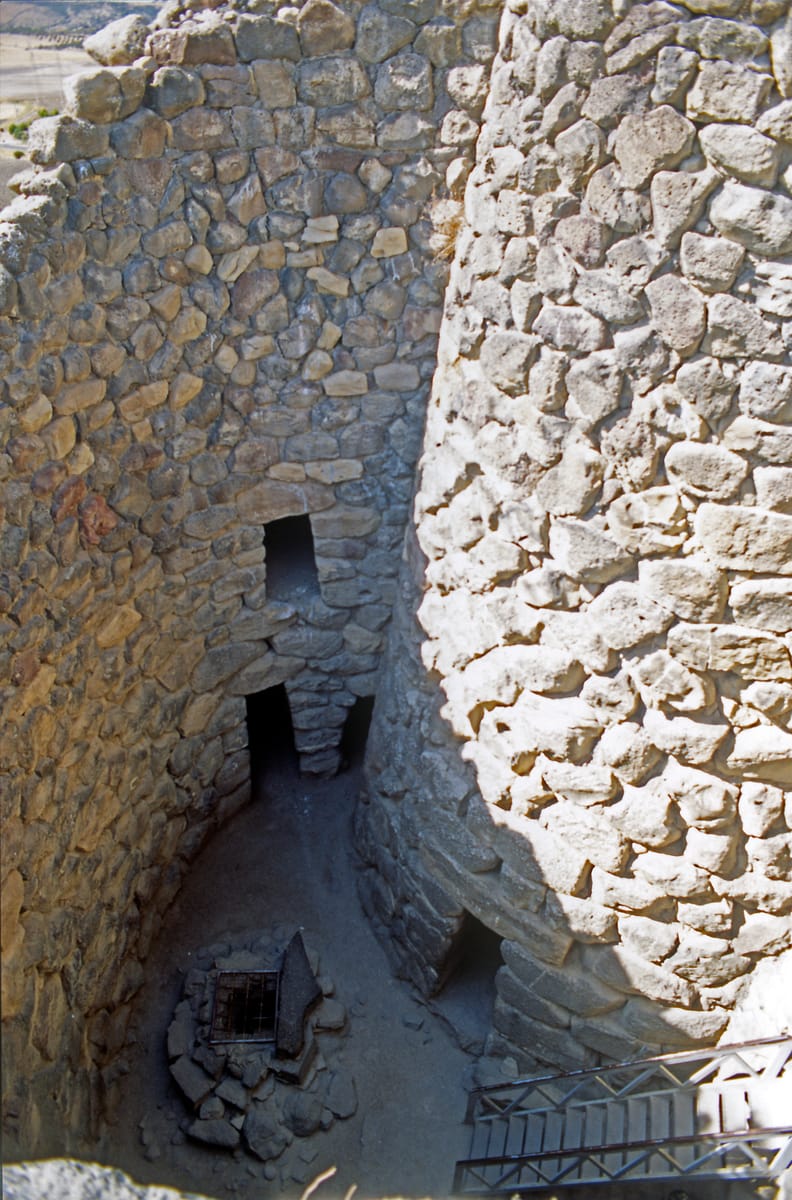
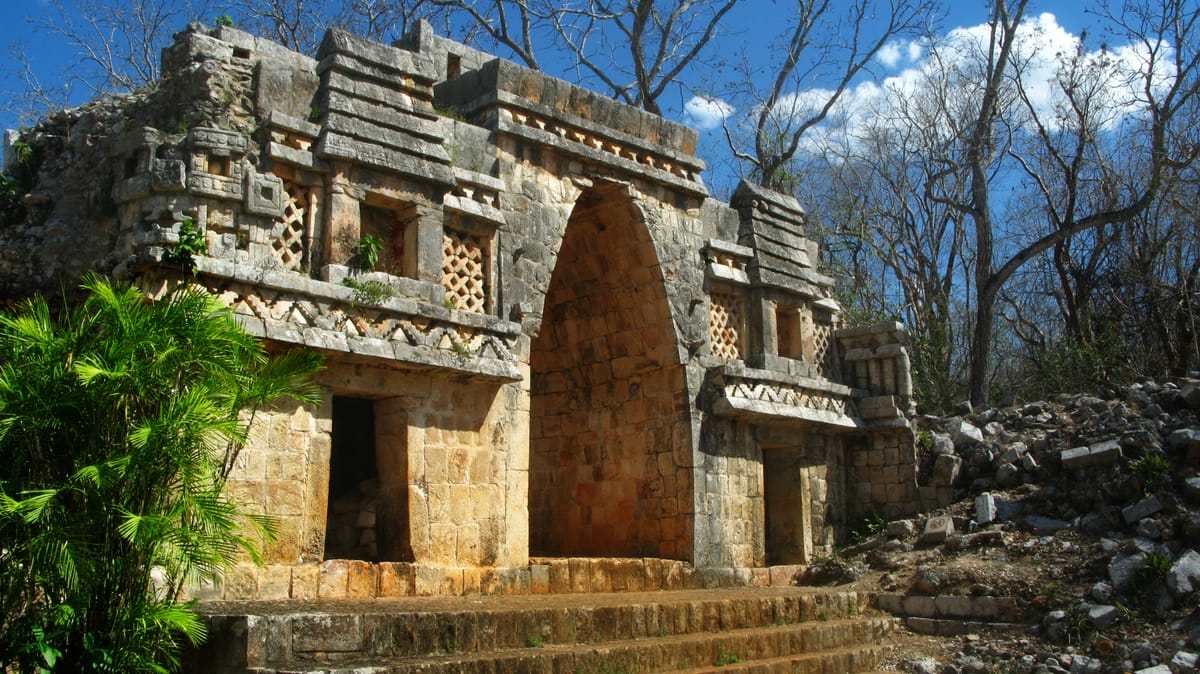
Stand in the chamber at Newgrange and look up. Slabs of greywacke climb six metres over your head, each course laid a little further in than the one beneath, until a single capstone closes the gap. It has been dry up there for five thousand years. Now stand in the passage of the Arch of Labná, in the limestone hills of Yucatán, four thousand years later and an ocean west, and look up again — the same inward creep, the same flat stone closing the last of it. Halfway between them in time, on a rise in central Sardinia, a Bronze Age tower does it a third time, then stacks the trick three storeys high.
The materials could hardly be less alike. Newgrange’s builders used unshaped slabs, tilting each corbel’s buried outer end slightly downward so rain percolating through 200,000 tonnes of cairn ran off instead of in. At Su Nuraxi the Nuragic masons worked in basalt, blocks up to several tonnes dry-laid without a grain of mortar, closing a beehive chamber 4.8 metres across and 7.8 metres tall — then raising two more on top. The Puuc Maya at Labná took a subtler route: thin veneer plates with long heels running back into a core of rubble and burnt-lime concrete, so every course was keyed into the mass that pinned it down. Then they dressed the steps smooth, until the passage reads as a graceful curve. It is not a curve. It is a staircase, mirrored.
Ireland and Sardinia share a continent, and you could argue the idea drifted. Yucatán ends that argument: Mesoamerican builders arrived at the corbel entirely alone, before 250 CE, and roofed almost everything with it. And all three stopped in the same place. A corbelled vault has no keystone, and so it cannot get wide — none of these spans much beyond five metres. The one idea that breaks that ceiling, the wedge-shaped voussoir, turns up in Old World mudbrick around 1750 BCE, then waits centuries for Rome to use it. It never crosses the Atlantic at all. We tell this story as though the arch were the hard thing everyone strained toward. Turn it around. The corbel is the answer human beings keep finding on their own; the keystone is the fluke. Three roofs, three peoples, one idea nobody handed down — and one wedge of stone that none of them ever cut.
Read the full studies: NewgrangeSu Nuraxi di BaruminiThe Arch of Labná
Sources
- Wikipedia — Corbel arch
- Wikipedia — Arch (earliest true voussoir arches)
- Claire O'Kelly — Description of Newgrange (chamber and corbelled vault)
- UNESCO World Heritage Centre — Su Nuraxi di Barumini
- Sardegna verso l'Unesco — The nuragic tholos
- Wikipedia — Mesoamerican architecture (on the corbelled vault and the keystone)