One Rock Cut Square, One Rock Grown Hexagonal — Same Wall
In Zimbabwe and Micronesia, two peoples with nothing in common raised mortarless stone cities from opposite ends of geometry.
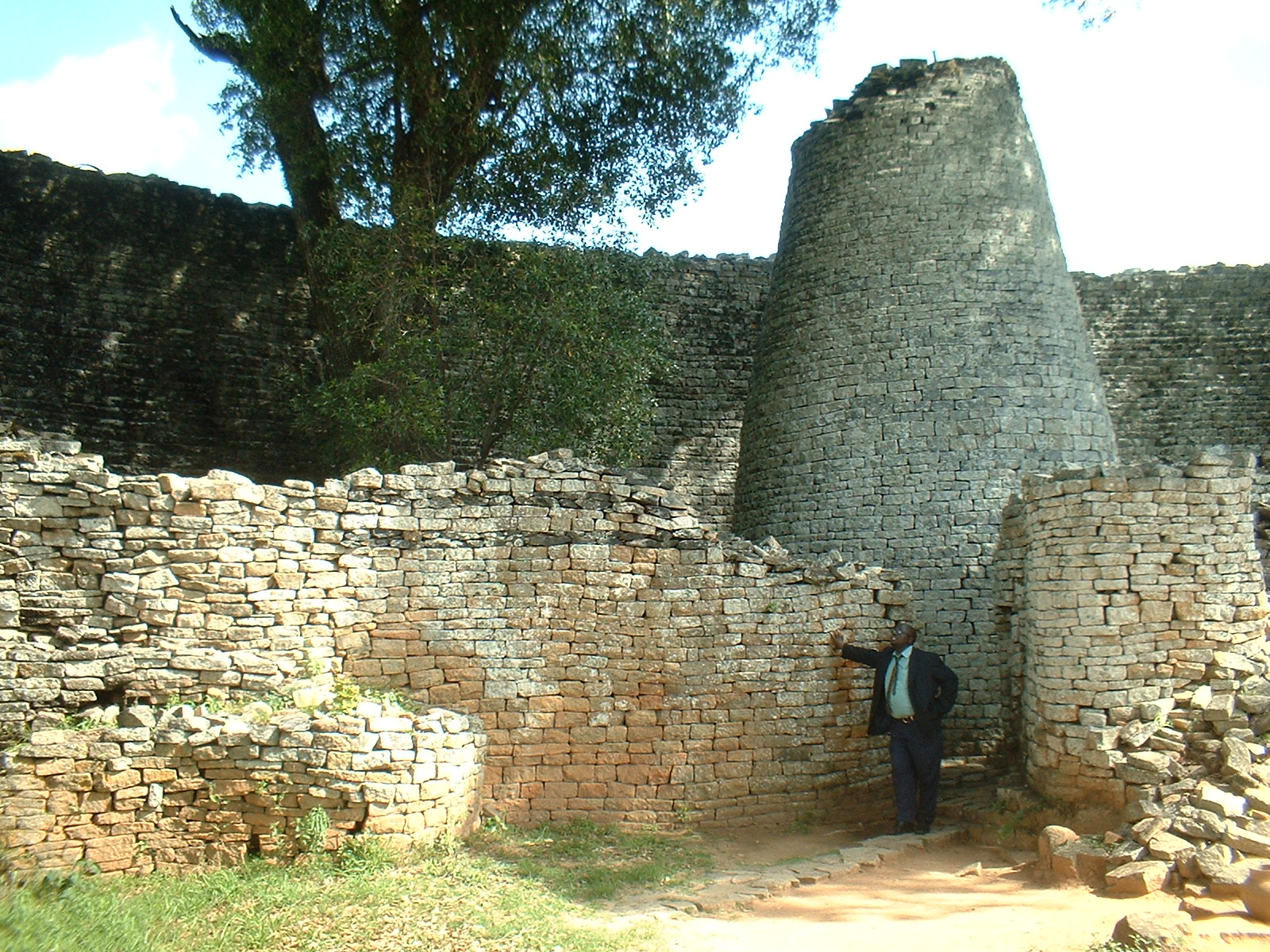
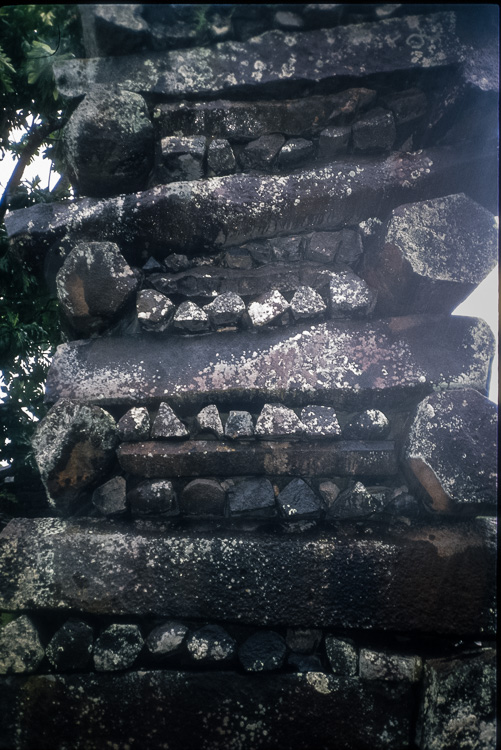
Two cities, no mortar, built centuries apart, and the raw stone itself couldn’t be more opposite. In the hills of southeastern Zimbabwe, Shona masons split granite along its natural grain into flat slabs, dressed them into rough rectangles, and coursed more than 800,000 of them into the curving walls of Great Zimbabwe — some rising 11 metres, held up by nothing but their own cut faces and stacked weight. Half a world away, off a reef flat on Pohnpei, Saudeleur builders did the reverse: they took basalt columns that had already cooled into natural hexagons — ready-made prisms nobody had to cut at all — and stacked them criss-cross like felled logs to raise the retaining walls of nearly 100 artificial islets, the city known as Nan Madol.
One society forced geometry onto formless stone; the other borrowed geometry the volcano had already supplied. Both refused mortar entirely. At Great Zimbabwe, the trick was precision — slabs ground and re-set until each coursed, slightly battered row locked its neighbor by friction and mass alone, flexing rather than cracking through six centuries of weathering. At Nan Madol, the trick was logistics: hexagonal columns weighing up to several tonnes, quarried clear across Pohnpei and rafted over open reef water on canoes at high tide, then levered into alternating header-and-stretcher courses so the columns’ own interlocking shapes did the holding. Cut stone forced into a wall; grown stone that arrived pre-fitted. Neither people had a wheel, a pulley, or a draft animal. Both needed a state rich and organized enough to direct that labor for generations — a gold-trading kingdom in one case, a tribute-collecting island dynasty in the other.
They never met, and never needed to: an ocean and unrelated centuries apart, they hit the same wall — literally, how to stack stone with no binder — and each found the answer already lying in their own ground. What they share beyond geometry is uglier. Colonial writers looked at Great Zimbabwe and invented Phoenicians, Arabs, a lost “white race” — anyone but the Shona who built it. Fringe theorists still whisper that Nan Madol is “too advanced” for the Pohnpeians who raised it, reaching for Lemuria instead. Both claims collapse against the same evidence: pottery, radiocarbon dates, unbroken cultural continuity. The stone was always local. So were the hands.
Read the full studies: Great ZimbabweNan Madol