Soft Enough to Carve, Soft Enough to Lose
A Neolithic underworld beneath a Maltese suburb and a 71-metre Buddha in a Sichuan cliff were both made possible by picking weak stone. Both are now being taken apart by the weather for exactly the same reason.
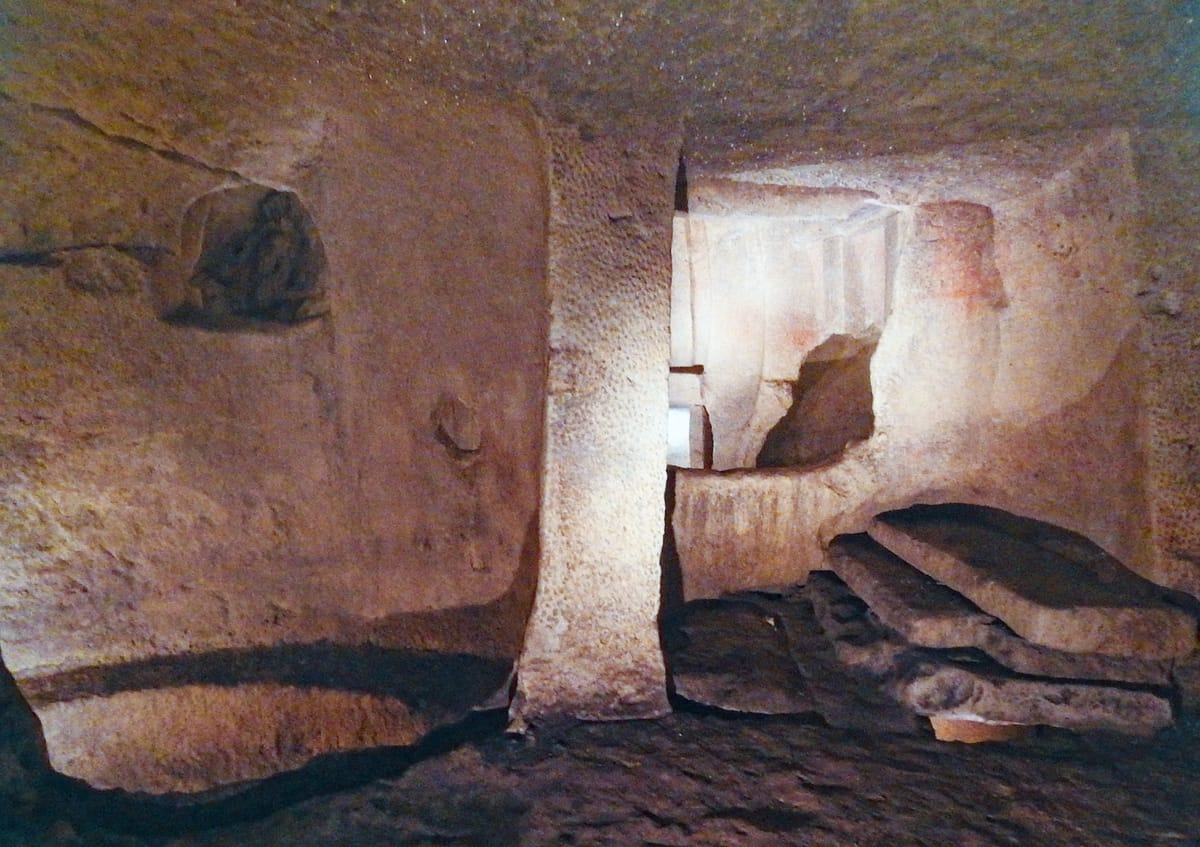
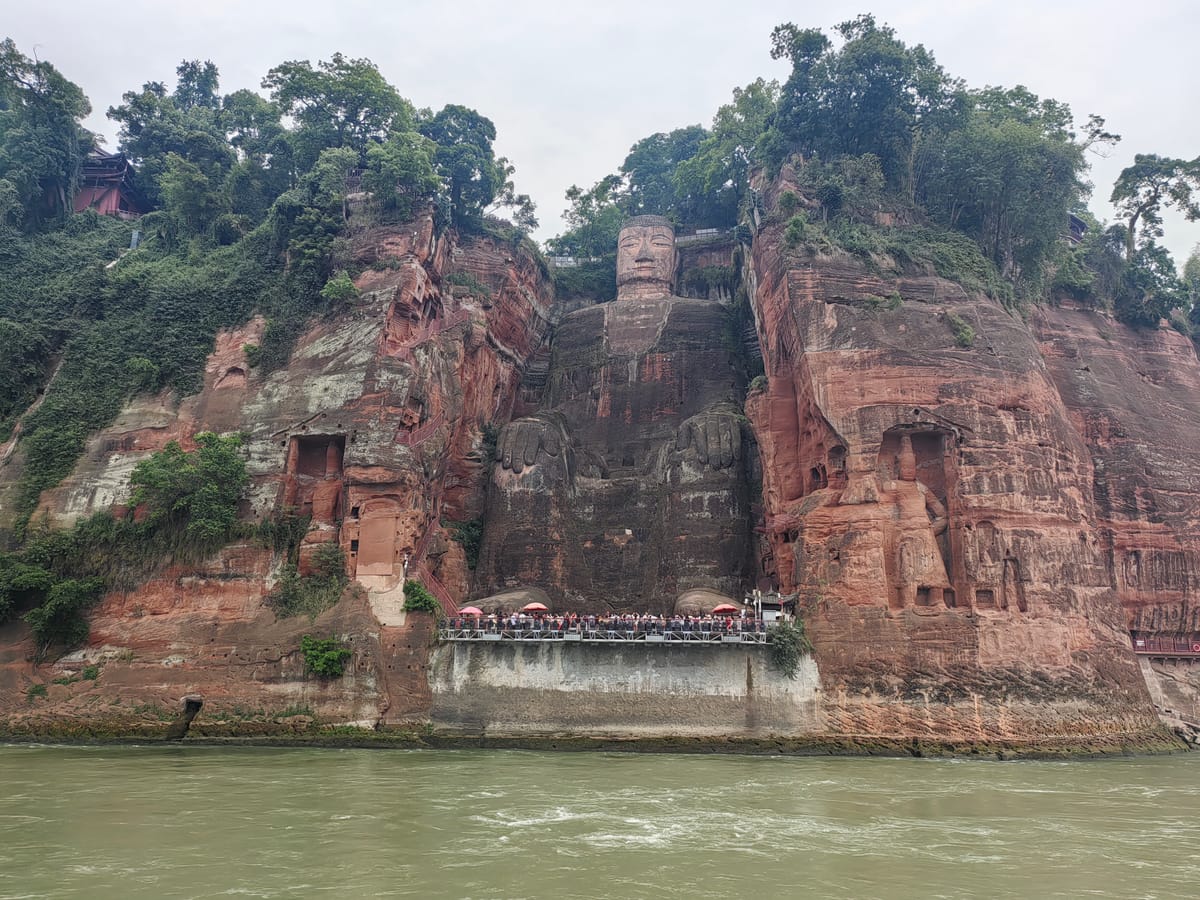
Ten and a half metres beneath a suburb of Valletta there is a warren of chambers on three levels, cut into the rock over something like fifteen centuries, which eventually held the bones of roughly seven thousand people. Eight thousand kilometres east, a Buddha sits in a cliff above the meeting of three rivers in Sichuan — seventy-one metres tall, ears seven metres long, a head crowned with 1,021 individually carved coils of hair. Neither of these was built. Both were subtracted. And both were possible for the same unglamorous reason: the rock was weak.
Malta’s Neolithic diggers had no metal at all. They cut the Ħal Saflieni Hypogeum with hand picks, flint, chert, obsidian traded in from across the sea, and antler tools for the fine work — which is survivable only because globigerina limestone is soft and fine-grained and still holds an edge once cut. At Leshan the stone is a Cretaceous red sandstone that Tang iron chisels bite straight into, and that softness is the entire reason a seventy-one-metre figure was thinkable by hand. The monk Hai Tong began in 713, got as far as the head and shoulders, and died; it took ninety years and three separate patrons to finish him.
Leshan’s carvers understood what they had bought. Threaded through the hair coils, the collar, the chest and the backs of the ears runs a system of concealed gutters and channels that catches rain and carries it off the vulnerable surfaces before it can soak in. It was cut more than twelve hundred years ago. It still works.
Malta’s builders left no such hedge — and 8,080 kilometres and 4,713 years mean nobody could have told them to. So we do it for them. Ħal Saflieni now admits a handful of visitors a day under regulated temperature and humidity, and Leshan, its great timber shelter long since gone, is surveyed, scrubbed and patched.
Both chose the stone that would let them in. The stone has never stopped charging for it.
Read the full studies: Ħal Saflieni HypogeumLeshan Giant Buddha