Engineering the Drought
Two desert civilizations faced the same enemy — too little water, arriving all at once — and built entire societies around opposite answers: one hoarded every drop behind stone, the other flung the floods across the sand.
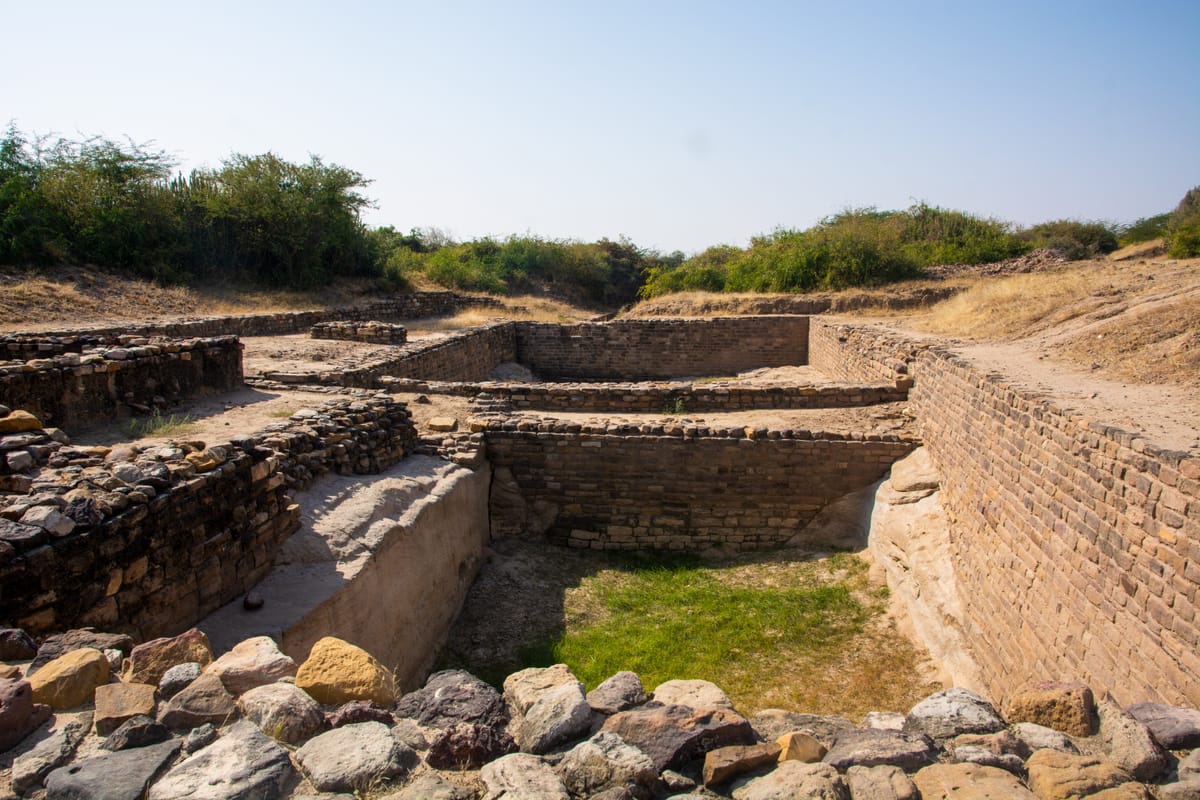
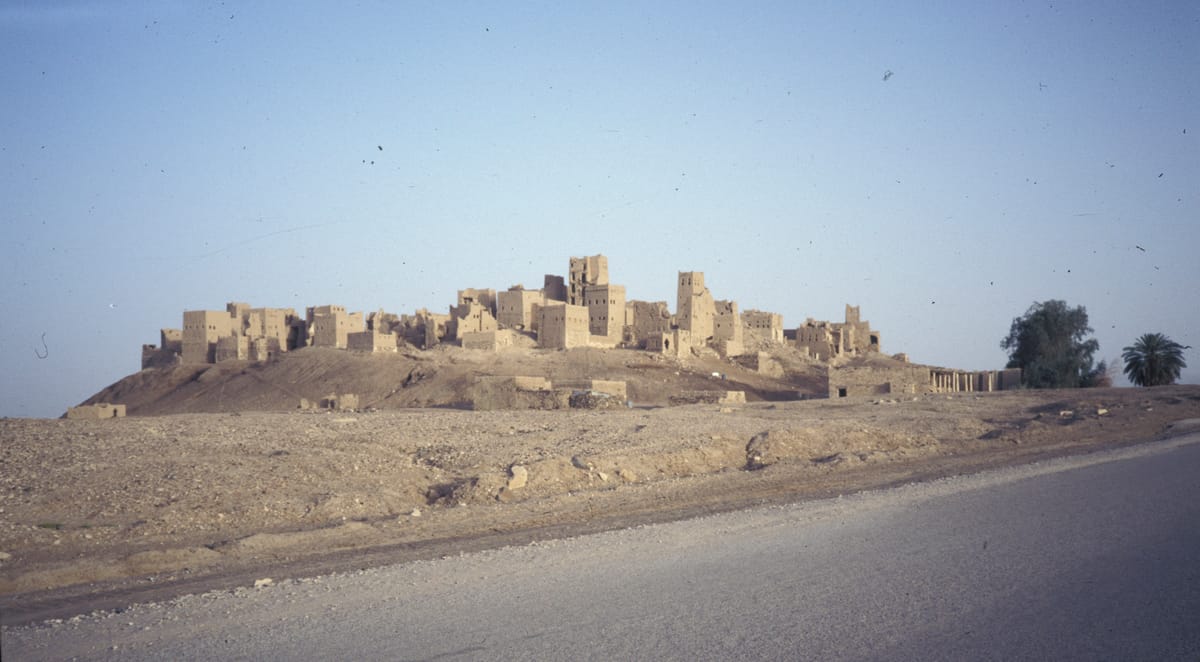
Stand on a barren island in the salt flats of Kutch and there is no river, no spring, almost no rain — only, for a few violent weeks each year, a monsoon that arrives all at once and then vanishes for the rest of the year. Fifteen hundred miles away and stand in the basin below Marib, in the Yemeni desert, and the picture is nearly identical: parched ground that sees almost no direct rainfall, fed only by flash floods that come roaring down the Wadi Dhana out of the highlands in short, brutal pulses. Two of the driest places a Bronze Age city ever chose to stand on, facing the exact same enemy — not the absence of water, but its terrible timing. Everything a whole year needs, delivered in a few days, then gone.
Dholavira’s answer was to hoard. The Harappans gave up nearly a third of their walled city to water, ringing and threading it with sixteen or more reservoirs — some cut vertically down into the bedrock, others raised in dressed-stone masonry, the largest on the order of 80 meters long and 7 meters deep, holding a live reserve estimated at well over 250,000 cubic meters. They dammed the two seasonal streams flanking the island, slowed the floods so silt could settle out, and cascaded the runoff through stone-cut channels and settling tanks into the great stores, where it would wait out the long dry year behind stone. Marib did the opposite. Its engineers threw a packed-earth embankment, eventually 14 meters high and some 580 meters long, across the mouth of the wadi — not to lock the flood away, but to catch it just long enough to aim it. Masonry sluices at both ends released the impounded water through a hierarchy of canals that fanned it out across an estimated hundred square kilometers of farmland, a rationed flood spread thin over grain, dates, and grapevines. One city built walls to keep every drop from leaving. The other built a wall to let the water go, on command, exactly where it was wanted.
Here is what should stop you: these are not two versions of one idea handed down a trade road. The incense caravans of Saba and the seafaring merchants of the Indus world did touch the same wider Bronze Age economy, but they were separated by fifteen centuries and the whole width of Arabia, and the hydraulic logic each city arrived at is a mirror image of the other’s — hoard versus spread, hold in versus push out. Scarcity posed one clean question to both, and each, alone, found the answer its own landscape allowed: a river-less island had nothing to do but store; a wide basin below a flood-bearing wadi had everything to gain by spreading. Both solutions worked for more than a thousand years, and both, in the end, met a limit — the monsoon that weakened over Dholavira, the floods that finally overran Marib. Two deserts, one problem, opposite plumbing. And somewhere under the salt of Kutch, a full stone reservoir still holds the shape of water that fell fifteen centuries before anyone alive was born.
Read the full studies: DholaviraThe Great Dam of Marib