The Great Dam of Marib
How did Sabaean and Himyarite engineers, working with packed earth, dressed stone, and Iron Age tools, build — and then rebuild, again and again, for over a thousand years — a dam and sluice system precise enough to turn a stretch of Arabian desert into one of antiquity's richest oases, before it finally, catastrophically failed for good?
Why this rating?
- Construction difficulty
- 3/5
- Method uncertainty
- 3/5
- Capability gap
- 3/5
- Open questions
- 3/5
An earthen embankment with dressed-stone sluices was within the known engineering vocabulary of the ancient Near East, and royal inscriptions document Sabaean and Himyarite building phases in unusual detail for a structure this old — so the basic method is not deeply mysterious. What keeps the score from the low end is the sheer duration of the achievement: maintaining and repeatedly rebuilding a single hydraulic system for well over a thousand years, and the genuine scholarly uncertainty over its exact construction phases, sluice mechanics, and the true sequence of its final failures.
Overview
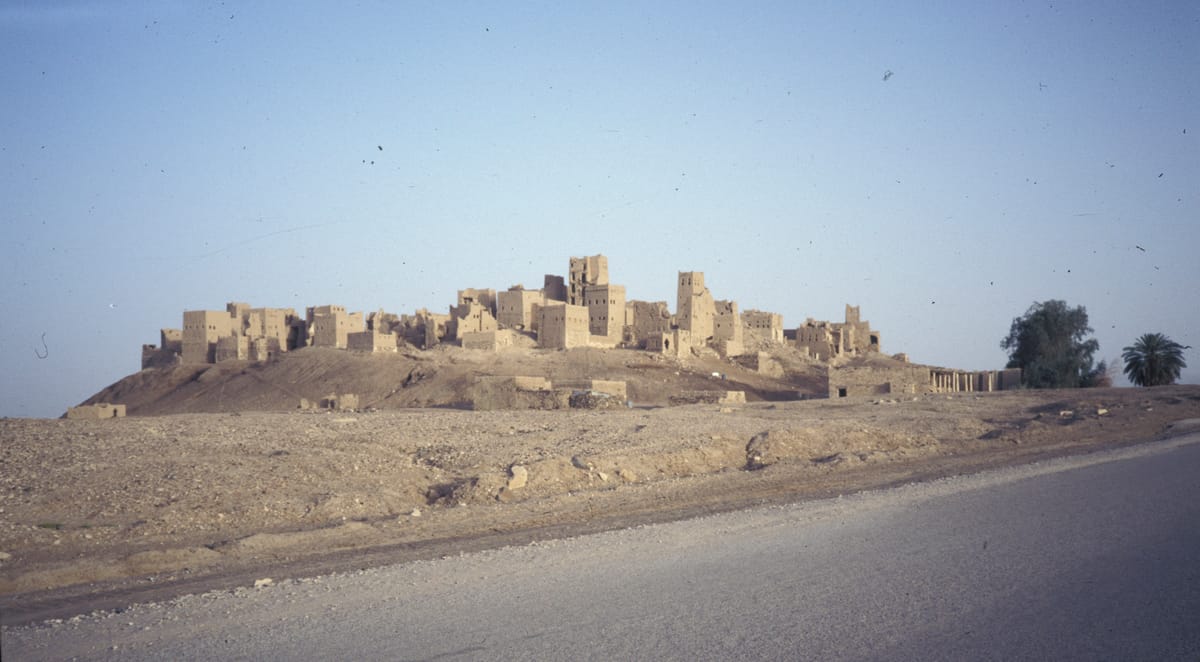
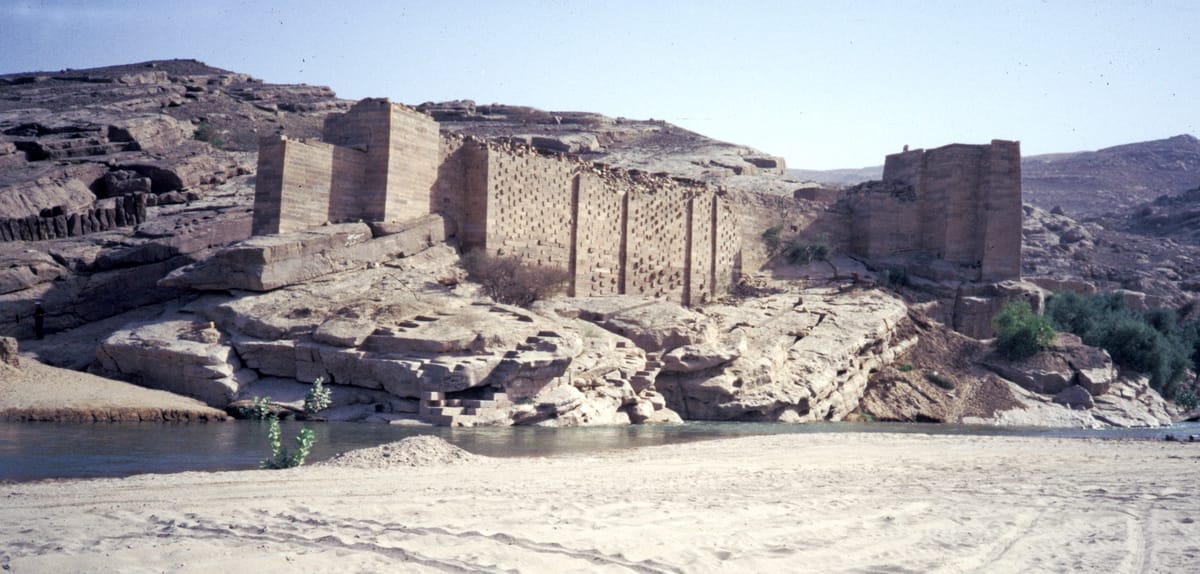
West of the modern town of Marib in central Yemen, a low ridge of eroded earth and broken masonry runs across the mouth of the Wadi Dhana — all that remains of the Great Dam of Marib, once the largest and longest-serving work of hydraulic engineering in the pre-modern world. For well over a thousand years, from around the 8th century BCE until its final catastrophic failure around 570 CE, the dam and its associated sluices and canals captured the seasonal flash floods that poured out of Yemen’s highlands and spread them across a wide desert basin, turning it into the fertile heartland of the ancient kingdom of Sabaʼ — the Sheba of biblical and Quranic tradition. The dam was not a single structure built once and left standing, but a project continuously rebuilt, heightened, and re-engineered across centuries by successive Sabaean and, later, Himyarite rulers, each campaign recorded in stone inscriptions that give historians an unusually detailed, if still incomplete, timeline of its life. Its final breach, remembered in the Quran (Surah Saba, 34:16) as the “flood of the dam” (Sayl al-ʿArim), marks one of the most resonant turning points in pre-Islamic Arabian history, traditionally associated with the scattering of Yemeni tribes and the decline of South Arabia’s ancient irrigation civilization. A modern concrete dam, built nearby in the 1980s with UAE funding, now performs the same basic function — but the ruins described here are the ancient one, the structure that made Marib the capital of a caravan kingdom for well over a millennium.
The Structure
Marib was the capital of the Sabaean kingdom, a South Arabian state that grew wealthy controlling the overland trade in frankincense and myrrh, incense resins prized across the ancient Mediterranean and Near East. But the kingdom’s underlying wealth was agricultural: Marib sits in an arid basin that receives almost no direct rainfall, and its prosperity depended entirely on capturing the violent, short-lived floods that surged down the Wadi Dhana from the mountains during the monsoon season. The earliest known dam works date to around the 8th century BCE, when Sabaean builders threw a packed-earth embankment across the wadi; inscriptions attribute repairs and enlargements to early Sabaean rulers, including Yathaʼamar Watar and Yadaʼil Bayin, in the 8th century BCE. Around 115 BCE the Himyarite kingdom rose to prominence in South Arabia and, over succeeding centuries, rebuilt Marib’s dam on a far grander scale, work that inscriptions suggest was not completed in its final elaborated form until around the early 4th century CE. In its mature state the dam stood roughly 14 meters (46 feet) high and around 580 meters (1,900 feet) long, with major stone-built sluice and spillway complexes at both its northern and southern ends, feeding a network of distribution canals that irrigated an estimated 100 square kilometers (roughly 25,000 acres) of oasis land — enough, by some estimates, to support tens of thousands of people growing grain, dates, and grapes. A medieval Arab geographer, writing centuries after the dam’s fall, described the impounded floodwater as collecting “like a sea,” released through sluice gates whenever farmers needed to irrigate their fields. The dam’s long life was punctuated by repeated partial failures — breaches are recorded in the mid-5th and mid-6th centuries CE — each one requiring costly repair by a kingdom whose political and economic fortunes were, by then, already declining as Red Sea maritime trade routes bypassed the old overland caravan roads.
How Was It Built?
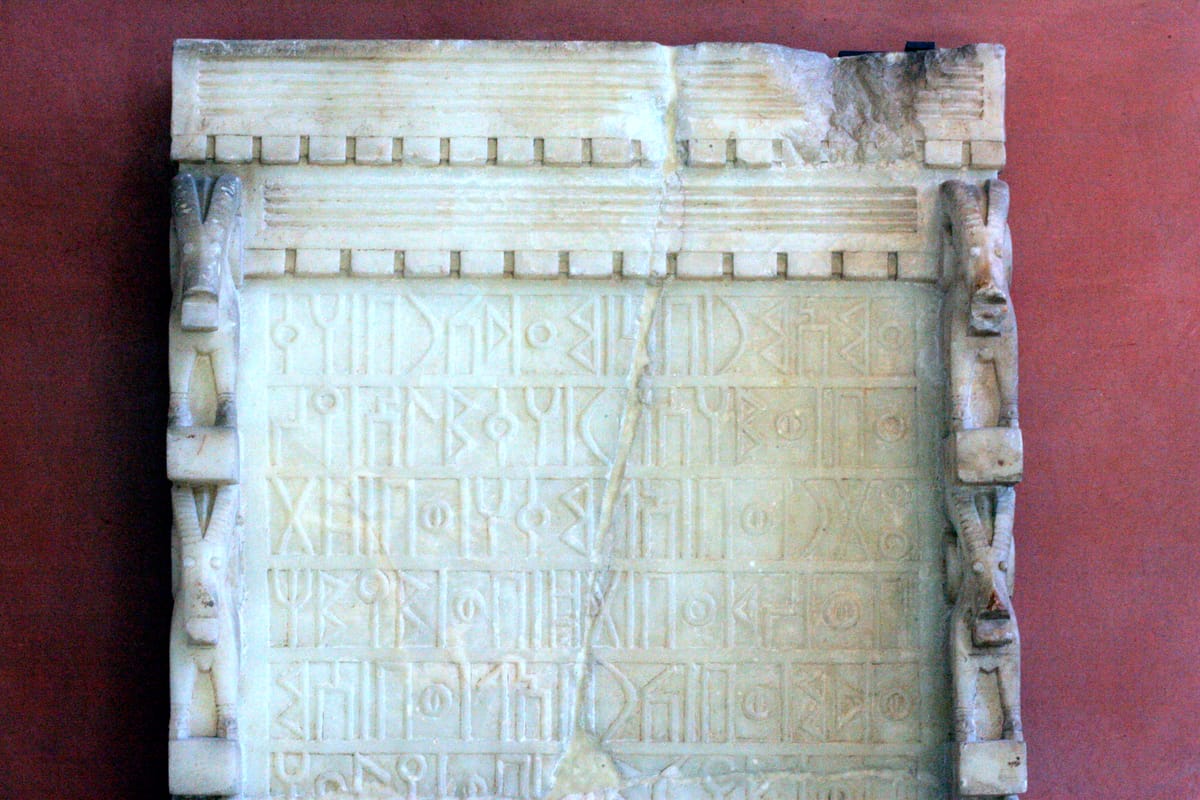
The dam’s core was an engineering solution well suited to the materials at hand: a massive earthen embankment, built up in a broadly triangular cross-section from packed local soil and rubble, wide and heavy enough at its base to resist the lateral push of impounded floodwater. In its earliest form this earthwork stood only about 4 meters (13 feet) high; over the following centuries, as engineers learned the limits of unprotected earth against flash floods, the upstream face was progressively reinforced with dressed stone laid at a shallow angle — around 45 degrees — and eventually bonded with mortar, protecting the soil core from erosion and seepage. The real engineering sophistication, though, lay not in the embankment itself but in its water control works. Rather than a single spillway, the Himyarite-era dam relied on substantial masonry sluice complexes cut into the rock outcrops flanking the wadi at both its northern and southern ends: dressed stone channels, gated openings, and settling basins that let coarse sediment drop out of the water before it entered the main distribution canals, protecting the finer irrigation channels downstream from silting up. From these sluice complexes, a hierarchy of canals — a wide primary channel branching into a dozen or more smaller distribution ditches — fed water across the oasis fields in a controlled, rationed system rather than a simple uncontrolled flood release. Royal inscriptions carved to commemorate building and repair campaigns, in the Sabaic script used across South Arabia, provided the labor force, materials, and successive rulers credit for the work — a written record that is one reason the dam’s construction history is better documented than that of most ancient earthworks, even though it survives today only as eroded ruins.
The Mainstream View
Historians and archaeologists are confident about the broad outline of the dam’s story: a Sabaean-built irrigation structure, begun in the 8th century BCE, progressively heightened and reinforced over centuries, then rebuilt on a much larger scale by the Himyarite kingdom from around the turn of the millennium through the early 4th century CE, before finally failing beyond repair in the second half of the 6th century CE. This chronology rests on a genuinely unusual body of evidence for an ancient engineering project: dozens of royal inscriptions in Old South Arabian script, carved by successive Sabaean and Himyarite rulers to commemorate specific repair and construction campaigns, alongside the physical archaeology of the embankment and sluice remains themselves and later Arabic historical and geographical writing about the dam’s fall. Taken together, this evidence supports a well-grounded consensus: the dam was a sophisticated but explicable achievement of Iron Age and late-antique hydraulic engineering — earthwork construction, stone masonry, and controlled sluice-and-canal irrigation — undertaken and maintained by a wealthy, organized South Arabian state whose income from the incense trade funded centuries of repair and expansion. Its eventual collapse is understood not as a mysterious event but as the product of a structure that had always required constant, expensive maintenance, failing once the Himyarite kingdom’s political cohesion and economic base eroded in the run-up to the region’s conquest by Aksumite and later Sassanid Persian forces in the 6th century CE.
The Open Case
What remains genuinely unresolved about the Great Dam of Marib is less “how could ancient people have done this” and more the finer grain of exactly how, and when. The inscriptions that document royal repair campaigns are numerous but incomplete, and modern sources still disagree on the precise dates of the dam’s partial failures — variously placed in the 440s or 450s and again in the 540s or 550s CE — and even on whether the final, unrepaired breach came in 570 or 575 CE; reconciling these accounts, drawn from inscriptions, later Arabic tradition, and modern archaeological survey, remains active scholarly work. The operational details of the sluice system are similarly only partly recovered: how the settling basins and distribution canals were managed season to season to prevent the whole irrigated oasis from silting up, given that silting is precisely what centuries of repair campaigns suggest the dam’s engineers were constantly fighting, is reconstructed more from the logic of the surviving stonework than from any surviving operating manual. And the very fact that the dam needed rebuilding and heightening so many times over a thousand years raises a real question about the limits of ancient hydraulic engineering here: was each failure a matter of a single catastrophic flood exceeding what any Iron Age earthwork could survive, or a slower, chronic struggle against silting and seepage that centuries of Sabaean and Himyarite engineers held off, again and again, right up until the political will and resources to keep rebuilding finally ran out? Folk tradition later blamed the final collapse on rats gnawing through the dam’s foundations — a legend, not a historical cause, and no serious scholar treats it as anything but a story people told themselves once the empire that could rebuild the dam was gone. The real story is more remarkable than the legend: a desert kingdom that, using nothing but packed earth, quarried stone, and centuries of accumulated hydraulic know-how, held back the floods of the Wadi Dhana for longer than most nations have existed.
Sources
Connected findings
- Engineering the Drought — Two desert civilizations faced the same enemy — too little water, arriving all at once — and built entire societies around opposite answers: one hoarded every drop behind stone, the other flung the floods across the sand.
On screen
- The Dam You Keep Repairing — Two Total War games put the Great Dam of Marib on the map — and neither of them lets you finish it.
- sabaean-kingdom
- himyarite-kingdom
- yemen
- ancient-dam
- irrigation-engineering
- south-arabia
- quran
- iron-age
- late-antiquity
- unesco-tentative-list
Gallery