Al-Khazneh (The Treasury), Petra
Nabataean masons carved an entire 40-metre, two-story temple facade downward into a living sandstone cliff, with no seams, no assembled blocks, and apparently no written plan that survives — so exactly how was the work sequenced and scaffolded from the top down, who was it really built for, and what still lies unexcavated beneath it?
Why this rating?
- Construction difficulty
- 3/5
- Method uncertainty
- 2/5
- Capability gap
- 2/5
- Open questions
- 3/5
The top-down subtractive carving technique is corroborated by tool marks and comparison to Petra's many other rock-cut facades and is not seriously disputed, so what remains open is mostly interpretive: the tomb's unconfirmed patron and exact date, and how much more of the site, as the 2024 tomb find showed, is still unexcavated.
Overview
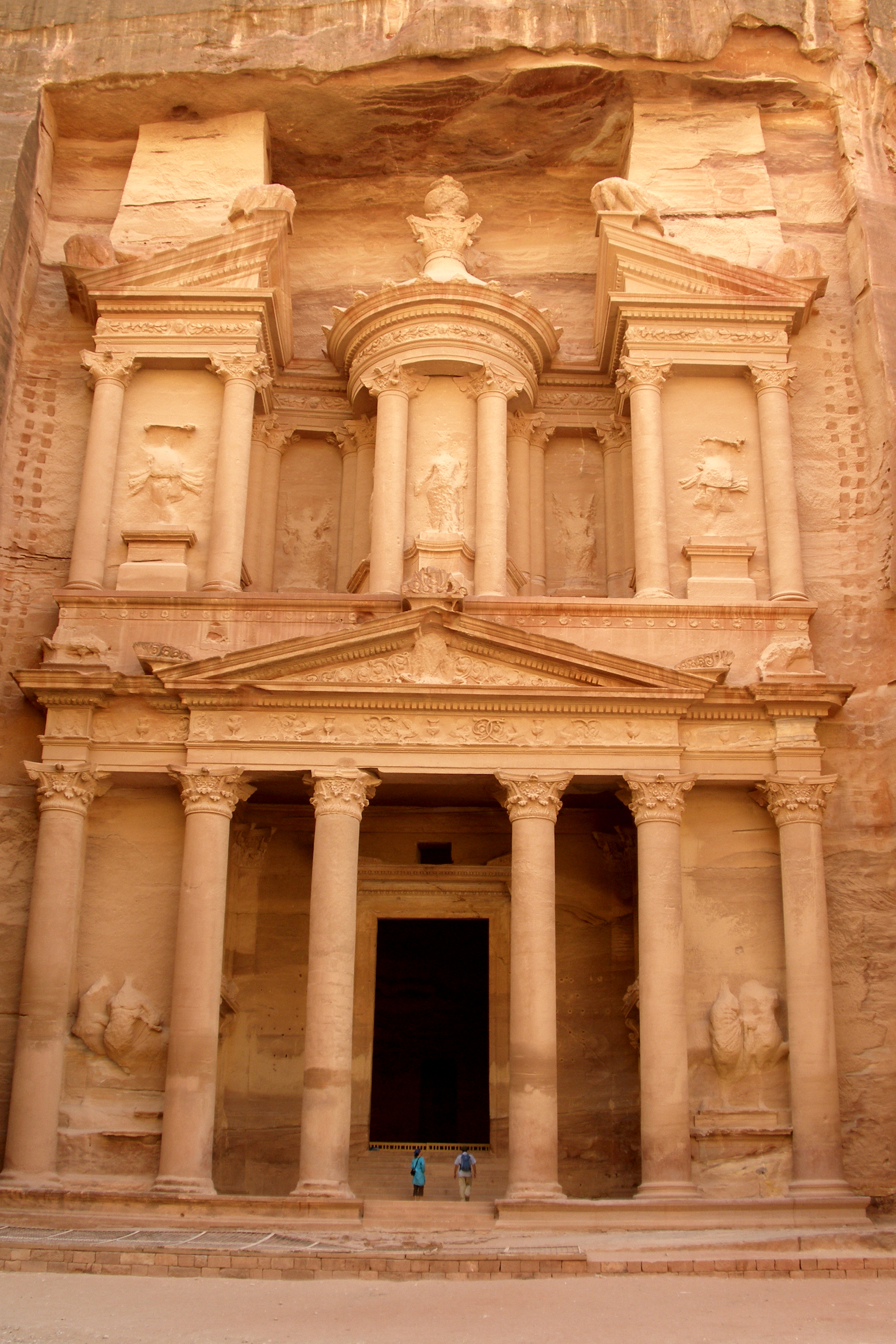
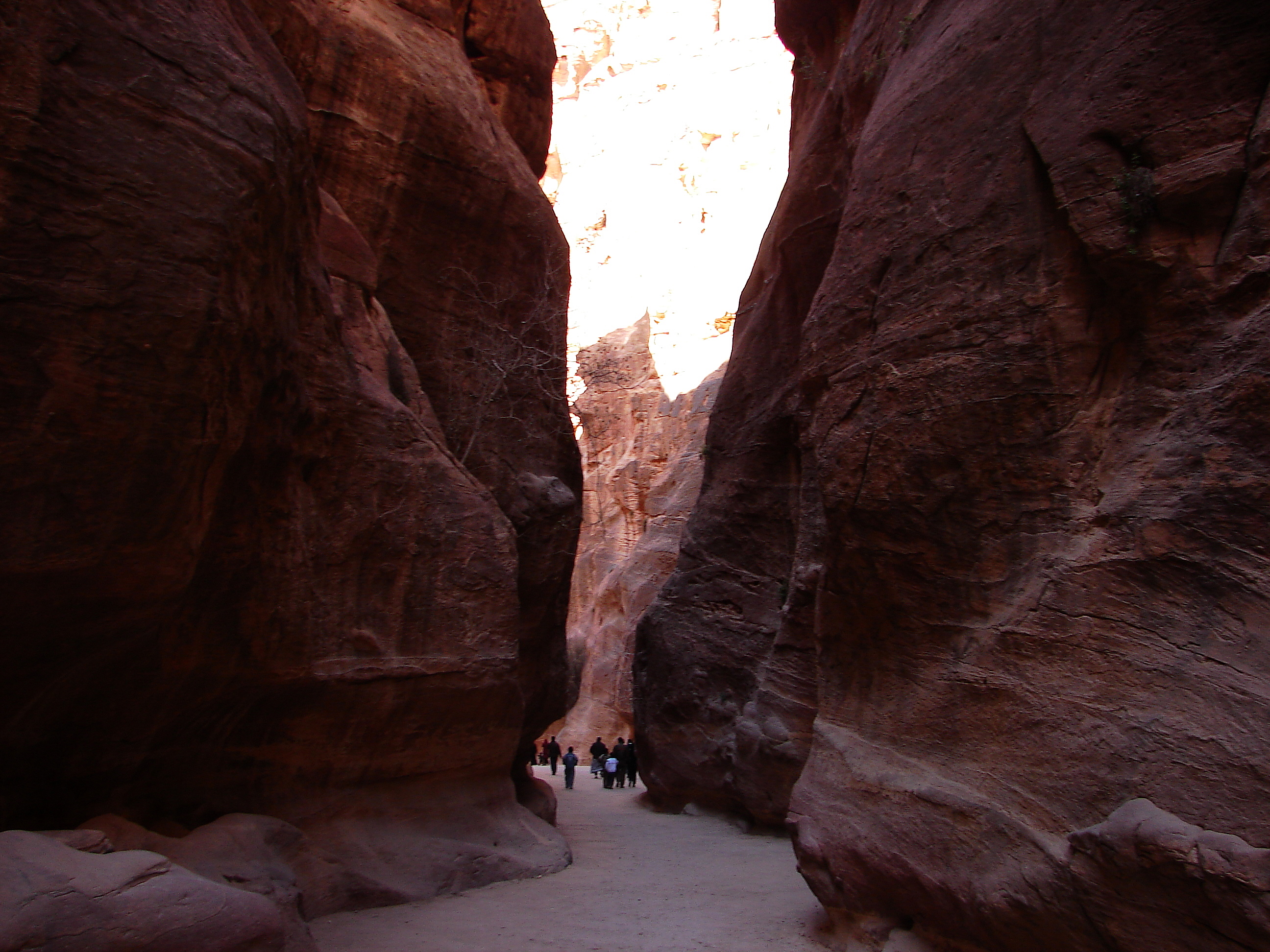
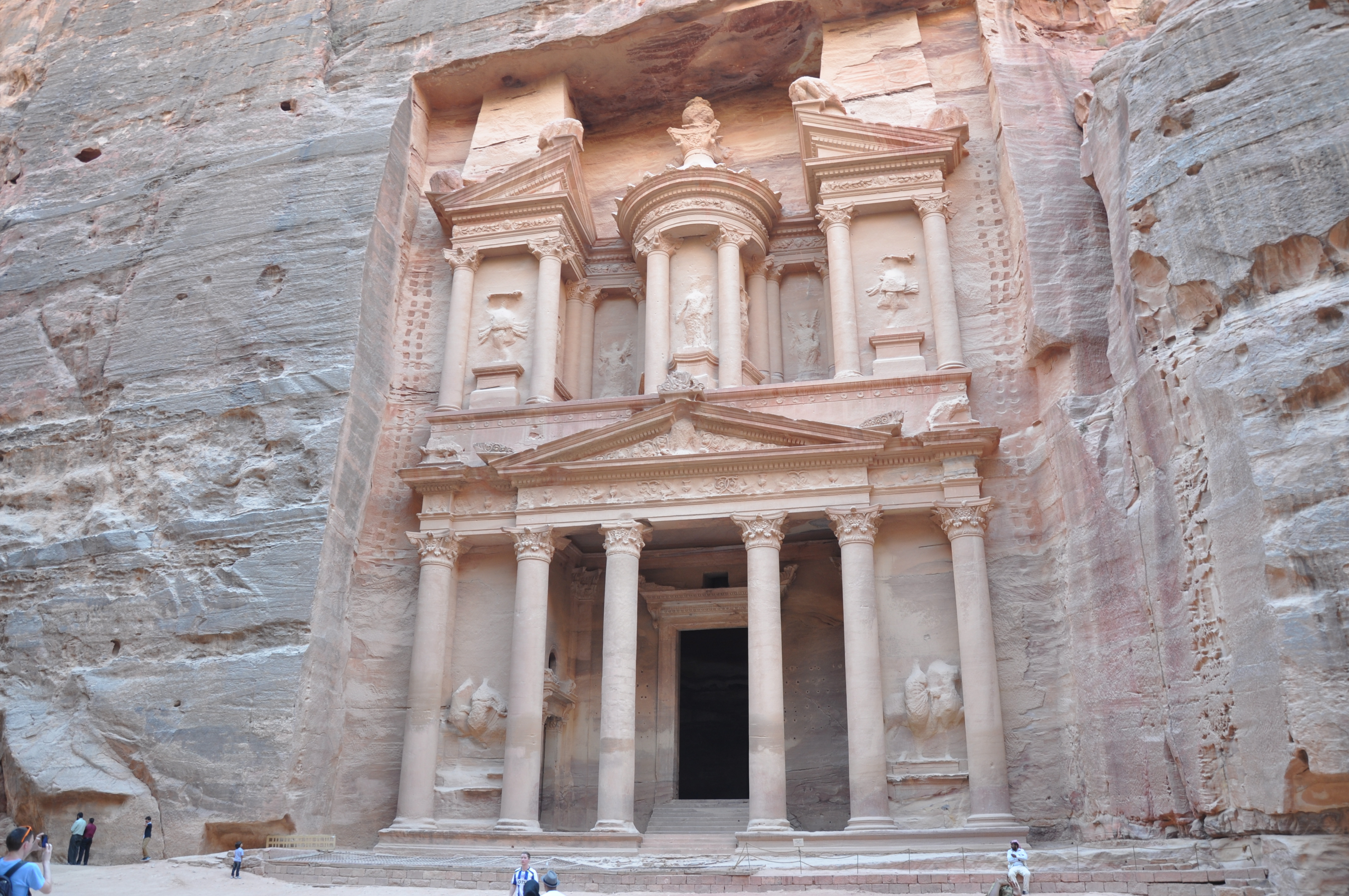
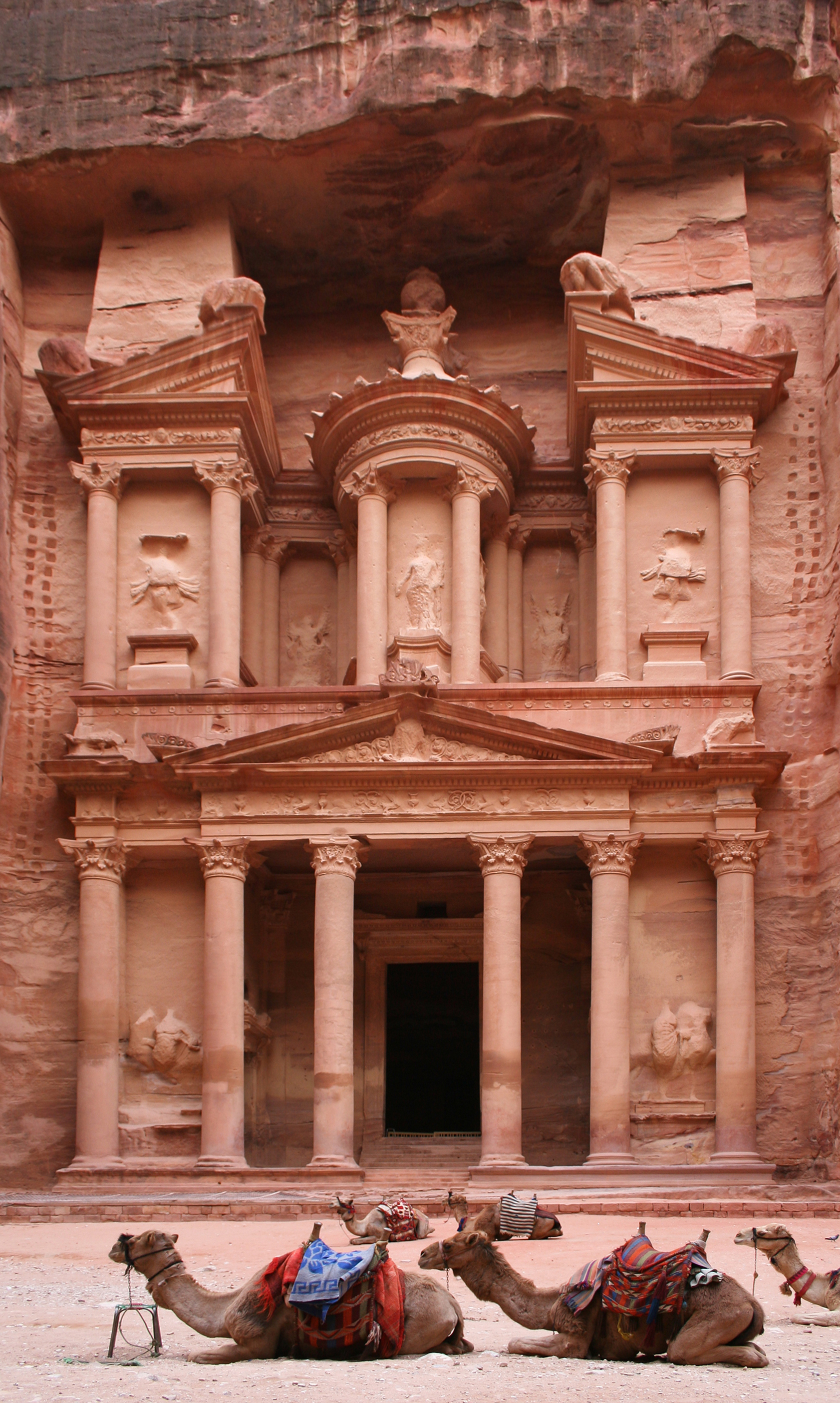
At the end of a narrow, kilometre-long gorge called the Siq, in the desert mountains of southern Jordan, the walls suddenly part to reveal Al-Khazneh — “The Treasury” — the most celebrated monument of the ancient Nabataean city of Petra. It is a monumental temple-tomb facade, roughly 40 metres tall and 28 metres wide, carved directly into a cliff of rose-red Nubian sandstone: not built up from blocks, but cut downward out of the living rock. Scholars generally date it to the late 1st century BCE or early 1st century CE, and most closely associate it with the reign of the Nabataean king Aretas IV Philopatris (who ruled roughly 9 BCE-40 CE), though the exact date and patron remain debated. Despite its name, Al-Khazneh was almost certainly not a treasury at all but a royal tomb and mausoleum; the “Treasury” label comes from a much later Bedouin legend that a pharaoh had hidden gold inside a stone urn carved into its upper facade — a belief so persistent that the solid-sandstone urn still bears bullet scars from people who fired at it hoping to break it open. Petra itself, the capital of the Nabataean Kingdom, was inscribed as a UNESCO World Heritage Site in 1985 (reference #326), prized both for its rock-cut architecture and for the Nabataeans’ remarkably sophisticated water-management system, which let a substantial city flourish in an arid desert basin. In 2024, archaeologists working in the Treasury’s forecourt made international headlines when they discovered a previously unknown, still-sealed tomb containing twelve intact skeletons and burial goods roughly 2,000 years old — a rare, undisturbed find in a site that has been investigated for two centuries.
The Structure
Al-Khazneh’s facade rises in two ornate stories carved from a single mass of rock, blending Nabataean building traditions with Hellenistic, Alexandrian, and Roman architectural vocabulary — a fusion natural to a kingdom whose wealth came from controlling caravan routes carrying incense, silk, and spices between Arabia, the Mediterranean, and lands further east. The lower level is fronted by a portico of six Corinthian columns (four freestanding, two engaged) supporting a classical pediment, framing a doorway flanked by carved reliefs, including figures identified with the mythological twins Castor and Pollux. The upper level breaks from strict classical symmetry with a “broken” pediment split around a circular tholos, a design borrowed from Ptolemaic architecture in Alexandria; the tholos is crowned by the carved stone urn that gave the monument its modern name, and the facade elsewhere carries eagles, dancing figures, and other funerary imagery. Behind this elaborate exterior lies a comparatively plain interior: a large square main chamber and three smaller adjoining rooms, with a combined interior volume of only around 2,000 cubic metres — modest compared to the towering facade in front of it, consistent with the building functioning as a burial and commemorative monument rather than a space for public use. Al-Khazneh sits within the much larger Petra Archaeological Park, a city half-built and half-carved into the surrounding sandstone, whose Nabataean, Roman, and Byzantine-era remains include hundreds of other tombs, temples, a theater, and the channels, cisterns, and dams of an extensive ancient water system. The 2024 discovery beneath the Treasury’s right-hand forecourt — made using ground- penetrating radar before excavation — turned up a sealed tomb with twelve skeletons in their original burial positions, along with bronze, iron, and ceramic grave goods, including a jug fragment dated to around the 1st century BCE; researchers noted that finding a chamber still intact and unlooted, so close to one of the most visited monuments in the ancient world, was without precedent in Petra’s long excavation history.
How Was It Built?
Al-Khazneh was not assembled from cut stone blocks; it was carved, subtractively, directly out of the cliff face — a technique the Nabataeans used across Petra for dozens of monumental tomb facades. The working method inferred from tool marks and comparable Nabataean sites is top-down excavation: masons began at the crest of the planned facade and worked downward, cutting the uppermost decorative elements first and progressively removing rock in stages toward the base, using platforms or scaffolding lowered as the work descended rather than raised from ground level. This sequence let carvers finish each register of ornament — cornices, pediment, columns, statuary — to its final form before the rock beneath it was even exposed, and it meant that a single continuous face of sandstone, rather than jointed masonry, forms the entire visible structure, with no seams between separately placed stones. The rock itself, a Cambrian-to-Cretaceous Nubian sandstone banded in shades of red, pink, and white by mineral staining, is workable enough with metal chisels to allow fine detail while still being durable enough to hold a monumental facade for two millennia — though it is also soft enough that wind-blown sand, flash floods, and, in the modern era, tourist contact have visibly eroded the surface (measurable recession has been recorded in as little as a decade near ground level). No Nabataean architectural plans, inscriptions naming a patron, or building accounts for Al-Khazneh have survived, so the specifics of how labor, tools, and scaffolding were organized are reconstructed from the finished carving, from tool-mark analysis, and from comparison with other, better-documented rock-cut monuments in the region rather than from a direct historical record.
The Mainstream View
Archaeologists and historians are confident about the broad picture: Al-Khazneh is a Nabataean rock-cut monument, most likely a royal tomb, carved in the decades around the turn of the 1st century CE by a wealthy, cosmopolitan desert kingdom whose trade wealth gave it access to Hellenistic and Roman architectural styles alongside its own building traditions. The absence of inscriptions naming an owner has not stopped scholars from proposing candidates, with King Aretas IV — under whom Petra reached its architectural and economic peak — the most frequently cited, though other Nabataean elites have also been suggested, and the attribution remains a considered best inference rather than a certainty. The carving technique itself is not seriously disputed: comparative study of Petra’s many other facades, together with visible tool marks and the logical sequencing of finished upper details above unworked lower rock, supports a top-down subtractive method using iron tools and removable scaffolding or platforms, a technique attested more widely in ancient quarrying and rock-cut architecture. The 2024 tomb discovery beneath the forecourt fits comfortably within this picture, reinforcing rather than upending it: it confirms that the area in front of and beneath Al-Khazneh was used for burials in the same period the facade itself was carved, consistent with the monument’s function as part of a larger Nabataean necropolis.
The Open Case
What remains genuinely open is not whether Nabataeans built Al-Khazneh — that is well established — but the finer details of how, for whom, and what else is still buried around it. The precise identity of the person or persons the tomb was built for is not confirmed by any inscription, so the Aretas IV attribution, however plausible, stays a leading hypothesis rather than a settled fact, and the exact building date within the roughly century-wide window scholars allow is likewise debated. The logistics of the top-down carving method — how many masons worked simultaneously, how scaffolding was engineered and moved as the facade emerged, how long the project took, and how designs of this precision were planned and communicated without surviving architectural drawings — are reconstructed rather than directly documented, since no Nabataean building records for the monument have been found. And Petra continues to yield surprises: the 2024 discovery of an intact, never-before-disturbed tomb with twelve skeletons directly beneath one of the most visited and thoroughly studied monuments on Earth is a reminder that, after two centuries of excavation, substantial parts of the site — including, quite possibly, more of what lies beneath and around Al-Khazneh itself — remain unexplored. These are real, actively researched questions of method, attribution, and undiscovered archaeology; nothing about the evidence points beyond skilled human stonemasons working within a wealthy, technically accomplished Nabataean civilization.
Sources
On screen
- The Treasury You Can Build — In Civilization VI, you queue up Al-Khazneh yourself, and the game stops to tell you what it means.
Gallery