The Army You Can Build
In Civilization, the emperor's buried guard becomes a building you queue up like any other.
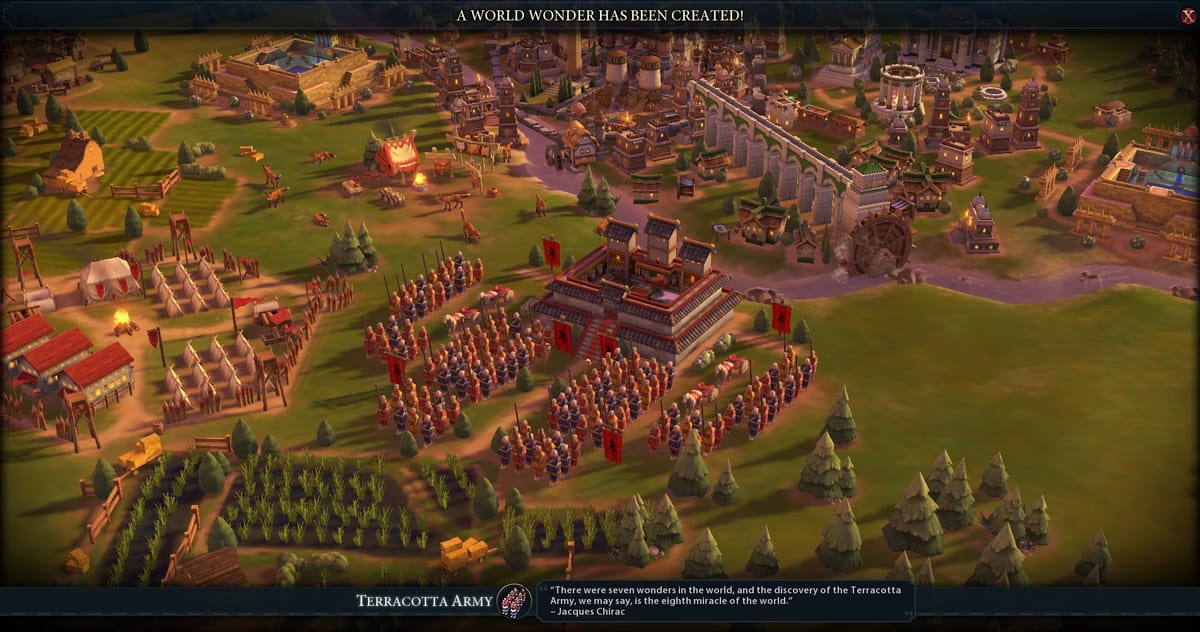
Every Civilization game hands you the same quiet joke: the wonders of the ancient world, built by empires with millennia of labour behind them, reduced to a line in a production queue. The Terracotta Army gets that treatment twice over. In Civilization VI, it is a Classical-era Wonder that has to be built next to an Encampment — plant it there and your capital’s own clay ranks start grinding out Great General points, a straight-faced translation of “funerary guard for an emperor” into “military production bonus.” Finish it and the game throws up the same triumphant banner as the ancient real thing, no less: rows of red-and-blue soldiers standing at attention around a freshly built hall.
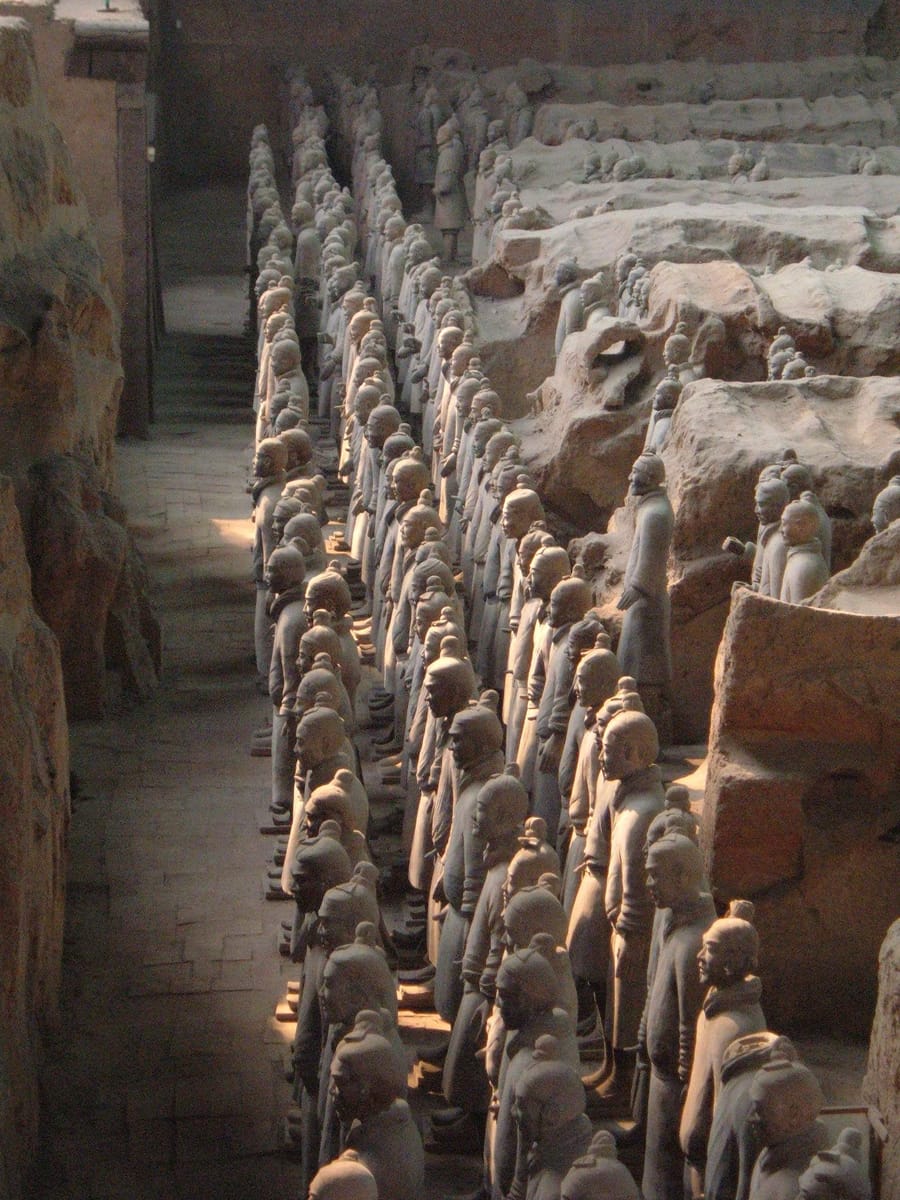
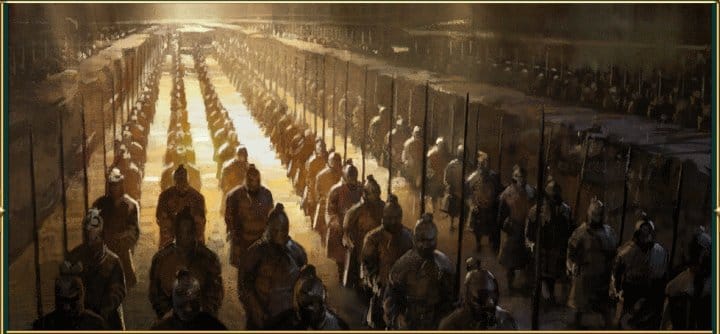
Civilization V got there first, in 2010, with a version that leans even harder into the bit: complete the wonder and it doesn’t just sit on the map looking impressive, it manifests a free copy of every land unit type you already have. One army, in clay, quietly duplicating itself into your actual army — which is, in its way, closer to Qin Shi Huang’s original intent than most game wonders manage. The completion screen for that version drops the isometric hex grid entirely for a painted splash of soldiers receding into golden light, corridor after corridor of them, which is about as close as a strategy game interface gets to a photograph of Pit 1.
Neither game explains the moulded torsos, the luted joints, or the workshop foremen who stamped their names into the clay so a bureaucracy could hold them accountable. That production story doesn’t fit in a tech-tree tooltip. What the games do capture, almost by accident, is the scale — an army that exists because a state decided to mass-produce individuality, then buried the result to stand guard forever. Two and a half thousand years later, players are still building it, one queue slot at a time.
Read the full study: Terracotta Army