Stonehenge
How did people without wheeled transport, draft animals, or metal tools quarry, move, and precisely erect stones weighing up to 30 tonnes from as far as Wales and Scotland, and what was the monument actually for?
Why this rating?
- Construction difficulty
- 5/5
- Method uncertainty
- 4/5
- Capability gap
- 3/5
- Open questions
- 4/5
Moving sarsens up to 40-50 tonnes and bluestones 230km from Wales (with the Altar Stone traced to Scotland, 700km away) used known sledge-and-roller methods demonstrated by experimental archaeology, but no direct evidence of the actual haul survives, so the land/water balance and exact route remain debated, and the monument's ultimate purpose among several competing theories (healing shrine, ancestor cult, unification) is still unresolved.
Overview
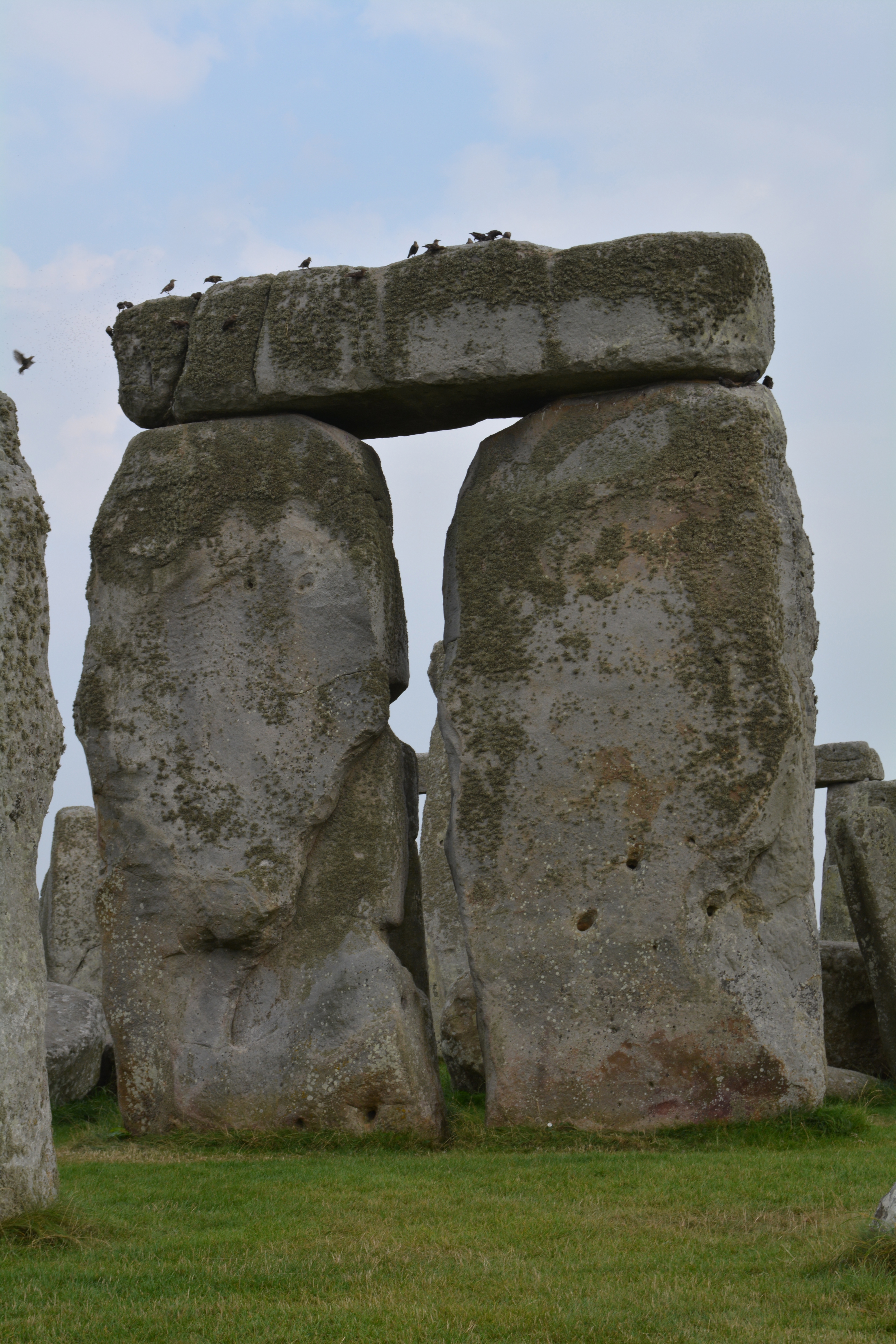
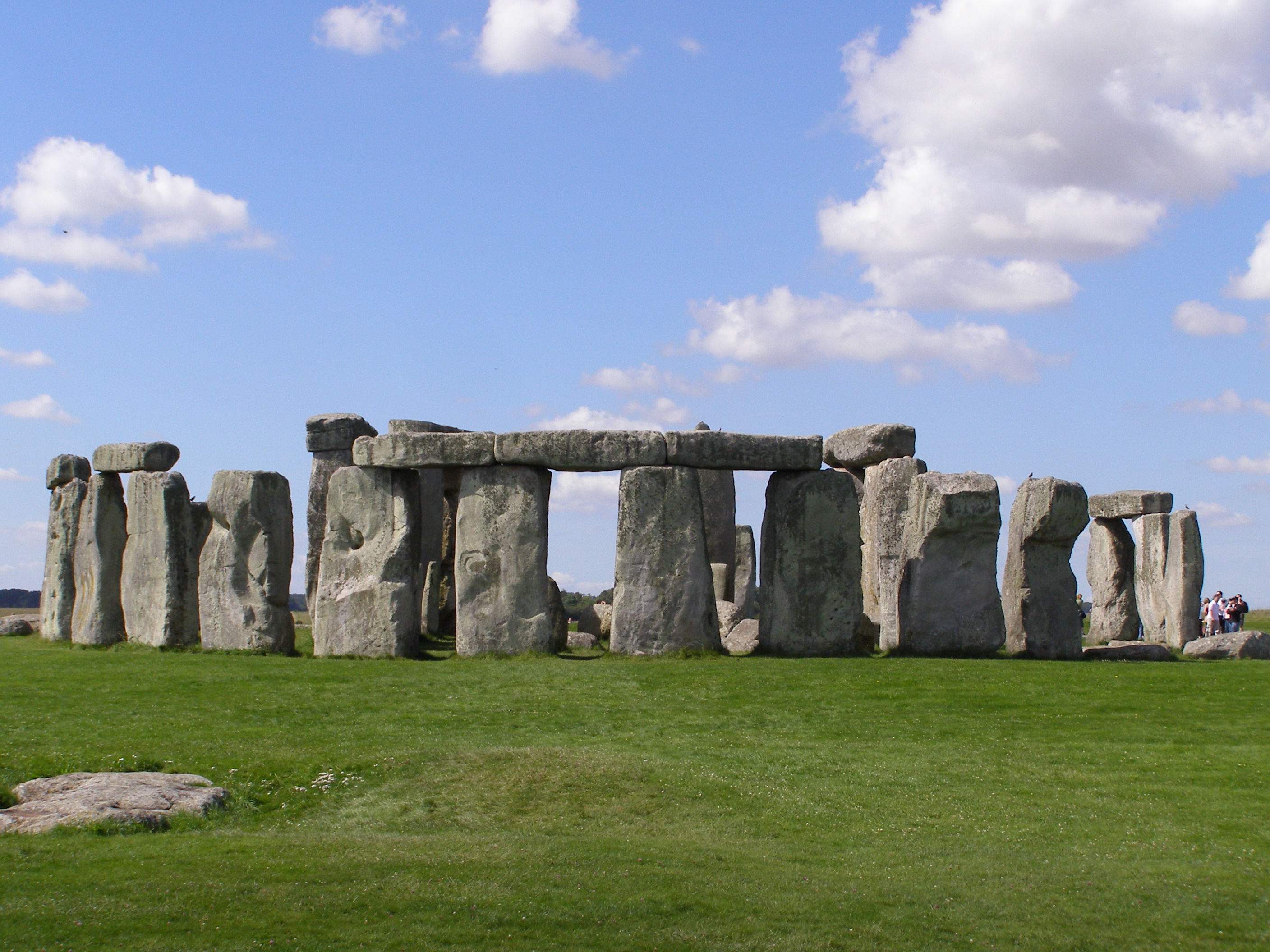
Stonehenge is a prehistoric stone monument standing on Salisbury Plain in Wiltshire, southern England. It consists of concentric settings of standing stones — an outer circle of massive sandstone “sarsens” capped with horizontal lintels, an inner horseshoe of tall sarsen trilithons, and rings and arcs of smaller “bluestones” — surrounded by a circular ditch and bank first dug around 3000 BCE. It was not built in a single campaign but assembled, dismantled, and rearranged over roughly 1,500 years, with the great sarsen circle and trilithons raised around 2500 BCE. Stonehenge is the most architecturally sophisticated stone circle in the world: its sarsens are shaped and fitted using mortise-and-tenon and tongue-and-groove joints borrowed from woodworking, and the whole monument is aligned on the axis of the midsummer sunrise and midwinter sunset. It sits at the center of a much larger prehistoric landscape of burial mounds, processional avenues, and other monuments, and forms part of the Stonehenge, Avebury and Associated Sites UNESCO World Heritage Site, inscribed in 1986. Stonehenge is also, unusually for a monument of its age, a cemetery: cremated remains of dozens of people have been recovered from in and around it, spanning much of its history of use.
The Structure
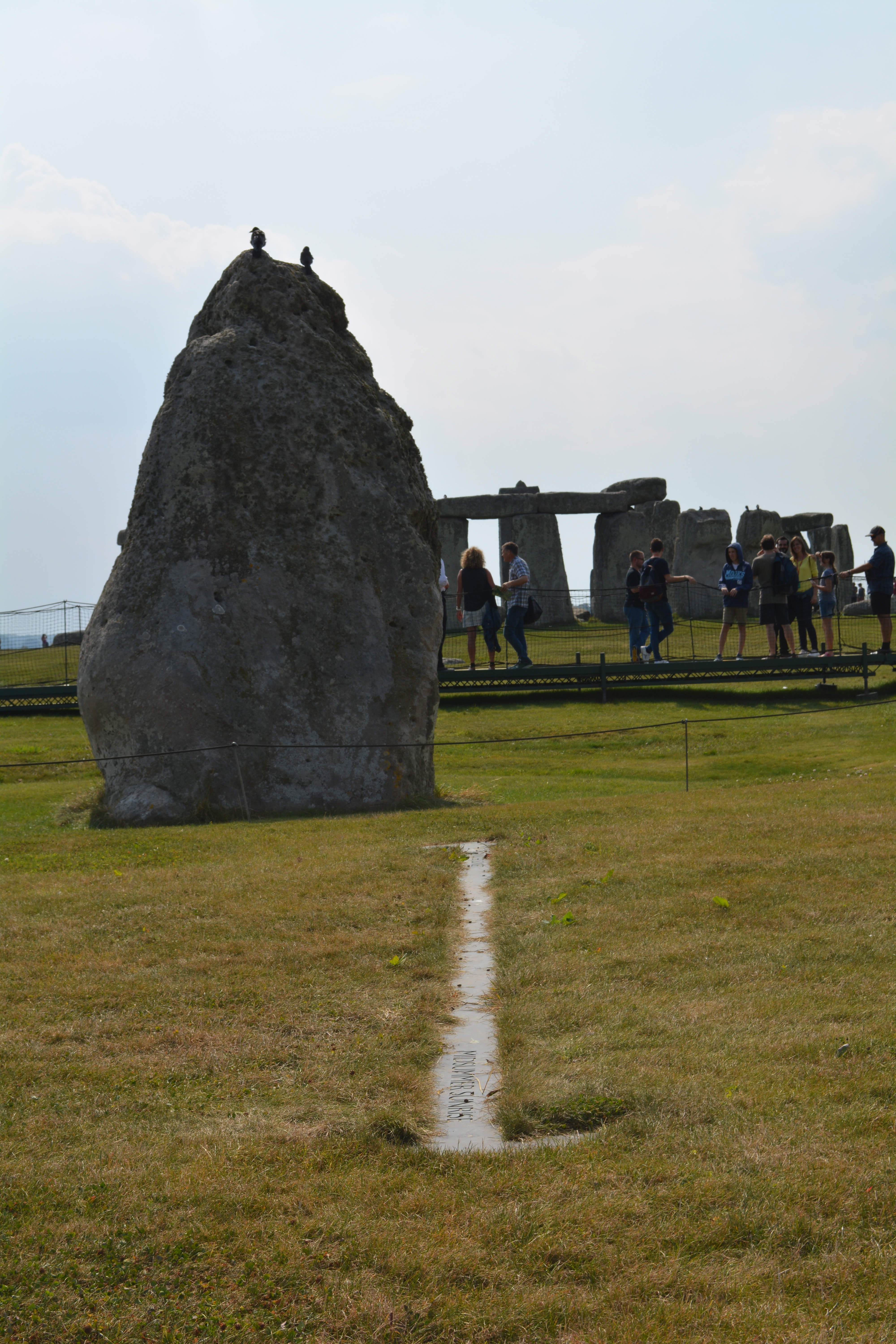
The earliest phase, from around 3000 BCE, was a large circular earthwork about 110 meters across: a ditch with an inner bank, enclosing a ring of 56 pits known as the Aubrey Holes, some of which held cremated human remains. Timber structures may have stood inside the enclosure in the centuries that followed. The monument’s stone phases began around 2900-2600 BCE with bluestones — smaller stones, mostly a type of volcanic rock called dolerite along with rhyolite, tuff, and sandstone — set up in early arrangements. Around 2500 BCE the dramatic architecture visible today took shape: 30 massive sarsen stones, roughly 4 meters tall and weighing around 25 tonnes each, were erected in a circle about 30 meters across and capped with a continuous ring of lintels, and within it five free-standing trilithons (paired uprights with a lintel) were arranged in a horseshoe, the tallest pair originally standing nearly 7.5 meters and weighing up to about 40-50 tonnes. The bluestones were rearranged into new settings between about 2400 and 1600 BCE, ending in the double bluestone circle and oval that stand among the sarsens today. A partially buried sandstone slab known as the Altar Stone lies at the monument’s center, and an outlying sarsen called the Heel Stone stands beside the processional Avenue, a pair of parallel banked ditches that runs about 3 kilometers from the northeast entrance to the River Avon. On the morning of the summer solstice, the sun rises close to the line drawn from the center of the monument through the Heel Stone; on the winter solstice, the sun sets on the same axis in the opposite direction — an alignment widely accepted as intentional, since it also matches the orientation of the earlier earthwork enclosure. Archaeological survey has connected Stonehenge to the nearby monument of Durrington Walls, a large henge with timber circles about 3 kilometers away, which some archaeologists interpret as a settlement for the builders and a counterpart monument aligned on the opposite midwinter sunrise.
How Was It Built?
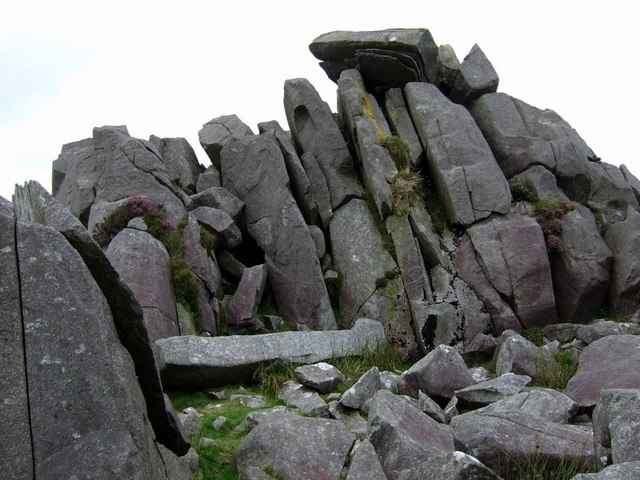
Stonehenge’s sarsens were shaped with stone hammers (mauls), which were used to dress the surfaces smooth, carve mortise holes and tenons on the tops of the uprights, and cut matching sockets into the lintels — techniques adapted from woodworking joinery and used here in stone, an approach found nowhere else among Britain’s prehistoric monuments. The lintels’ undersides and inner faces were subtly curved so the ring would read as a continuous circle, and their tops were leveled to compensate for the slope of the ground, holding the whole ring level to within a few centimeters. Most sarsens were sourced from the Marlborough Downs, about 25-30 kilometers to the north, and moved on sledges over log rollers, greased trackways, or similar means — a method demonstrated as feasible by full-scale experimental archaeology, including a 1995 trial in which around 130 people hauled a 40-tonne slab. The bluestones present the larger puzzle: geological sourcing has traced them to specific outcrops in the Preseli Hills of west Wales, including Carn Goedog and Carn Menyn, roughly 230 kilometers from Salisbury Plain — the longest confirmed transport distance of any stones used in a Neolithic monument in Britain or continental Europe. How they got there is genuinely debated: one camp argues for entirely human-hauled overland transport along a route close to the modern A40; another has argued for a combination of overland hauling and transport by water raft along the Welsh coast and up local rivers; a long-standing alternative theory, that the bluestones were carried most of the way by glacial ice long before people moved them the final stretch, has been increasingly undermined by geological fieldwork and is now a minority position. In 2024, geochemical analysis of the monument’s central Altar Stone found its mineral composition matches sandstone from the Orcadian Basin in northeast Scotland, over 700 kilometers away — meaning Stonehenge’s builders coordinated the transport of stone from both far western Wales and far northern Scotland to one site in southern England, evidence of long-distance contact and organization across Neolithic Britain on a scale not previously appreciated.
The Mainstream View
Archaeologists treat Stonehenge as the product of successive Neolithic and early Bronze Age communities in southern Britain, built and remodeled over many generations rather than to a single plan. The earliest earthwork phase coincides with a period when cremation burial was becoming widespread in the region, and excavation (notably the Stonehenge Riverside Project led by Mike Parker Pearson) recovered cremated remains of an estimated 150-plus individuals spanning several centuries, making Stonehenge, on current evidence, one of the largest late Neolithic cemeteries known in Britain. Its builders had no writing, no wheeled vehicles suited to megalith-hauling, no draft animals bred for such loads, and no metal tools — bronze only reaches Britain toward the end of the monument’s main construction era — yet they organized quarrying, long-distance haulage, and stoneworking on a scale requiring, by most estimates, a large, coordinated workforce sustained over years. Leading interpretations, not mutually exclusive, include Parker Pearson’s proposal that Stonehenge and Durrington Walls together formed a ritual landscape linking the realm of the dead (stone, permanent) to the realm of the living (timber, temporary), joined by the River Avon; Timothy Darvill and Geoffrey Wainwright’s suggestion, based partly on the number of individuals showing signs of injury or illness among the burials, that the bluestones were credited with healing properties and the site drew pilgrims; and a reading, strengthened by the Altar Stone’s Scottish origin, of Stonehenge as a monument to unification, gathering stone (and by extension, people and allegiance) from across Britain at a time when populations across the island were becoming more interconnected. Its solstice alignment is treated as deliberate and central to its purpose, whatever else the monument meant to those who built and used it.
The Open Case
The genuinely unresolved questions are not whether Stonehenge is a real, dateable prehistoric monument — it is one of the most intensively excavated and scientifically dated sites in the world — but exactly how its builders achieved specific feats, and what the monument was ultimately for. The bluestone transport question remains open in its particulars: no wear-consistent sledge tracks, rollers, or watercraft associated with the journey have been found, so the balance between land and water transport, and the exact route, rests on inference from the geology and from smaller-scale experimental trials rather than direct archaeological evidence of the haul itself. The Altar Stone’s 2024-confirmed Scottish origin raises a fresh and still-unanswered question: whether the stone was carried across Britain as a single deliberate expedition, exchanged hand-to-hand between communities over a longer period, or moved by some combination of the two — and why a community on Salisbury Plain would go to such lengths for a stone from so far away when comparable sandstone existed closer by. The precise purpose of the monument is likewise unsettled: the healing-shrine, ancestor-cult, and unification theories each fit part of the evidence but none commands full consensus, and it is possible the monument’s meaning changed as it was rebuilt across 15 centuries. What can be said without overreach is that Neolithic and early Bronze Age Britons, using only stone, wood, fiber rope, and human and possibly animal muscle, quarried, transported, shaped, and erected stones weighing tens of tonnes across distances up to hundreds of kilometers, fitted them with joinery techniques otherwise used in carpentry, and aligned the whole monument to the solstice sun with an accuracy still visible today. Whether that required social organization on a scale not otherwise evidenced for the period, lost techniques since forgotten, or simply patient, well-coordinated labor sustained across generations is the genuinely open question — not a case for anything beyond the reach of the people who are known to have built it.
Sources
On screen
- The Circle You Solve — Stonehenge shows up in two games that could hardly be less alike: a solemn Viking-era stone puzzle, and a Mario & Sonic chase after a fog machine.
Gallery