Serpent Mound
Which Native American culture actually built Serpent Mound and when, and what did its serpent form and solstice alignment mean to the people who raised it?
Why this rating?
- Construction difficulty
- 1/5
- Method uncertainty
- 2/5
- Capability gap
- 1/5
- Open questions
- 5/5
The earthwork itself, piled and layered clay, ash, and stone shaped into a low winding ridge, required sustained communal labor but no advanced technique, so its physical construction is not seriously in question. What is genuinely and actively disputed is which culture built it and when: competing radiocarbon studies have swung the consensus between an Adena origin (c. 300 BCE) and a Fort Ancient origin (c. 1070 CE) more than once, alongside open debate over the mound's purpose and the precision of its solstice alignment.
Overview
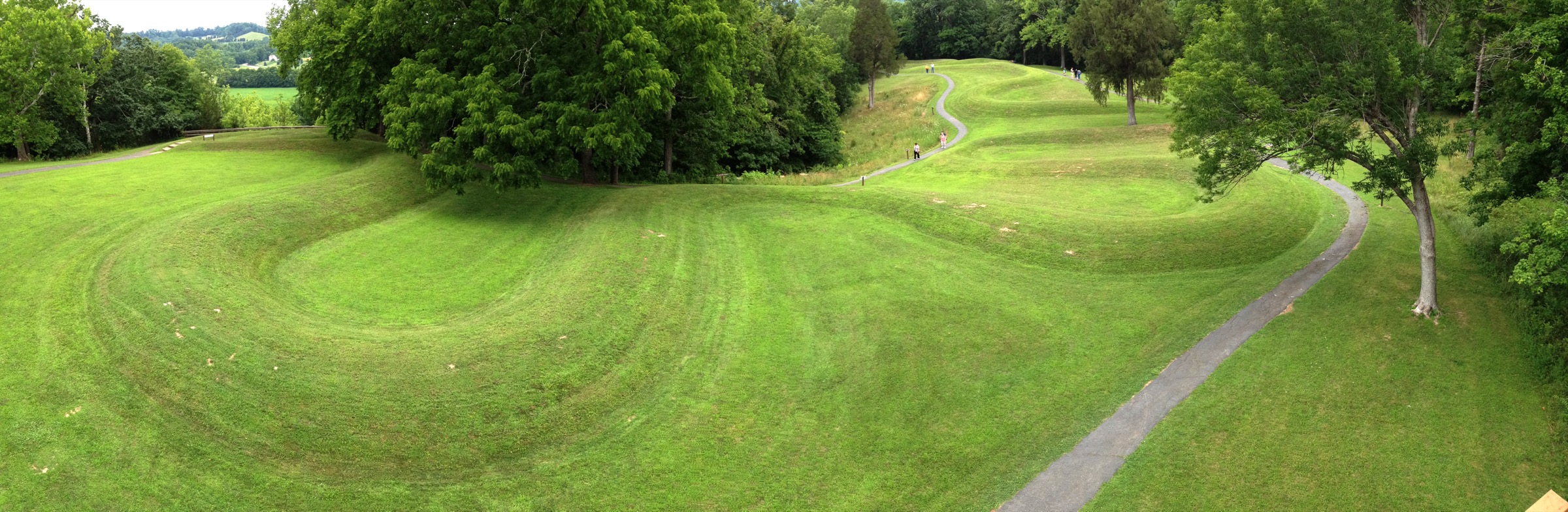
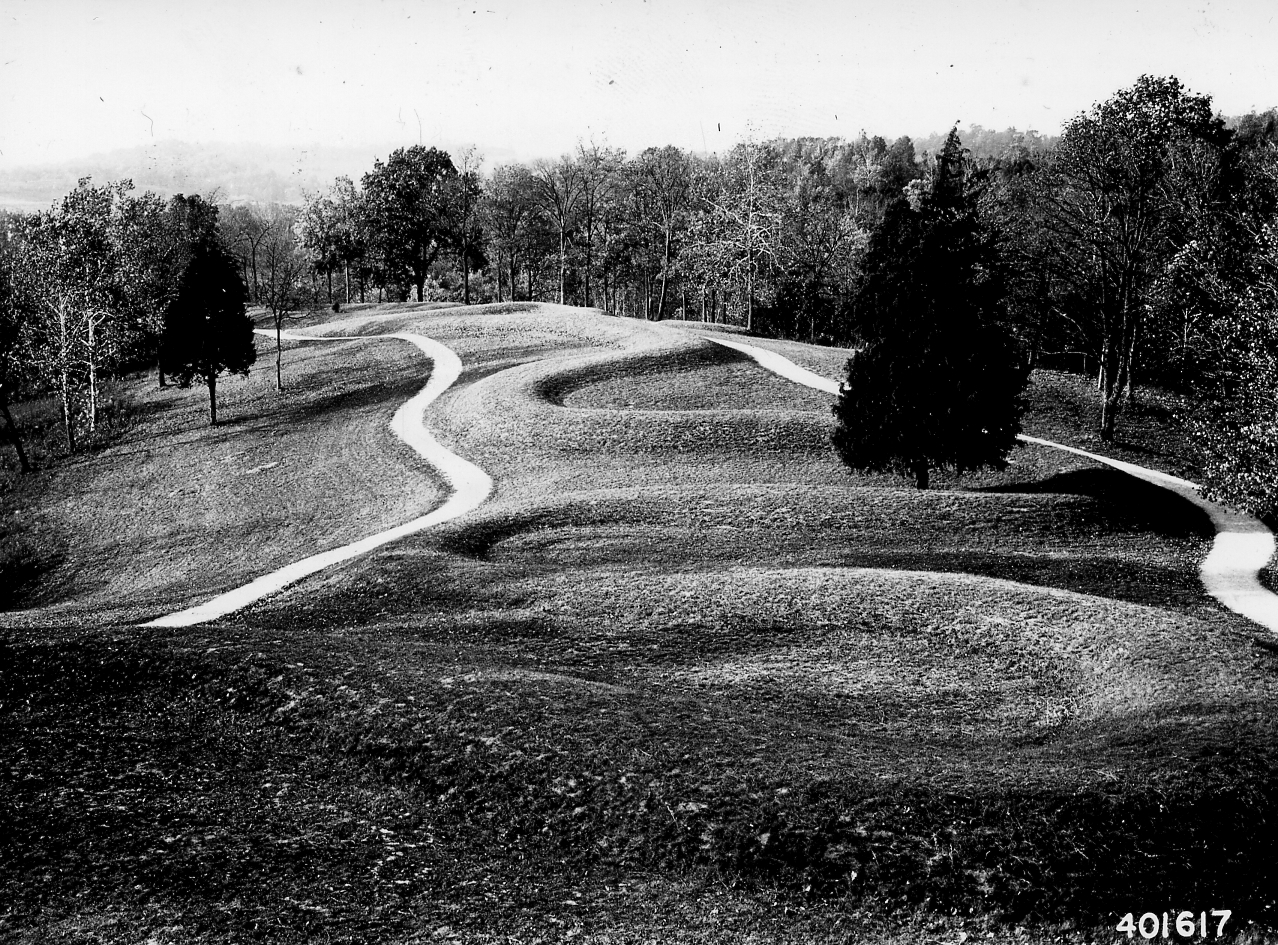
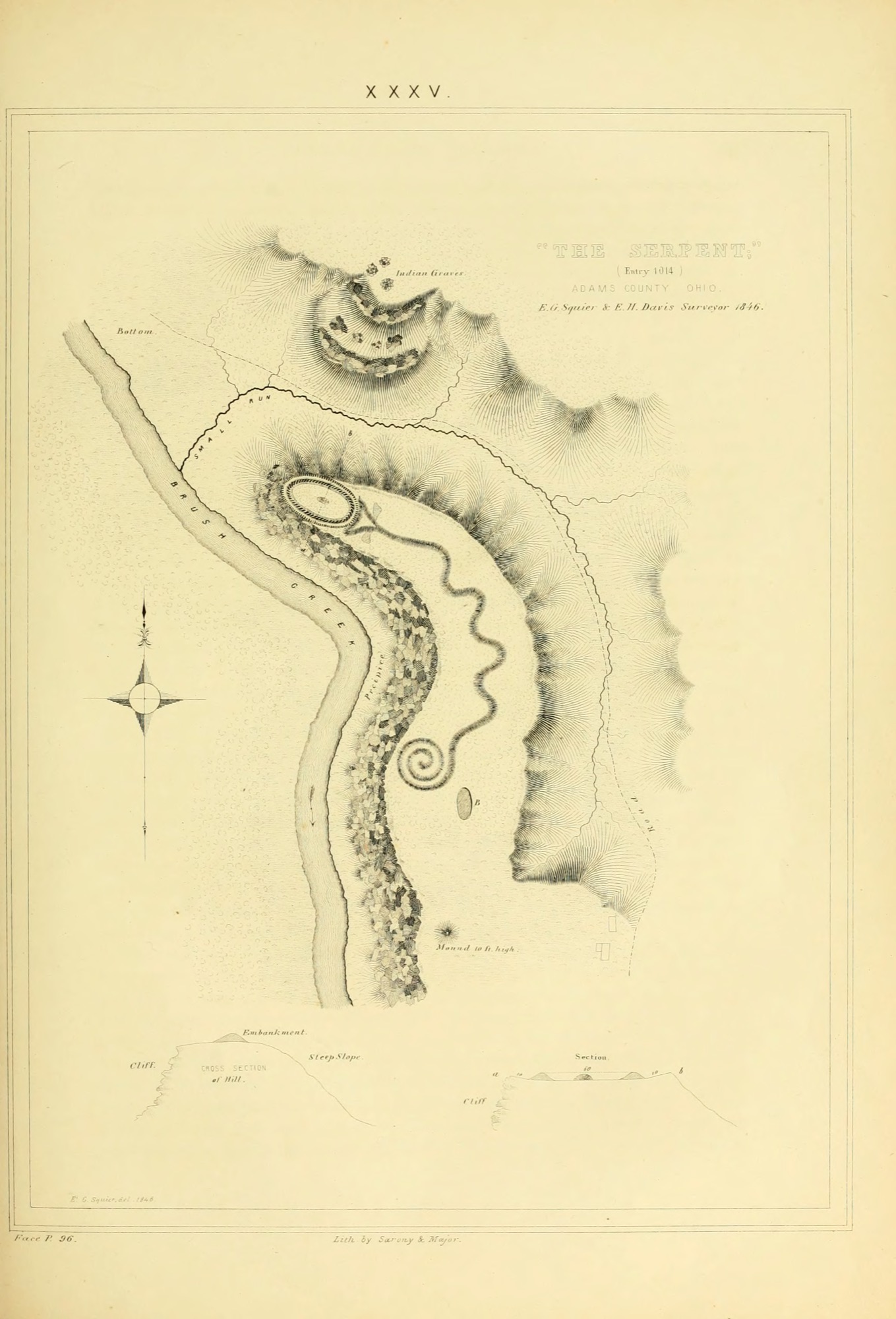
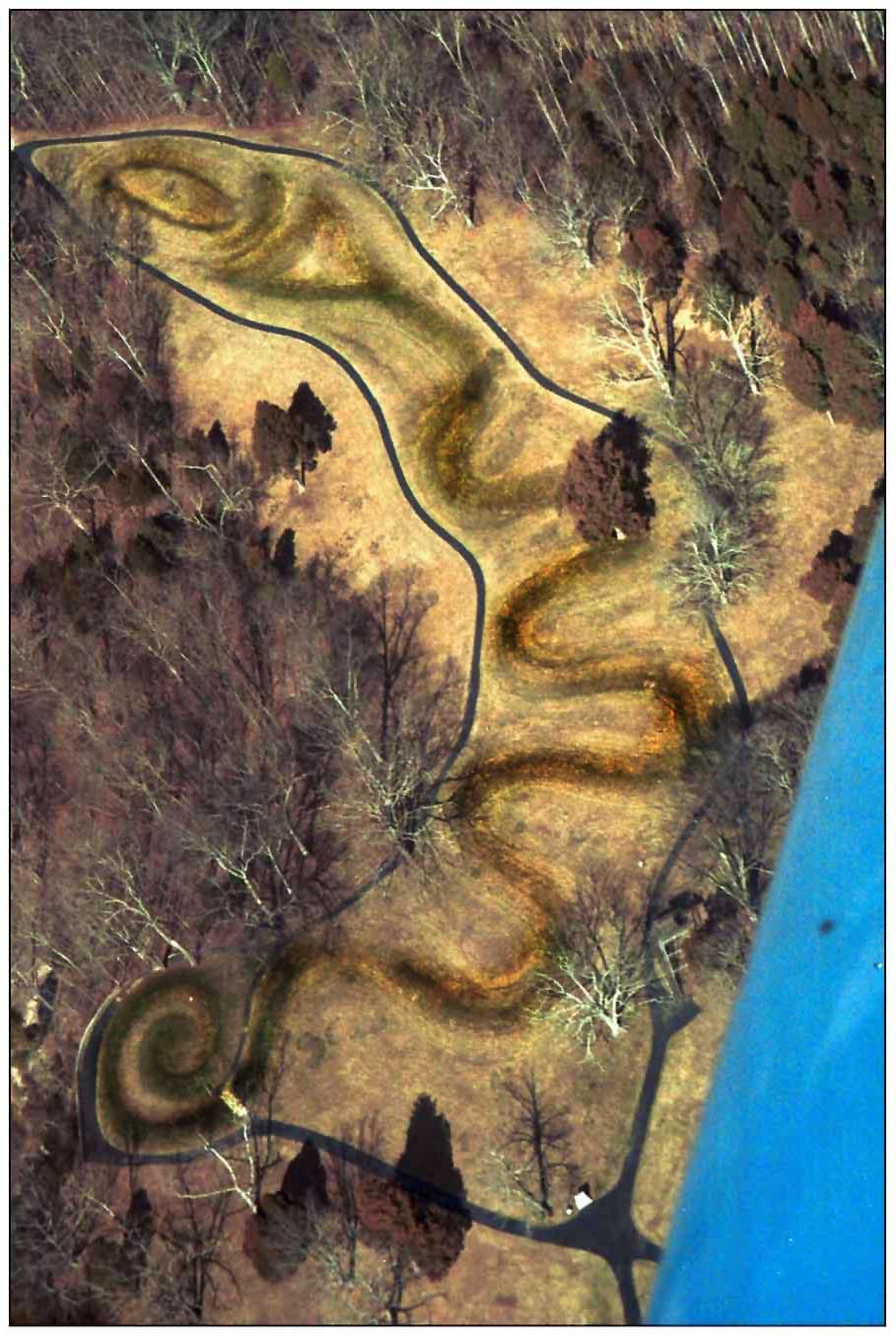
Serpent Mound is a vast earthen effigy in Adams County, in southern Ohio, United States, shaped like an undulating serpent with a tightly coiled tail at one end and, at the other, a triple-coiled head next to a large hollow oval. Built up from yellowish clay and ash and reinforced with a layer of stone, the earthwork winds for about 411 meters (1,348 feet) along a plateau above Ohio Brush Creek, standing only around a meter (three to four feet) high but roughly 6-7 meters (20-25 feet) wide. It is the largest surviving prehistoric serpent effigy in the world and one of the most recognizable works of ancient earthen architecture in North America. The mound was built by the ancestors of Native American peoples of the Ohio Valley; archaeologists agree on that much, but not on which specific culture raised it or exactly when. The site is a designated U.S. National Historic Landmark, is managed today by the Ohio History Connection, and sits on the United States’ tentative list for UNESCO World Heritage status.
The Structure
Serpent Mound occupies a narrow bluff overlooking a horseshoe bend of Ohio Brush Creek, a location that — intriguingly, though probably coincidentally to its builders — sits atop the remains of an ancient meteorite-impact structure, the Serpent Mound crater, whose disturbed bedrock produced the unusual plateau the effigy was built on. The serpent’s body flows through seven undulating curves before ending in a triple-spiral tail; at the opposite end, the head curls beside a large hollow oval earthwork roughly 36 meters (120 feet) long, which excavators and visitors alike have long debated: is it an egg the serpent is about to swallow, its open eye, or its gaping mouth? Ohio’s Indigenous oral traditions link serpent imagery to widely shared regional stories of a Great Serpent or horned water-panther figure in conflict with a sky-being or “First Woman” — a mythic pairing recorded among Shawnee, Haudenosaunee, and other eastern Woodland peoples, which is why many archaeologists read the mound as sacred narrative made visible in earth rather than as a practical structure. The Shawnee, whose ancestral homeland includes this part of Ohio, maintain a Snake Clan and have held ceremonies reconnecting with the mound around the summer solstice in recent years. No burials, artifacts, or hearths datable with confidence have been found within the serpent effigy itself, which is part of what makes pinning down its builders and date so difficult — unlike the burial mounds that dot the surrounding landscape.
How Was It Built?
The builders shaped the serpent by piling and sculpting basketloads of clay and ash into a low, winding ridge, then layering stones and additional soil over the core to stabilize and reinforce its outline — a method attested at other Ohio Valley earthworks of the broader mound-building tradition. No metal tools, wheeled vehicles, or draft animals were involved or needed: this was earth-moving on a large but achievable scale, using digging sticks, hand-carried baskets of fill, and, above all, a sustained communal effort by many people over what was likely an extended building campaign, possibly with later modification or repair. What sets Serpent Mound apart is not the difficulty of the physical construction but the apparent precision of its layout: the serpent’s head and the adjoining oval point toward the point on the horizon where the sun sets at the summer solstice, and researchers have proposed that the mound’s series of coils may also mark the winter solstice sunrise and possibly lunar events, meaning the builders needed not just labor but a working knowledge of solar (and perhaps lunar) cycles, translated onto the undulating shape of the bluff itself.
The Mainstream View
Archaeologists are united on one central point: Serpent Mound was built by the ancestors of Native American peoples native to the Ohio Valley — full stop. That consensus stands in direct opposition to the discredited “Mound Builder myth” of the 19th century, a racially motivated theory that attributed Ohio’s earthworks to a vanished non-Native race — Phoenicians, Vikings, a “Lost Tribe of Israel,” or refugees from Atlantis — precisely in order to deny that Indigenous Americans were capable of, or responsible for, monumental construction. That myth was thoroughly dismantled by 20th-century archaeology, which traced clear cultural continuity between the historic tribes of the Eastern Woodlands and the earlier mound-building societies of the region; no reputable scholar today disputes Indigenous authorship. What remains genuinely contested is which Indigenous culture built Serpent Mound, and when. For most of the 20th century, the mound was attributed to the Adena culture (roughly 800 BCE-100 CE), reasoning by association with nearby Adena burial mounds. That picture was upended in the 1990s, when radiocarbon dates from charcoal recovered within the earthwork suggested a construction date around 1070 CE, placing the mound instead in the hands of the Fort Ancient culture, a Late Prehistoric farming society known elsewhere for building effigy mounds and using serpent imagery in its art. A 2014 re-excavation and a 2019 follow-up study, using different soil-core samples, returned radiocarbon dates clustering around 300 BCE, reopening the case for an Adena origin, with the researchers proposing the mound may have been refurbished by Fort Ancient peoples centuries later. Other archaeologists have challenged those 2014 dates as likely drawing carbon from older, disturbed soil, arguing the Fort Ancient attribution better fits the serpent’s stylistic parallels. Ohio History Connection’s own current position describes both theories side by side rather than declaring a winner.
The Open Case
Nothing about Serpent Mound requires — or supports — appeals to lost civilizations, extraterrestrial visitors, or vanished races; that framing is a 19th-century myth that modern archaeology has put to rest, and it survives today mainly as a marker of how not to think about Indigenous history. The genuine open questions are narrower and, for archaeologists, more interesting. First is the date and builder culture: was this an Early Woodland creation of the Adena, later maintained by Fort Ancient peoples, or a Late Prehistoric work of the Fort Ancient culture built on ground the Adena had already made significant through nearby burial mounds? The radiocarbon evidence itself is contested on methodological grounds, and until a wider, less disturbed set of samples resolves the dispute, both readings remain live. Second is purpose: whether the mound served as a calendrical or ceremonial marker tied to the solstice, a representation of a specific origin narrative, a boundary or gathering marker for dispersed communities, or some combination that shifted in meaning as different generations returned to and reused the site. Third is the precision and intent of the astronomical alignment itself — researchers broadly agree the head-and-oval axis points toward the summer solstice sunset, but disagree on how deliberately the subtler curves of the coiling body track the winter solstice sunrise or lunar standstills, since a winding serpentine form built along a natural bluff edge will inevitably cross several sightlines by chance. None of this uncertainty touches who built Serpent Mound. It touches when, exactly why, and how much of its serpentine geometry was astronomy and how much was story translated into earth — questions that keep archaeologists returning to Adams County with new excavation methods, more precise dating techniques, and renewed collaboration with the descendant communities whose traditions the mound continues to speak to.
Sources
On screen
- The Serpent You Climb a Tower to See — Red Dead Redemption 2 hides a serpent effigy in the woods and makes you climb a tower to take it in — which is exactly how the real Ohio mound has been viewed since 1908.
Gallery