Serapeum of Saqqara
How did New Kingdom and later Egyptian workers quarry, hollow, and dress roughly two dozen multi-tonne granite and diorite sarcophagi for sacred Apis bulls, then maneuver each finished box through narrow rock-cut galleries deep underground and lower it precisely into its burial niche?
Why this rating?
- Construction difficulty
- 4/5
- Method uncertainty
- 3/5
- Capability gap
- 2/5
- Open questions
- 3/5
Hollowing and dressing ~40-tonne granite and diorite boxes to flat, square interior faces with copper and bronze tools, stone pounders, and abrasives was an immense but well-attested craft achievement for Egyptian stoneworkers, so the capability gap is modest; what stays genuinely uncertain is the finer sequence of hollowing, polishing, and especially maneuvering finished boxes through narrow galleries and lowering them into niches, which Mariette's own sand-fill evidence only partly reconstructs.
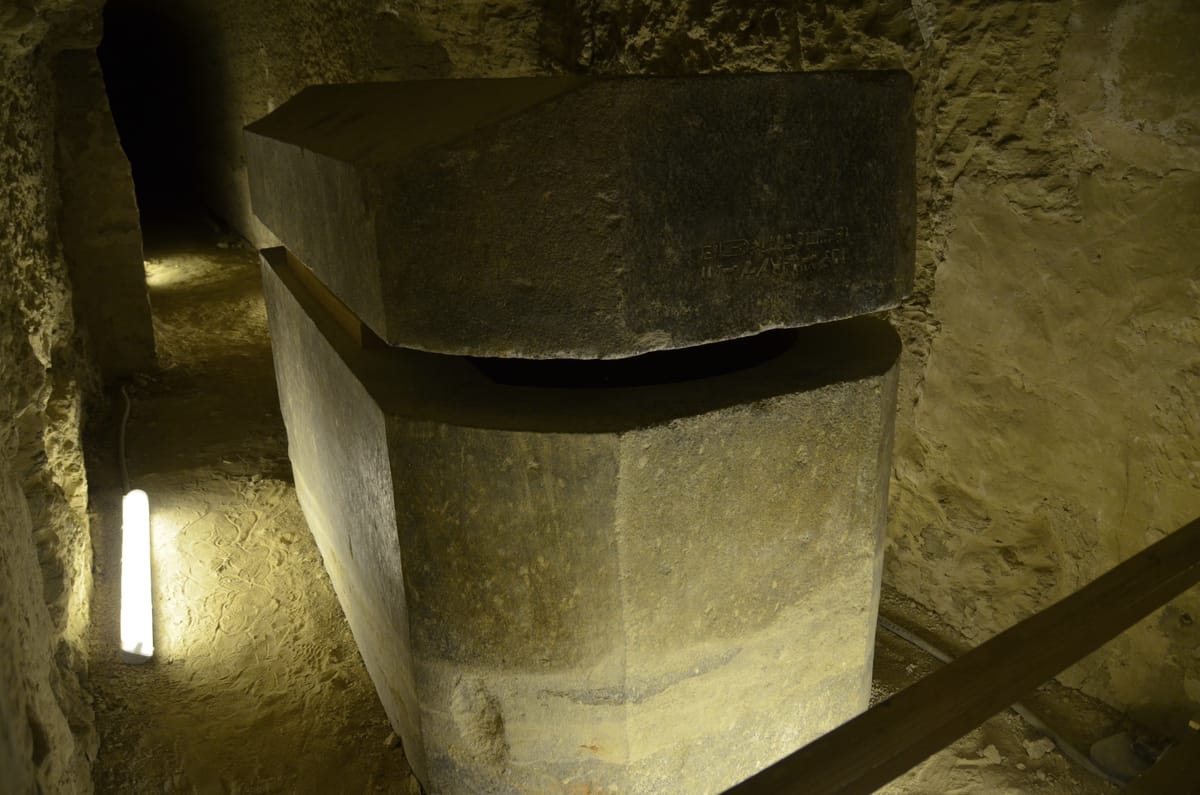
Overview
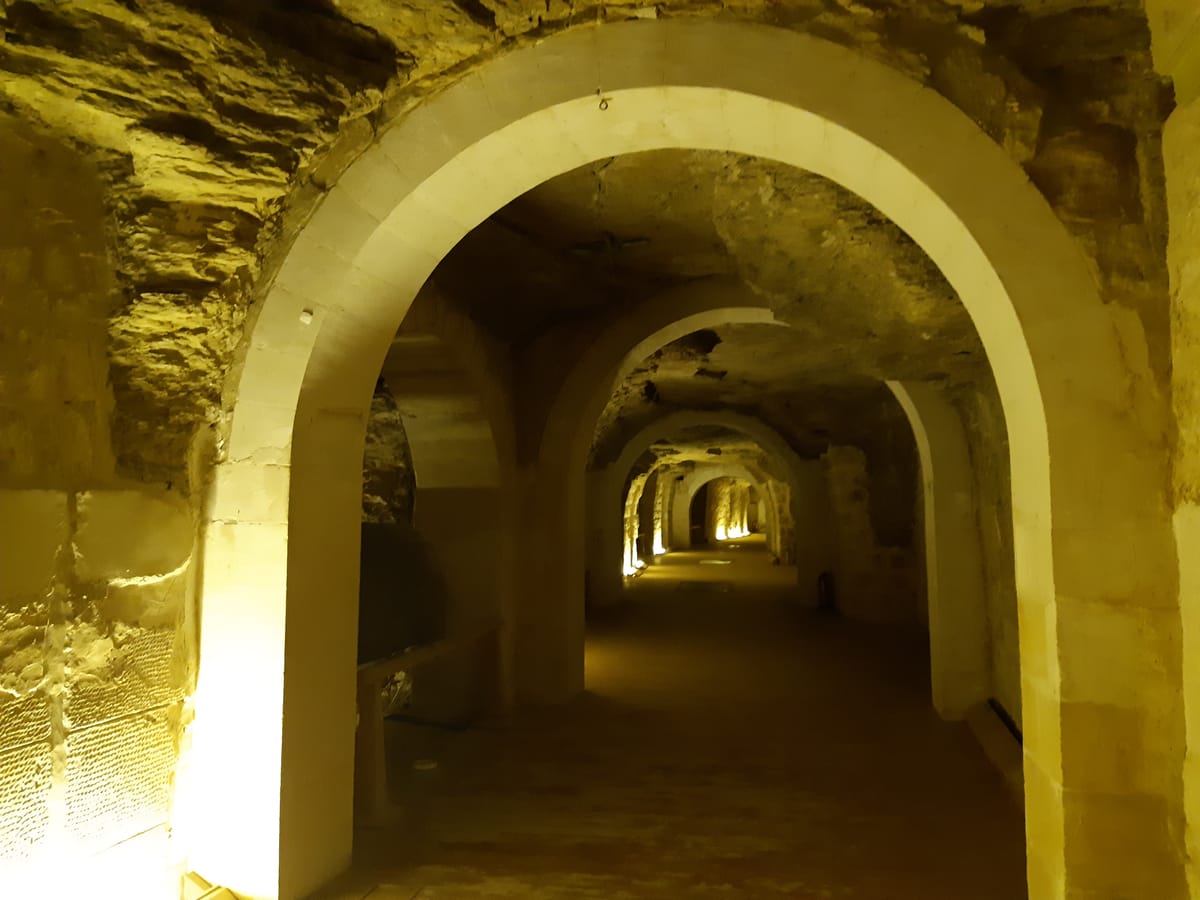
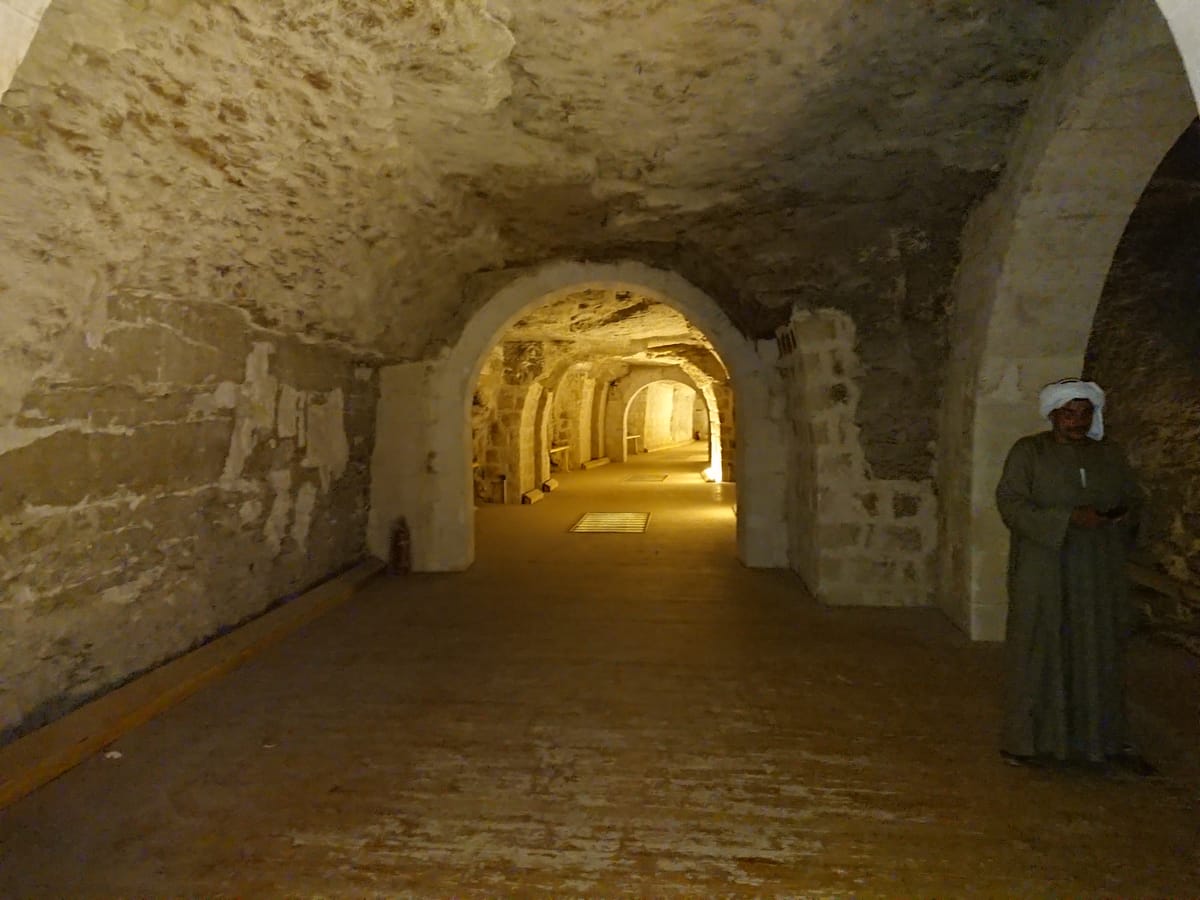
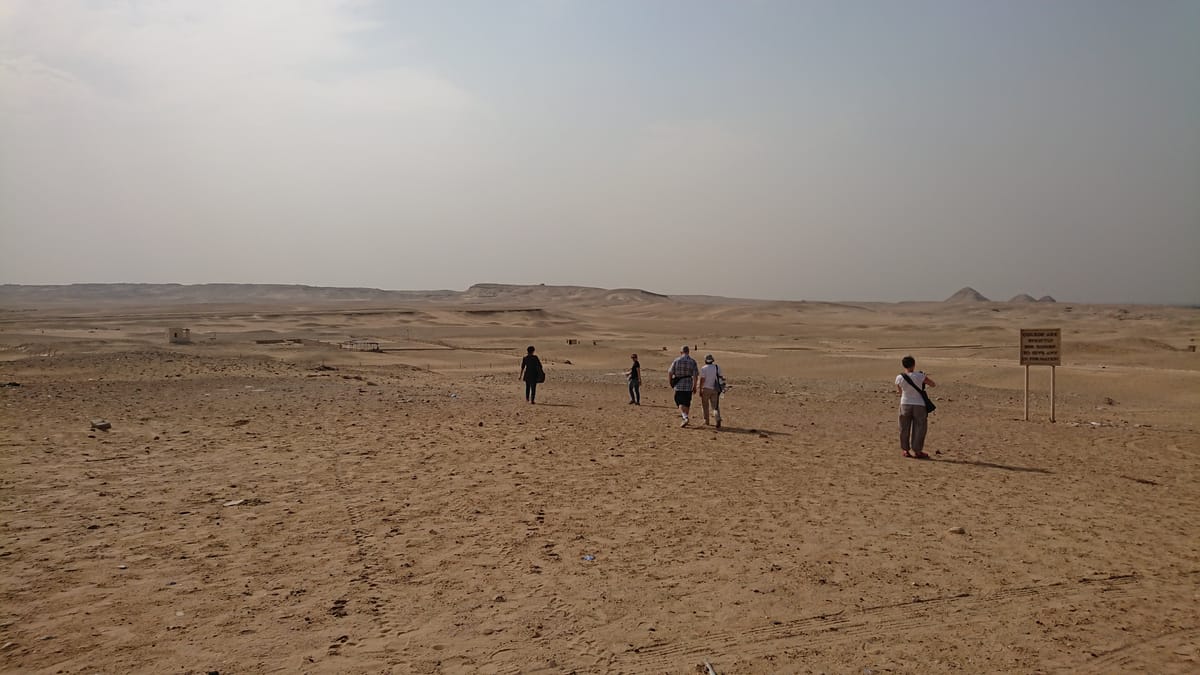
At Saqqara, the sprawling necropolis of ancient Memphis just south of Cairo, a set of rock-cut tunnels hides one of ancient Egypt’s strangest and most physically demanding burial traditions: the Serapeum, the underground catacomb where the sacred Apis bulls of Memphis were interred. Each Apis bull was worshipped in life as a living manifestation of the god Ptah and, after a ritually significant death, was mummified and buried as “Osiris-Apis” — a fused funerary identity that later gave rise to the Greco-Egyptian god Serapis, from whom the site takes its modern name. Rather than individual freestanding tombs, generations of bulls came to rest in a single, continuously extended gallery system cut into the desert bedrock, each animal sealed inside an enormous stone sarcophagus set into its own side chamber. The Serapeum was used across an extraordinary span of time, from the New Kingdom (starting around the 14th century BCE) through the Ptolemaic period, before being abandoned near the start of Roman rule in Egypt. It lay buried and forgotten under drifting sand for centuries until French Egyptologist Auguste Mariette rediscovered it in 1851, guided to the site by the tip of a single sphinx head protruding from the dunes — a find that made his career and helped launch the modern Egyptian Antiquities Service.
The Structure
The Apis cult itself was ancient, with roots that Egyptian tradition traced back to the earliest dynasties; a bull chosen as the living Apis had to bear a specific set of markings — a white triangle on its forehead, a vulture-shaped patch on its back, a scarab-shaped mark under its tongue, among others — and was kept, venerated, and consulted as an oracle at Memphis during its lifetime. On its death it was mummified with the same elaborate ritual care given to royalty, and interred at Saqqara. The earliest known Apis burial at the site dates to the reign of Amenhotep III in the 18th Dynasty (New Kingdom), and burials continued, with individual tomb chapels at first, until the reign of Ramesses II, whose son, the prince and high priest Khaemweset, is credited with reorganizing Apis burials into a connected set of underground galleries — the section now called the “Lesser Vaults.” Centuries later, starting under the 26th Dynasty pharaoh Psamtik I (664–610 BCE) and continuing through the Ptolemaic dynasty, a second, larger gallery — the “Greater Vaults” — was cut and extended to a length of roughly 350 meters, eventually housing the majority of the surviving sarcophagi. In total, Mariette and later archaeologists documented around two dozen of these massive sarcophagi across both gallery systems, along with the tombs of more than sixty Apis bulls in all. Only a handful bear inscriptions naming the ruler under whom they were made — including Amasis II, the Persian king Cambyses II, and possibly Ptolemaic-era royalty — giving modern scholars fixed points to anchor the gallery’s otherwise long and gradually built chronology.
How Was It Built?
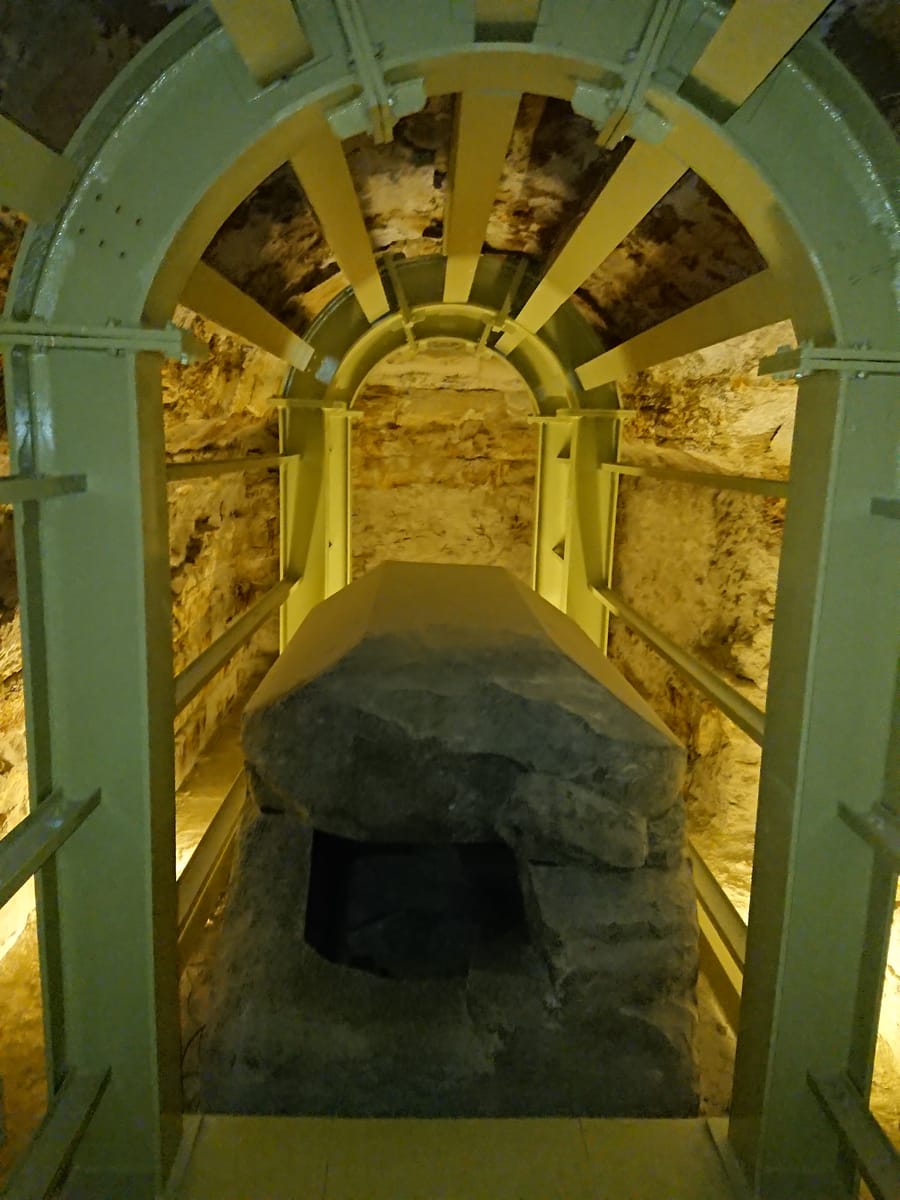
The defining physical feature of the Serapeum is its sarcophagi: rectangular boxes hollowed from single blocks of granite, diorite, or other very hard stone, with typical examples measuring around 3.85 meters long by 2.32 meters wide and high, topped by lids up to about a meter thick. Complete with their lids, the heaviest of these boxes are usually put at somewhere in the range of 60 to 80 tonnes of stone, with the hollowed box itself accounting for roughly 40 tonnes and its lid around half that. Producing one meant quarrying a rough block of hard igneous or metamorphic stone — Egypt’s principal source for granite was the quarries around Aswan, several hundred kilometers to the south — then dressing its exterior faces flat and hollowing a deep, regular interior cavity, all using the tools available to Bronze and early Iron Age Egyptian masons: copper and later bronze chisels and saws (with quartz-sand abrasive doing much of the actual cutting work, since copper alone cannot bite into granite), stone pounders and mauls of dolerite for battering out bulk stone, and drills and borers, likely tipped with stone or worked with abrasive slurry, for hollowing and smoothing interior surfaces. This is essentially the same toolkit and technique documented at Egyptian granite quarries and on other hard-stone monuments of the period, applied here at an unusually large and repeated scale. Getting a finished sarcophagus underground and into position was its own engineering problem. Mariette recorded physical evidence in the galleries themselves — worn grooves suggestive of rollers on the tunnel floors and the remains of wooden horizontal winches, each fitted with eight operating levers — and later reconstructions suggest chambers were temporarily packed with sand so a sarcophagus could be hauled in and settled at gallery-floor level, after which the sand was gradually excavated out from beneath it, lowering the massive box by degrees into its final position in the side niche. A Ptolemaic-era inscription tied to one burial records that transporting a single sarcophagus and its lid into its chamber took 28 working days, giving a rare, concrete sense of just how labor-intensive the final stage of each burial was.
The Mainstream View
Egyptologists treat the Serapeum’s origin, chronology, and general construction method as well established. The site fits comfortably into the broader, richly documented tradition of Egyptian hard-stone working seen at quarries, obelisks, and sarcophagi elsewhere in the country, and its gallery system was demonstrably built up gradually over more than a thousand years rather than in a single campaign, matching the political and religious history of Memphis across the New Kingdom, Late Period, and Ptolemaic era. Royal inscriptions on a subset of the sarcophagi, the identifiable tomb of Prince Khaemweset, and Mariette’s careful nineteenth-century excavation records all corroborate this timeline, and the copper-and-abrasive stoneworking techniques inferred for the sarcophagi match tool marks and unfinished examples documented at Egyptian quarry sites, including partly worked granite blocks left in place at Aswan. The physical traces Mariette found in the galleries — roller grooves and winch remains — are accepted as genuine evidence of the haulage system used to move the boxes underground, and the sand-packing-and-excavation method for lowering a sarcophagus into its niche is the leading, best-supported reconstruction of how the final, most delicate step of installation was achieved without cranes or pulleys of the kind used in later periods. None of this is seriously disputed: the Serapeum is understood as a large-scale, long-term expression of the Apis cult, executed with the stoneworking and labor-organization skills already well attested elsewhere in Egyptian civilization.
The Open Case
What remains genuinely unresolved is not who built the Serapeum or roughly why, but the precise, step-by-step choreography behind its hardest technical problems. The interior cavities of the sarcophagi are cut with notably flat, square faces inside extremely hard, abrasion-resistant stone — a level of finish that is plausible with sustained pounding, drilling, and abrasive grinding, but whose exact sequence of tools and stages, and how consistently Egyptian workshops achieved it across dozens of boxes and multiple centuries, is reconstructed from tool marks and comparative evidence rather than any surviving instructional text. The logistics of installation raise a related set of open questions: Mariette’s roller grooves, winches, and the sand-fill-and-excavation method explain the general mechanics of how a box could have been moved and lowered, but the finer details — how a 70-tonne block was safely guided through a passage only slightly wider than itself without shattering the surrounding rock or the sarcophagus itself, how many workers and how much time each stage genuinely required beyond the one 28-day figure recorded for a single Ptolemaic burial, and how consistent these methods were across thirteen centuries of intermittent use — remain matters of archaeological inference rather than settled fact. Renewed excavation of the long-inaccessible Lesser Vaults, underway since 2020, may still add real evidence to this picture. None of this uncertainty points to any technology beyond what New Kingdom and Late Period Egypt is independently known to have possessed; it is a genuine, still-open puzzle of ancient hard-stone craft and underground haulage, not a mystery in need of an exotic explanation.
Sources
- Wikipedia — Serapeum of Saqqara
- Wikipedia — Apis (deity)
- Wikipedia — Saqqara
- Wikipedia — Auguste Mariette
- Uppsala University (DiVA) — The Serapeum Project: New Kingdom Sacred Bull Burial Site (Newton)
- Egyptian Ministry of Tourism & Antiquities — Serapeum, Saqqara
- Louvre — Mummiform Sarcophagus Lid (Ânkhhep, Apis priest), Saqqara
- World History Encyclopedia — Apis (Sacred Bull of Memphis)
- Internet Archive — Auguste Mariette, Le Sérapéum de Memphis
- ancient-egypt
- saqqara
- memphis
- apis-bull
- necropolis
- granite
- rock-cut-gallery
- new-kingdom
- ptolemaic-period
- mariette
Gallery