Puma Punku
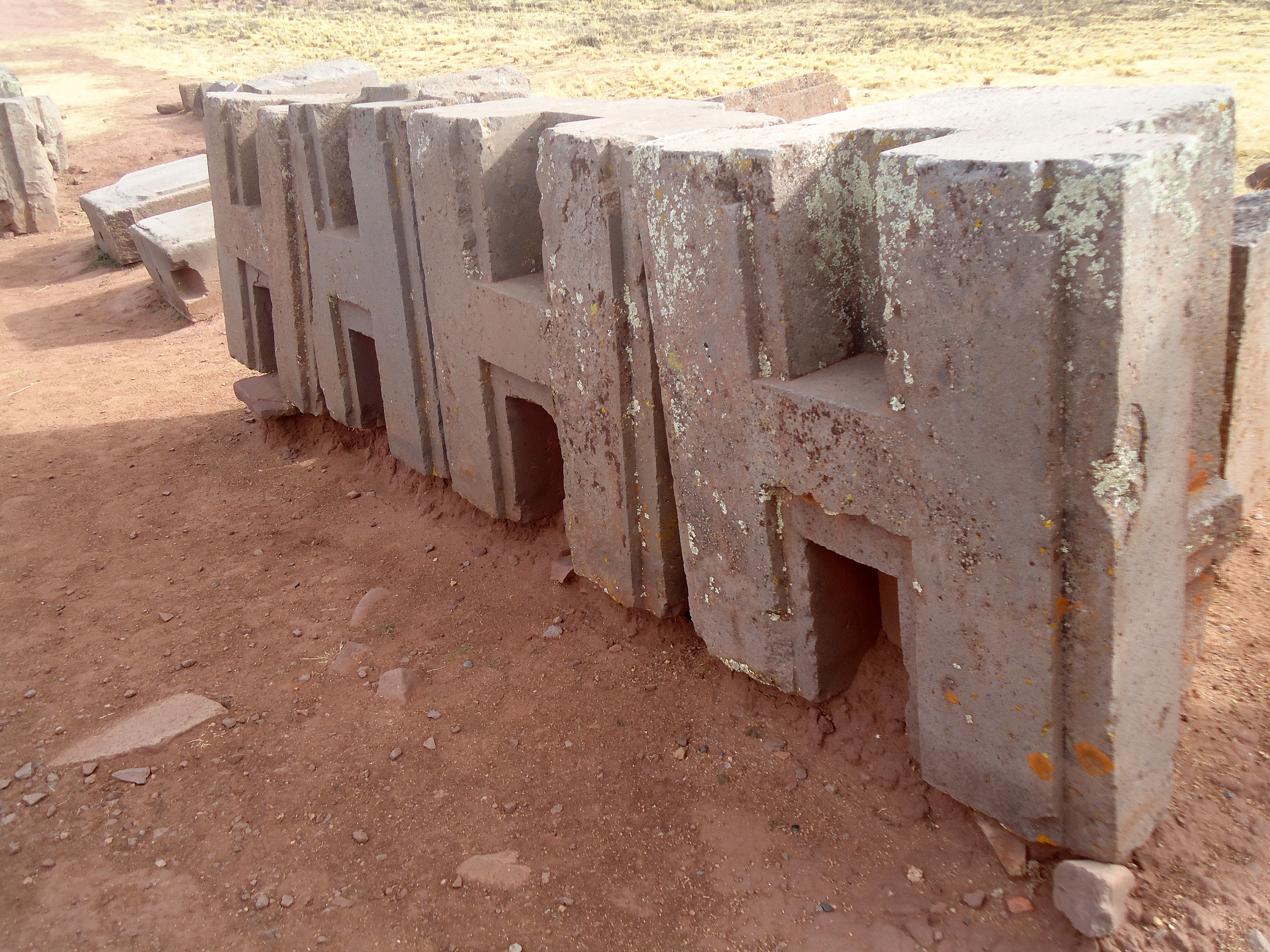
How did the Tiwanaku, working without iron tools, cut andesite and sandstone blocks into flat faces, crisp right angles, and repeating modular 'H' shapes precise enough to be interchangeable?
Why this rating?
- Construction difficulty
- 5/5
- Method uncertainty
- 4/5
- Capability gap
- 4/5
- Open questions
- 3/5
The Tiwanaku cut hard andesite to flat faces, true right angles, and interchangeable modular H-blocks using only hammerstones and abrasives, a genuinely difficult precision-stoneworking feat for the era's tools. Archaeologists have demonstrated the general technique experimentally and traced its Andean lineage, but the exact finishing toolkit was never recovered, leaving open how sub-millimeter tolerances on andesite were achieved and why the platform was left unfinished.
Overview
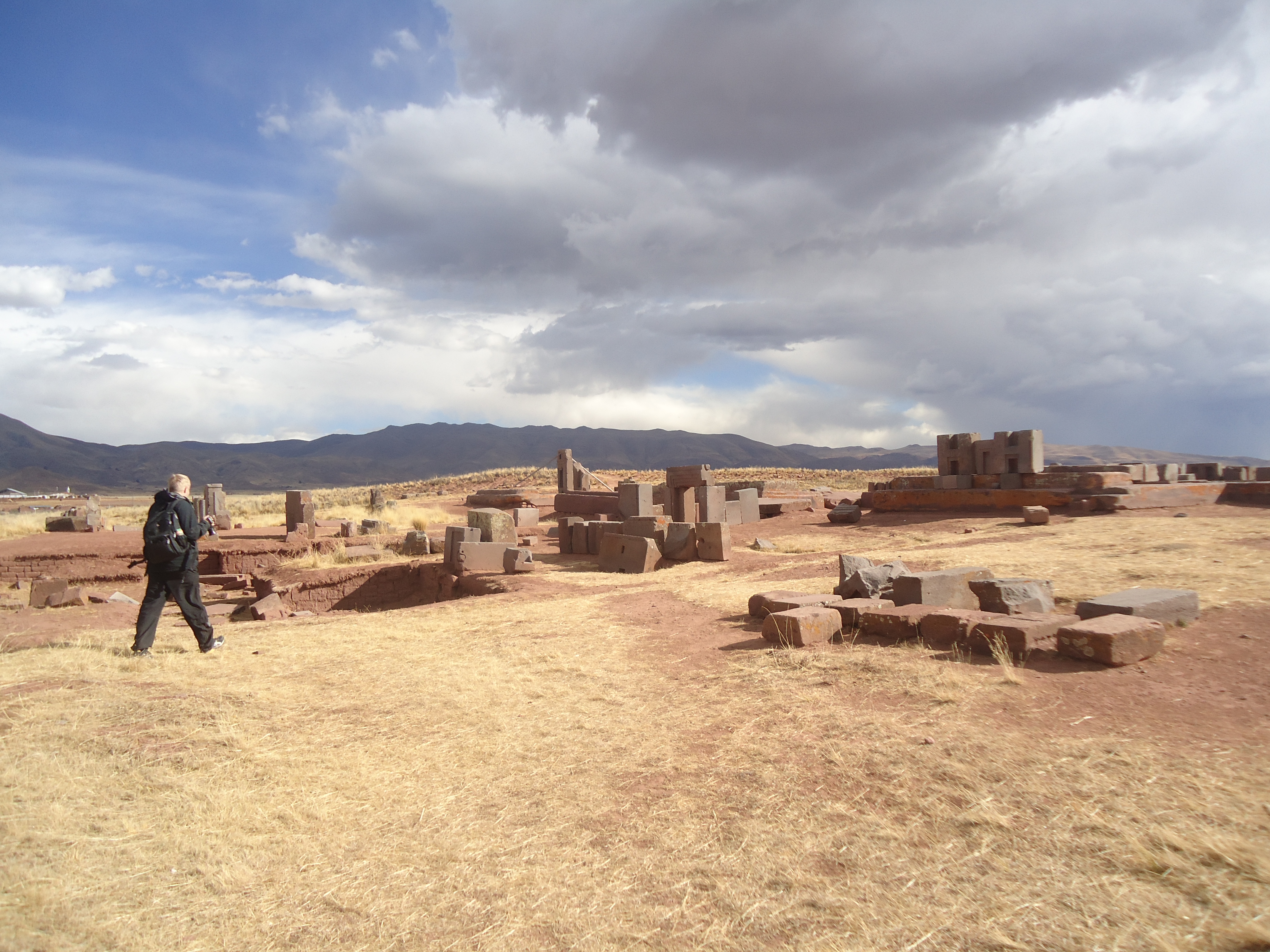
Puma Punku (“Gate of the Puma” in Aymara) is a ruined terraced platform mound that forms part of the great Tiwanaku archaeological complex, on Bolivia’s high altiplano a few kilometers from the shores of Lake Titicaca, at roughly 3,850 meters (12,630 feet) above sea level. It was built by the Tiwanaku (also spelled Tiahuanaco) culture, the major pre-Inca civilization of the south-central Andes, with construction beginning around 536–600 CE and continuing, in phases, for several centuries afterward. Today Puma Punku is mostly a field of scattered, broken stone blocks rather than a standing building — but those blocks are extraordinary: large slabs of andesite and red sandstone cut with flat faces, exact right angles, drilled holes, and neat internal channels, including a distinctive, repeating modular block shaped like the letter “H.” The precision of this stonework, combined with the site’s ruined and apparently unfinished state, has made Puma Punku one of the most discussed — and most misrepresented — archaeological sites in South America. It is inscribed, together with the rest of Tiwanaku, as a UNESCO World Heritage Site.
The Structure
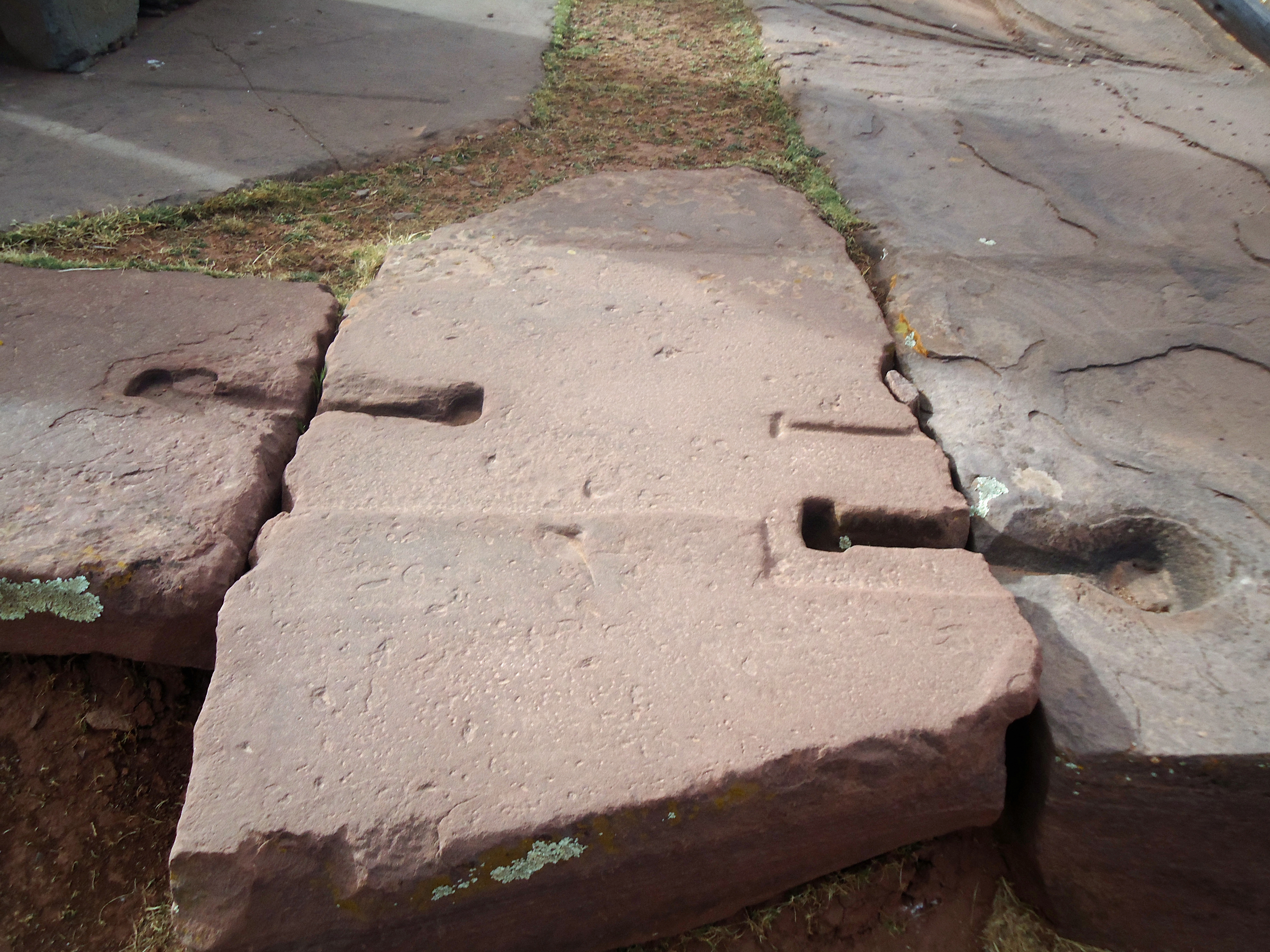
Puma Punku sits about a kilometer southwest of Tiwanaku’s main monumental core, and together the two form a single ceremonial and political center that, at its peak between roughly 700 and 1000 CE, anchored a city of an estimated 10,000 to 20,000 people and dominated the wider Titicaca basin. The platform itself is laid out in a T- or cross-shape, roughly 167 meters north-south by 117 meters east-west, built up from layers of clay, sand, and gravel faced with retaining walls of dressed stone, and including a sunken, T-shaped court. Excavation has covered only a small fraction — about 2 of the site’s 17 hectares — so much remains unexplored. Two materials dominate: red sandstone, used for large foundation and paving slabs (the single largest documented block weighs an estimated 131 metric tons), and gray-green andesite, a much harder volcanic stone, used for the finest carved and fitted elements, including monumental gateways of which only fragments survive. Some blocks were pinned together with I- and T-shaped metal cramps cast in place from a copper-arsenic-nickel bronze alloy, poured into carved sockets — a construction detail that itself required a working knowledge of metallurgy. Radiocarbon and other archaeological evidence indicate the platform was built and modified over at least three major phases between the 6th and 11th centuries CE, and that the Tiwanaku state itself collapsed by around 1000 CE, likely amid a prolonged regional drought; Puma Punku’s superstructure had by then deteriorated, and many scholars believe the complex was never fully finished. In the centuries since, the ruins suffered further from stone-robbing for colonial and modern construction, including for a nearby railway, as well as looting and amateur excavation, leaving the tumbled, puzzle-like field of blocks visible today.
How Was It Built?
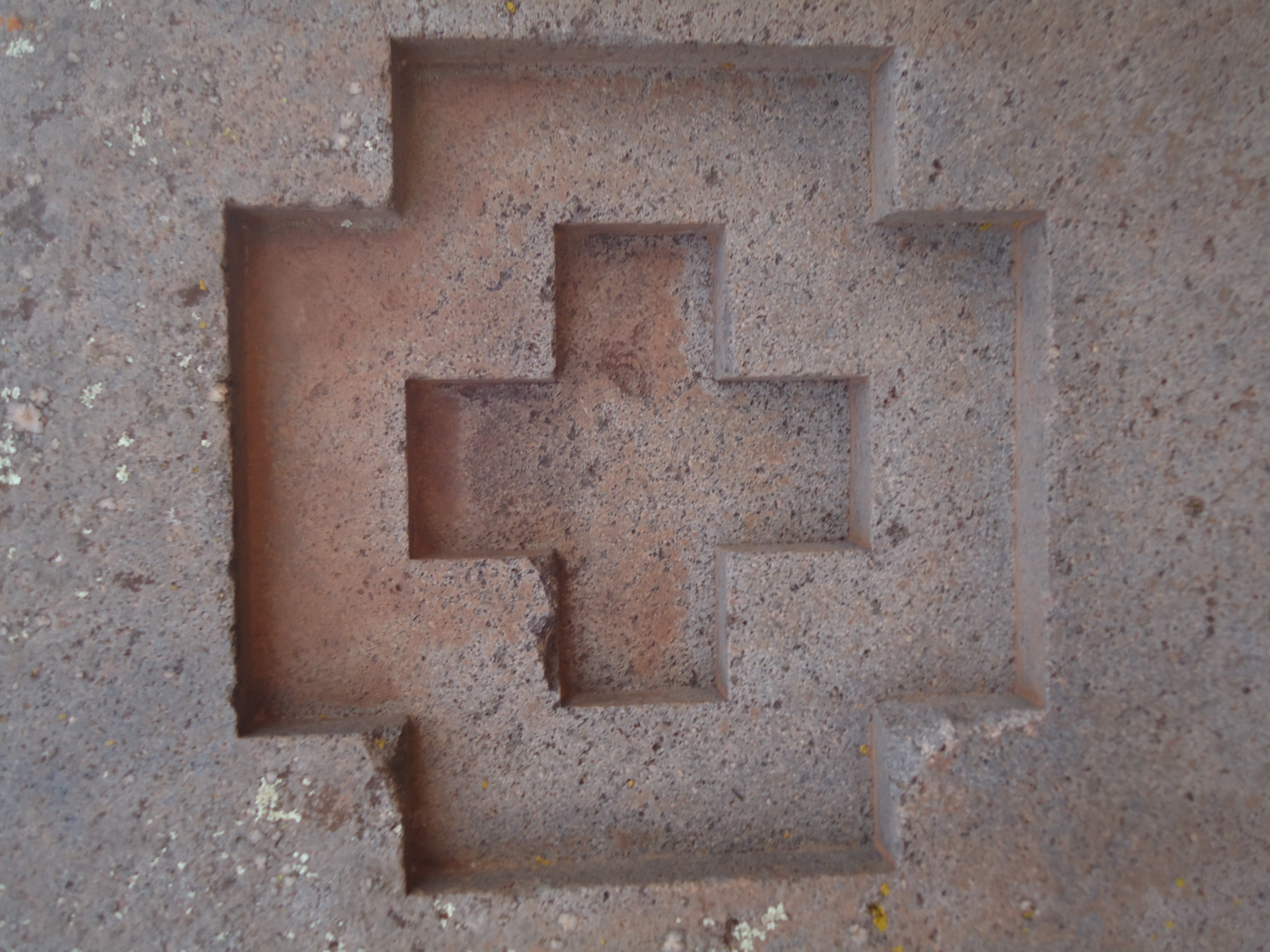
The stonework at Puma Punku is best known for a set of block types, especially the “H-blocks,” cut to a small number of standardized dimensions and interlocking, module-like forms — precise enough that some examples are close to interchangeable with one another. Faces are flat to within a few millimeters, corners meet at true right angles, and some blocks have drilled or channeled recesses whose function was structural (housing metal cramps) or decorative. Archaeologists agree the Tiwanaku lacked iron or steel tools; work was done with hammerstones of harder rock and, very plausibly, with additional abrasive tools of flint, obsidian, or other hard stone, followed by grinding and polishing with sand and water. Experimental work — for example by archaeologist Stella Nair, replicating comparable carving by hand — has shown that fine, precise stone-on-stone work of this kind, while extremely labor-intensive, is achievable with pre-metal tools over sustained hours of skilled effort. Getting the raw material to the site required its own major effort: the red sandstone was quarried roughly 10 kilometers away and hauled up a steep incline, while the harder andesite came from sources across Lake Titicaca on the Copacabana Peninsula, around 90 kilometers distant, implying transport by raft or boat as well as over land, most likely using ropes, sledges, log rollers, and ramps rather than any wheeled vehicle or draft animal capable of hauling such loads (llamas, the Andes’ principal pack animal, cannot pull heavy sledges). No quarry tools, sledges, or other direct physical evidence of the moving process have survived to document the operation step by step.
The Mainstream View
Mainstream archaeology attributes Puma Punku’s stonework to skilled Tiwanaku masons working within a well-established regional tradition of monumental construction, one with clear antecedents at earlier nearby sites such as Chiripa and Pukara that predate Tiwanaku by centuries — evidence, researchers argue, against any claim that this technology appeared from nowhere. Using 3D scanning and digital modeling, archaeologist Alexei Vranich and colleagues reassembled scattered blocks — including a 2018 project that 3D-printed scale models of 140 andesite pieces and 17 sandstone slabs — and showed that many of the H-blocks share a compact set of standardized dimensions, consistent with the use of templates or a repeated design formula that masons followed across separate blocks, rather than each stone being individually eyeballed. This combination — hammerstone-and-abrasive shaping, a practiced eye and hand refined over generations, standardized templates for repeated forms, cast metal cramps for fastening, and a large, organized workforce capable of quarrying and moving multi-ton stone over tens of kilometers — is considered sufficient by specialists to account for what survives at the site, without requiring any technology beyond what is independently documented for the Tiwanaku culture elsewhere.
The Open Case
What is genuinely still open is a matter of method and detail, not of who built Puma Punku. Vranich himself has noted that, aside from probable hammerstones, the specific finishing tools Tiwanaku masons used have not been recovered or conclusively identified — so archaeologists can describe plausible techniques and demonstrate some of them experimentally, but cannot yet point to a complete, physically documented toolkit. How, exactly, andesite — a stone significantly harder than the sandstone used elsewhere at the site — was worked to sub-millimeter tolerances, how templates or measurement standards were transmitted and enforced across a large workforce, and why the platform was seemingly abandoned before completion are all live questions in current research. Puma Punku’s dramatic, ruined, jigsaw-like appearance has also made it one of the most popular sites in “ancient astronaut” and lost-civilization media, with claims of impossible precision, alien tool marks, or a lost super-technology; archaeologists reject these claims outright, pointing to the direct developmental lineage from earlier Andean sites, the documented use of hammerstones and abrasives, and the absence of any tool marks, materials, or evidence inconsistent with pre-Columbian Andean technology. The credible open questions at Puma Punku are ones of engineering and craft — how far practiced skill, standardized templates, and organized labor can be pushed with stone-age tools — not questions of who, or what, was really behind them.
Sources
On screen
- The Ruins You Started In — Tomb Raider: Legend begins where Puma Punku stands — in the ruins of Tiwanaku, on a Bolivian plateau, with a stone puzzle to solve.
Gallery