Ingapirca
Why did the Inca, whose sun temples were everywhere else rectangular or circular, build the only known elliptical Sun Temple in their entire empire here — wrapping mortar-free masonry around a natural Cañari rock and aligning it to the solstices — on ground they had just taken from a people they chose not to erase?
Why this rating?
- Construction difficulty
- 3/5
- Method uncertainty
- 2/5
- Capability gap
- 2/5
- Open questions
- 3/5
The mortarless masonry is exquisite but uses modest, well-understood Inca ashlar techniques rather than the multi-tonne megaliths seen at other sites, so the construction method itself is not deeply mysterious. What remains genuinely open is why the empire made this single temple elliptical — a form found nowhere else in the Inca world — and how much of that choice, its solar alignment, and its function was a deliberate accommodation of Cañari belief rather than pure Inca design.
Overview
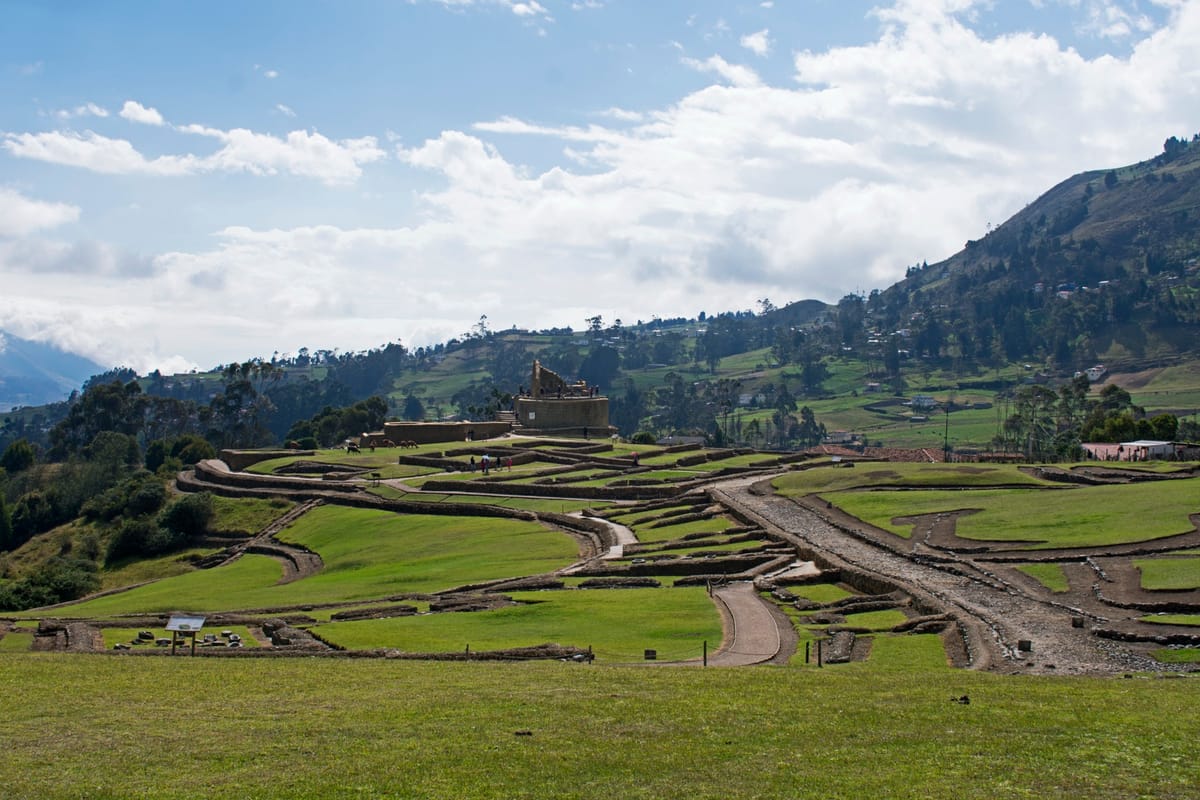
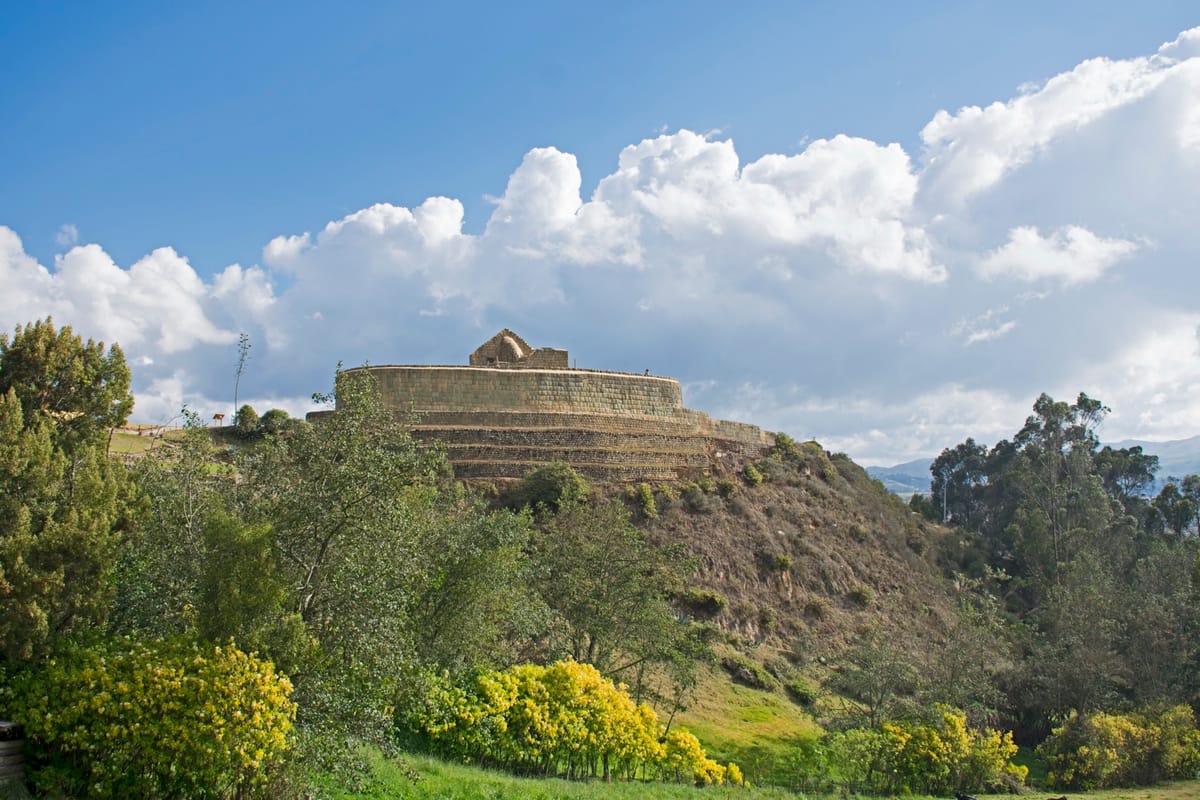
Ingapirca — Kichwa for “Inca wall” — is an Inca archaeological complex in the southern highlands of Ecuador, in Cañar Province, roughly 80 kilometers north of the city of Cuenca and standing at about 3,180 meters (some 10,400 feet) above sea level. It is the largest and best-preserved Inca site in Ecuador, and its centerpiece is one of the more genuinely unusual buildings the Inca ever raised: the Temple of the Sun, known locally as El Castillo, “the castle.” Where Inca sun temples elsewhere are rectangular or, occasionally, circular, this one is elliptical — an elongated oval of finely fitted, mortar-free stone built around a large natural rock outcrop at its core. The temple sits on the highest point of a ridge, its curved retaining wall enclosing a raised platform, and it was positioned so that on the solstices sunlight falls through the doorway of the chamber at its summit. What makes Ingapirca more than a single striking building is the story the wider site tells: the ground it stands on was long held by the Cañari people, who called the area Hatun Cañar, and the complex preserves evidence not of a conquered people erased but of two cultures occupying the same sacred ground. The first European scientific description of the site was made by the French geodesic explorer Charles-Marie de La Condamine, who visited in 1739 during his expedition to measure the shape of the Earth.
The Structure
The Cañari were an organized highland people who farmed, herded, wove, and worked metal, and who had made this hilltop a place of significance long before the Inca arrived. When the Inca Empire pushed north into what is now Ecuador in the second half of the 15th century — the conquest of the Cañari is traditionally credited to the emperor Túpac Yupanqui, with the great building phase attributed to his successor Huayna Capac — the newcomers did not raze the existing settlement. Instead they built alongside and above it, and the record on the ground reflects that overlay: Cañari structures and burials sit within the same complex as Inca walls, terraces, and the temple. The most striking piece of evidence is at a sector called Pilaloma, where excavations uncovered a collective Cañari tomb containing the remains of a high-status woman, sometimes described as a priestess, laid to rest with a number of accompanying individuals and grave goods that included spondylus shell — a prized material traded up and down the Andean world. Beyond the temple, the site spreads across the ridge as a working settlement and waystation: agricultural terraces, storehouses, residential and ceremonial foundations, ritual baths, and a carefully engineered underground aqueduct system that channeled water through the compound. Ingapirca lay on the Qhapaq Ñan, the great Inca road network linking Cusco with Quito, and it almost certainly functioned in part as a tambo — a state waystation for travelers, officials, and armies — as well as a religious and astronomical center. The Temple of the Sun itself has an elliptical footprint reported at about 37 meters long and 12 meters wide, with the dressed-stone retaining wall standing several meters high, all of it wrapped around the natural rock that anchors the structure.
How Was It Built?
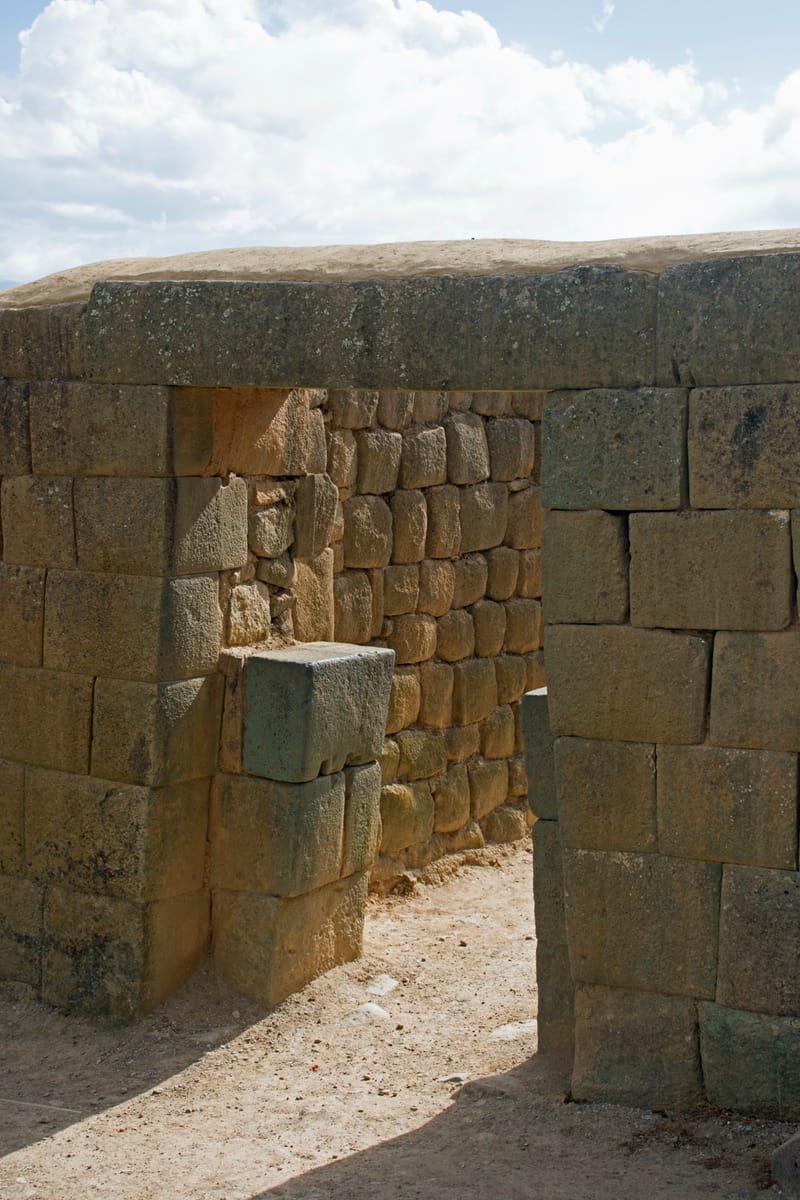
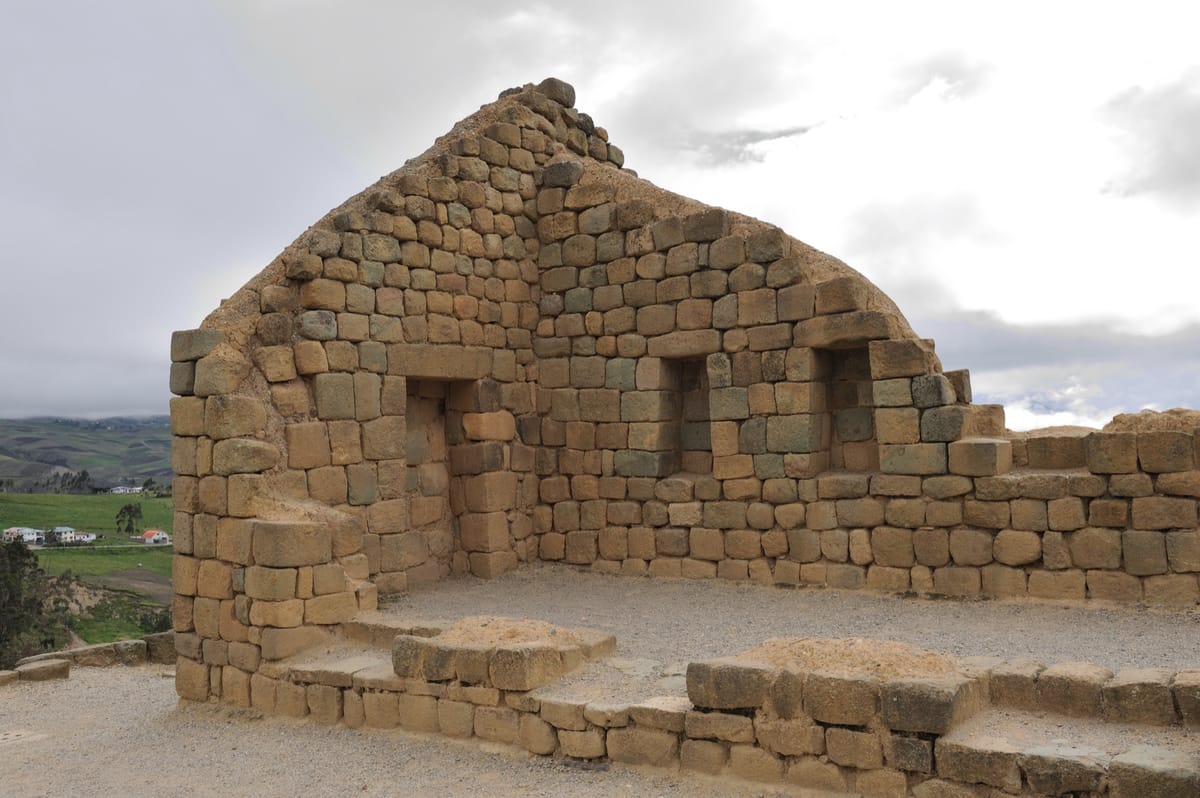
The temple is a showcase of classic Inca ashlar masonry adapted to an unusual curve. Its blocks are cut from a hard green-grey stone, generally identified as diorite, dressed into close-fitting shapes and laid without any mortar, each course stepped slightly inward so the wall gently battters as it rises. The joints are tight enough that a blade will not slip between them, and because the plan is elliptical rather than straight, the masons had to shape the outer faces of successive blocks to follow a continuously changing curve — a demanding refinement of the fitting technique the Inca used on their straight walls. As at other Inca sites, the work was done without iron tools, mortar, draft animals, or the wheel: masons dressed the stone with harder hammerstones, pecking and grinding the faces down, and test-fit blocks repeatedly against their neighbors until the contact surfaces matched. The core of the temple is a natural rock left in place and incorporated into the building rather than quarried away, so the elliptical wall functions partly as a monumental frame for an existing feature of the landscape. The chamber at the top of the platform was set out so that its doorway aligns with the sun at key moments of the year, which required the builders to combine their masonry with deliberate astronomical siting. The whole complex, from the terraces to the aqueduct that supplied it with water, reflects the same coordinated state building program — mobilized labor, careful surveying, and standardized stonecraft — that the Inca deployed across their empire.
The Mainstream View
Archaeologists regard Ingapirca as a well-understood example of Inca imperial construction grafted onto, and partly fused with, a pre-existing Cañari center. The masonry methods are not mysterious: the same peck-and-fit stoneworking, mortar-free coursing, and trapezoidal doorways appear across the Inca world, and the blocks at Ingapirca are modest in size compared with the multi-tonne megaliths at sites like Ollantaytambo or Sacsayhuamán, so the physical feat here is one of precision and finish rather than of moving colossal weights. The astronomical alignment fits a broad and well-documented Inca concern with solar observation tied to the agricultural and ritual calendar — tracking solstices and equinoxes to fix the timing of the farming year and major festivals such as Inti Raymi. The prevailing interpretation of the site’s most distinctive feature, its elliptical plan, is cultural rather than technical: scholars read it as a blend of Inca and Cañari traditions, a compromise between Inca solar religion and Cañari forms and beliefs, expressed by wrapping an Inca sun temple around a rock the Cañari already venerated. This reading is reinforced by the archaeology of coexistence at the site — the Cañari tomb at Pilaloma, the interleaving of the two peoples’ structures — and by the historically attested Inca policy of co-opting rather than obliterating the local elites and sacred places of the peoples they absorbed. In short, the mainstream view holds that Ingapirca was built by known means, for known purposes, by an empire that deliberately built its power on top of, and in dialogue with, the culture it had conquered.
The Open Case
What lingers at Ingapirca is not how the stones were cut but why this temple, alone in the entire Inca Empire, was made elliptical. The Inca built sun temples across an enormous territory, overwhelmingly to rectangular and circular plans; the oval at Ingapirca has no known parallel among them, and the cultural-compromise explanation, though widely accepted and well-supported, remains an interpretation rather than a documented decision. No Inca record tells us in their own words why the form was chosen here, how the design was negotiated with the Cañari, or exactly how the natural rock at the core was understood by either people. The precise astronomical program is likewise still being read from the stones: the solstice alignment through the summit doorway is clear enough, but how complete an observatory or calendar the temple was meant to be — how many alignments were intended, and how they served ritual versus practical timekeeping — is not fully settled. Even the building’s primary purpose has been argued over the centuries, variously described as temple, fortress, observatory, and waystation, and it likely served several roles at once. Ingapirca invites the same question its elliptical wall poses in stone: was this simply an empire skilled enough to bend its own strict architecture into a new shape for local reasons we can only partly reconstruct, or is there more embedded in that singular curve than the surviving evidence can yet tell us? The site does not resolve the question so much as preserve it — a mortar-free oval wrapped around a Cañari rock, aligned to the sun, standing as the one place the Inca chose to build this way.
Sources
Gallery