Göbekli Tepe
How did hunter-gatherers with no metal tools, pottery, or agriculture organize the labor to quarry, move, and raise multi-ton carved pillars, and why?
Why this rating?
- Construction difficulty
- 4/5
- Method uncertainty
- 3/5
- Capability gap
- 5/5
- Open questions
- 5/5
Mobile hunter-gatherers with no metal tools, pottery, agriculture, or the wheel quarried and raised 10-16 ton pillars using reconstructible methods (levering, ropes, sledges), but doing so implies large-scale social organization unattested anywhere else among hunter-gatherers this early, and the meaning of the carvings, the purpose of the periodic burials, and what drew people back to the hill for 1,500 years remain actively debated with only a small fraction of the site excavated.
Overview
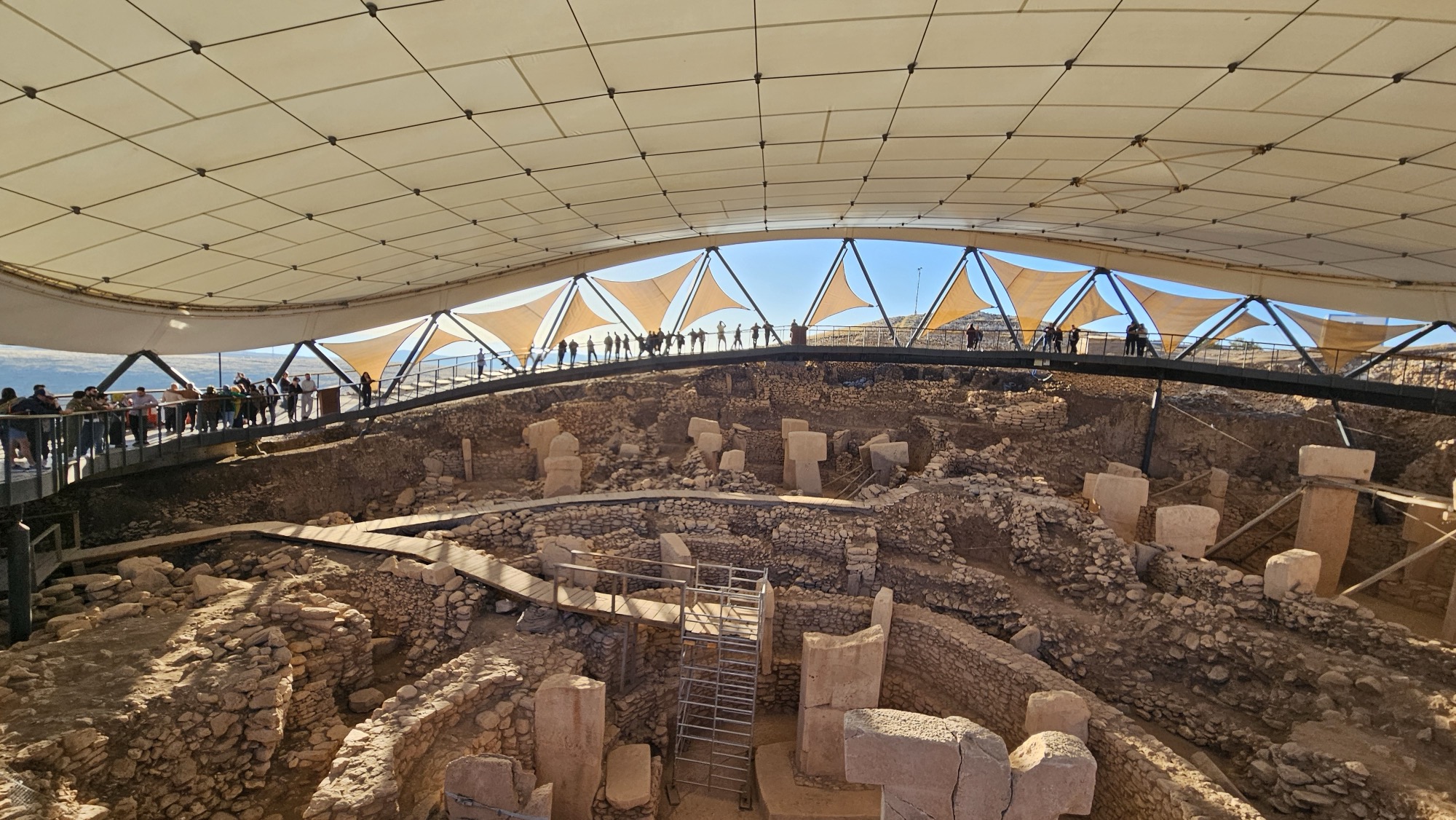
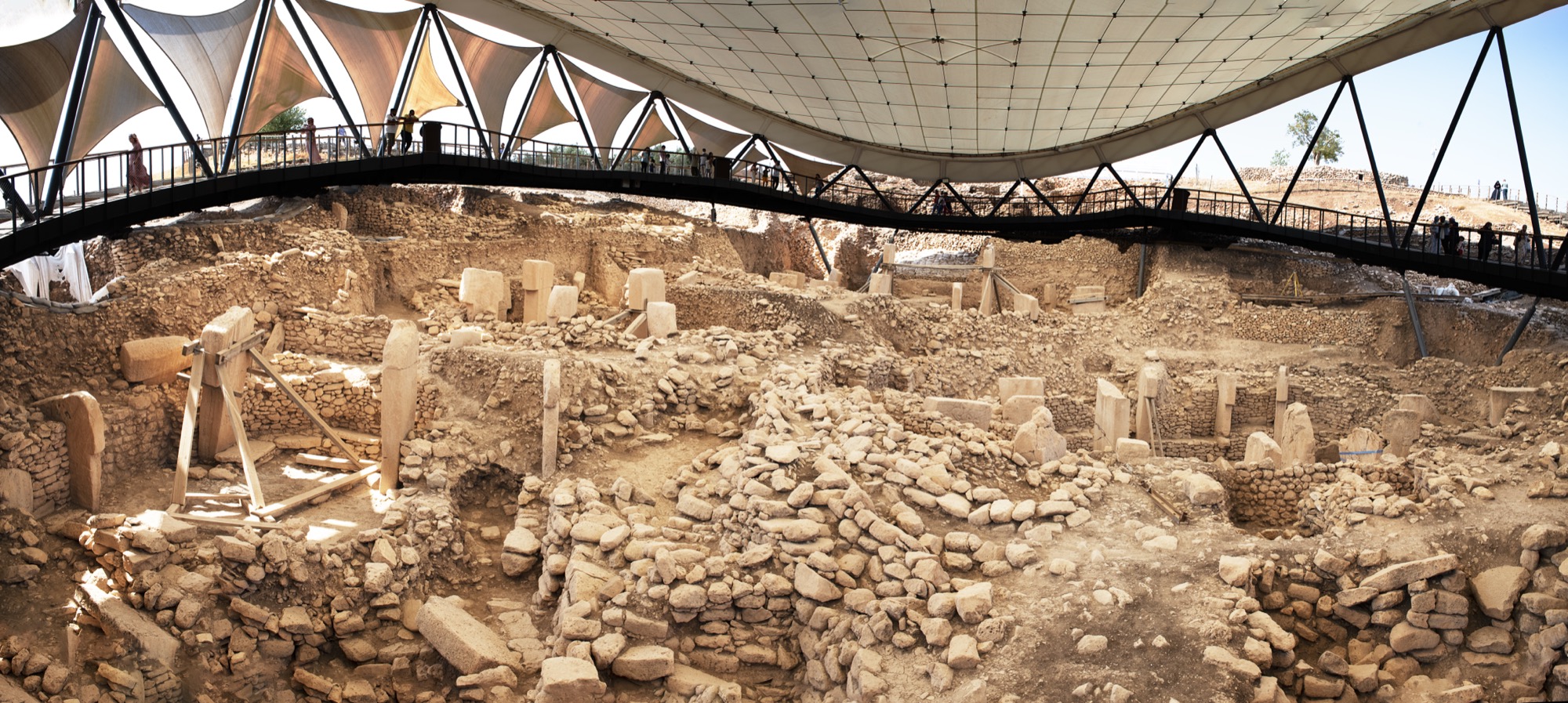
Göbekli Tepe (“Potbelly Hill” in Turkish) is a hilltop archaeological site in Şanlıurfa Province, southeastern Turkey, near the modern border with Syria. It consists of a series of large circular and oval enclosures ringed by massive, T-shaped limestone pillars, many carved with reliefs of animals and abstract symbols. Excavated from 1995 onward under German archaeologist Klaus Schmidt, and continued by Istanbul University, the Şanlıurfa Museum, and the German Archaeological Institute after his death in 2014, the site has been dated to roughly 9600-8000 BCE — the Pre-Pottery Neolithic period. That makes its oldest structures more than 11,000 years old: built some six thousand years before Stonehenge and seven thousand years before the Great Pyramid of Giza, by people who, as far as the evidence shows, had no metallurgy, no pottery, no wheel, and no domesticated cereal agriculture. Göbekli Tepe is widely regarded as one of the oldest known examples of monumental architecture built by human beings, and it was inscribed as a UNESCO World Heritage Site in 2018.
The Structure
The site sits atop a limestone ridge and forms an artificial mound roughly 15 meters high and covering about 8 hectares — built up over centuries as older enclosures were deliberately backfilled and new ones raised on top of them. Geophysical surveys and excavation, which by the 2020s had opened only a small fraction of the site, have identified around twenty circular enclosures, of which a handful (labeled Enclosures A through D, among others) have been fully excavated. These enclosures range from about 10 to 30 meters across and are defined by rings of T-shaped pillars set into low stone-and-clay walls with interior benches, usually with two larger pillars standing free-standing at the center.
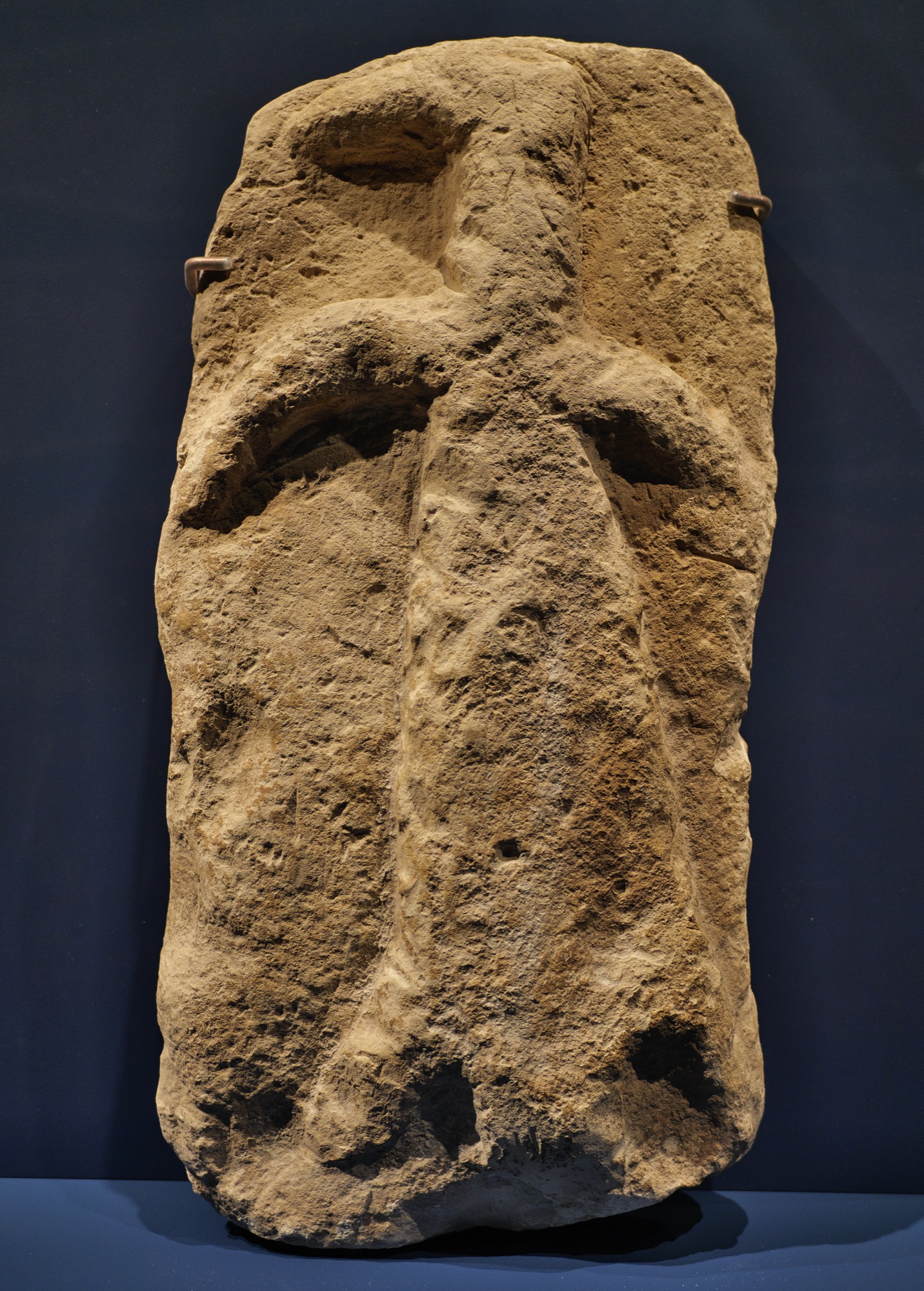
The pillars are the site’s defining feature. Cut from local limestone, most stand a few meters tall, while the largest central pillars reach roughly 5.5 meters and weigh between 10 and 16 tons. The T-shape itself appears to be a stylized human figure: several pillars carry carved arms, hands, and belts running down the narrow “shaft,” with the horizontal capstone reading as a head. Others are covered in relief carvings of foxes, boars, snakes, scorpions, wild cattle, cranes, vultures, and other creatures, along with abstract H-shapes, crescents, and disc motifs. No residential architecture, hearths for daily living, or evidence of a resident farming population have been found at the earliest phases, which is part of why the earliest interpretation treated the enclosures as ritual or ceremonial in function rather than a village. Bones from wild gazelle, deer, aurochs, and birds — evidence of feasting rather than herding — were found in quantity around the pillars. Later phases of the site, however, show smaller rectangular buildings, more than 7,000 grinding stones, and water-management features, prompting recent scholarship to describe a more mixed picture in which ceremonial and everyday life overlapped rather than staying strictly separate.
How Was It Built?
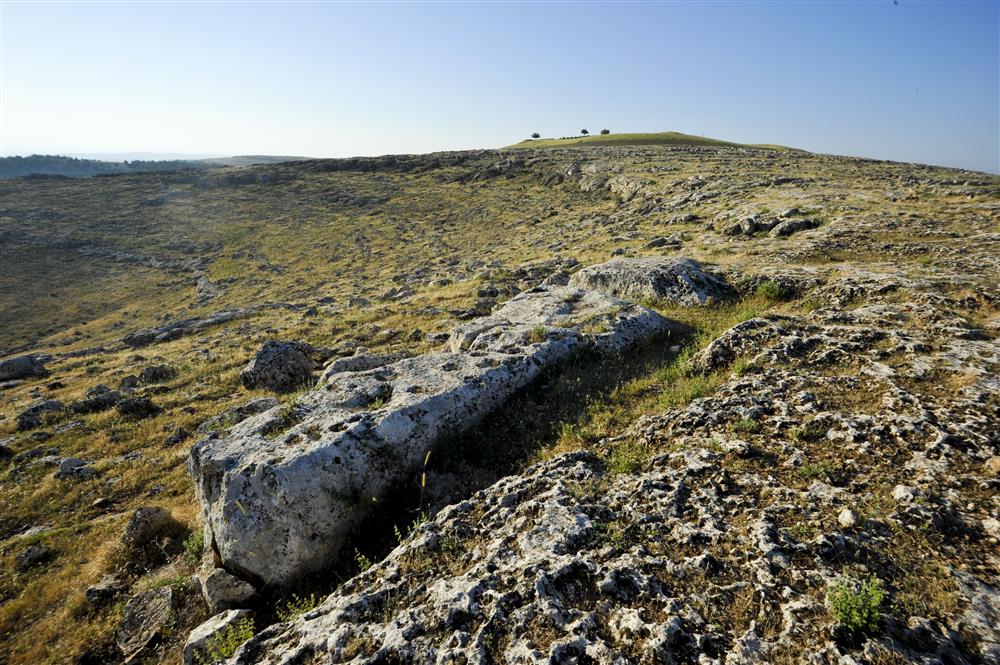
The pillars were quarried from the bedrock a short distance away — some quarry sites lie only about 100 meters from the enclosures — where unfinished pillars, one over 7 meters long, still lie in the stone, partly worked and abandoned. Archaeologists have reconstructed the method: the outline of a pillar was pecked into the limestone using hard hammerstones and flint tools, and the block was then gradually undercut and levered free along the bedding planes of the rock. Once separated, the pillar had to be dragged and maneuvered upright without draft animals, metal tools, or the wheel, using ropes, wooden sledges or rollers, earthen ramps, and coordinated human labor. Experimental archaeology and labor-cost modeling suggest that the smaller pillars could plausibly have been moved by groups as small as a few dozen people, while erecting a large central pillar and building an enclosure likely required organizing many more — Klaus Schmidt himself argued that assembling an enclosure demanded gathering hundreds of people at once, well beyond a single family band, for a sustained construction effort.
The Mainstream View
The scholarly consensus, built on three decades of excavation, radiocarbon dating, and faunal and botanical analysis, holds that Göbekli Tepe was constructed and used by mobile or semi-mobile hunter-gatherer communities of the Pre-Pottery Neolithic — before the emergence of settled farming villages in the region. Rather than a single “lost civilization,” the site is understood as the product of successive local groups returning to the same hilltop over roughly 1,500 years, periodically building, using, and then deliberately burying enclosures before raising new ones. Archaeologists see it as evidence that large-scale ritual gathering and monumental building preceded, rather than followed, the domestication of plants and animals in the Fertile Crescent — a finding that has reshaped thinking about the so-called Neolithic Revolution, suggesting that the need to feed and organize large gatherings of people at sites like this one may have helped drive, rather than simply result from, the shift to agriculture. The prevailing view treats the site as a religious or communal ceremonial center, though the “temple-only” framing Schmidt favored has been softened by later excavators, who point to domestic-looking structures and everyday tools in later layers as evidence of a more blended use over time.
The Open Case
What remains genuinely unresolved is not whether Göbekli Tepe is old or real — both are firmly established by radiocarbon dating and two generations of careful excavation — but how a non-agricultural, non-metal-using society mustered the social organization to pull it off, and exactly why. Moving and raising ten-to-sixteen-ton pillars without draft animals or the wheel is not physically impossible, but it requires sustained cooperative labor at a scale not otherwise attested among hunter-gatherers anywhere else in the world at this early date — implying forms of leadership, shared belief, or seasonal gathering that left no other trace in the archaeological record. The specific meaning of the animal carvings, whether the pillars represent ancestors, deities, or something else, why particular enclosures were periodically buried and rebuilt, and what exactly drew people back to this one hill for a millennium and a half are all still debated among the excavators themselves. Because only a small percentage of the site has been opened, and because comparable structures continue to turn up at nearby sites such as Karahan Tepe, the fuller picture is still being written. Whether Göbekli Tepe represents an isolated feat of unusually early social organization, or the visible tip of a much wider and still poorly understood Pre-Pottery Neolithic culture, is the open question that keeps archaeologists digging.
Sources
Gallery