Cliff Palace
How did Ancestral Puebloan builders raise the largest cliff dwelling in North America — roughly 150 rooms and 23 kivas of shaped sandstone and mortar — inside a sheer canyon alcove reached only by pecked hand-and-toe holds, and why, within a few generations of finishing it, did they abandon it entirely?
Why this rating?
- Construction difficulty
- 3/5
- Method uncertainty
- 2/5
- Capability gap
- 2/5
- Open questions
- 4/5
Fitting a roughly 150-room, 23-kiva town into a natural cliff alcove — working with stone tools, no wheels, no draft animals, and reaching the site only by hand-and-toe holds pecked into a sheer rock face — was demanding, skilled work, but the sandstone-and-mortar masonry itself is well understood and closely dated by tree rings. The masonry methods are not a puzzle. What genuinely lingers is why these communities left the mesa tops to build in the cliffs at all in the 1200s, exactly how the site functioned socially, and why, within a few generations of completing it, they abandoned Cliff Palace and the whole Mesa Verde region and migrated south.
Overview
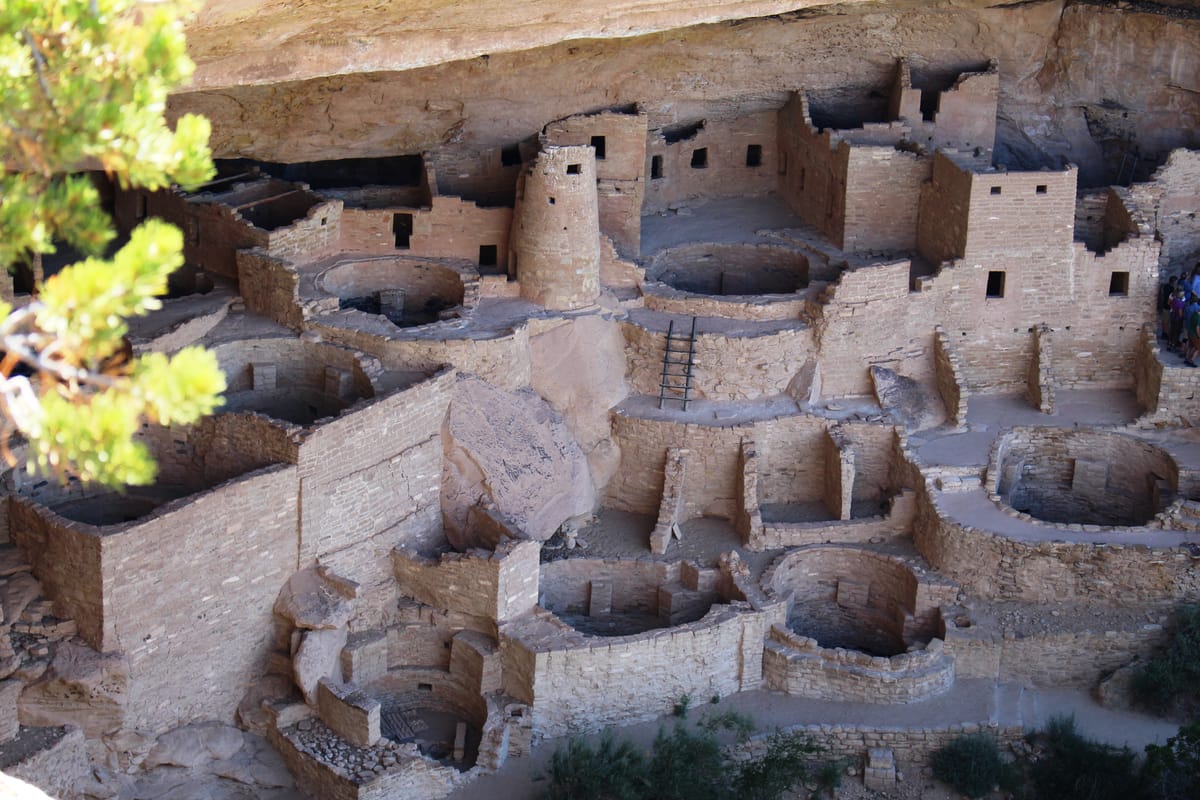
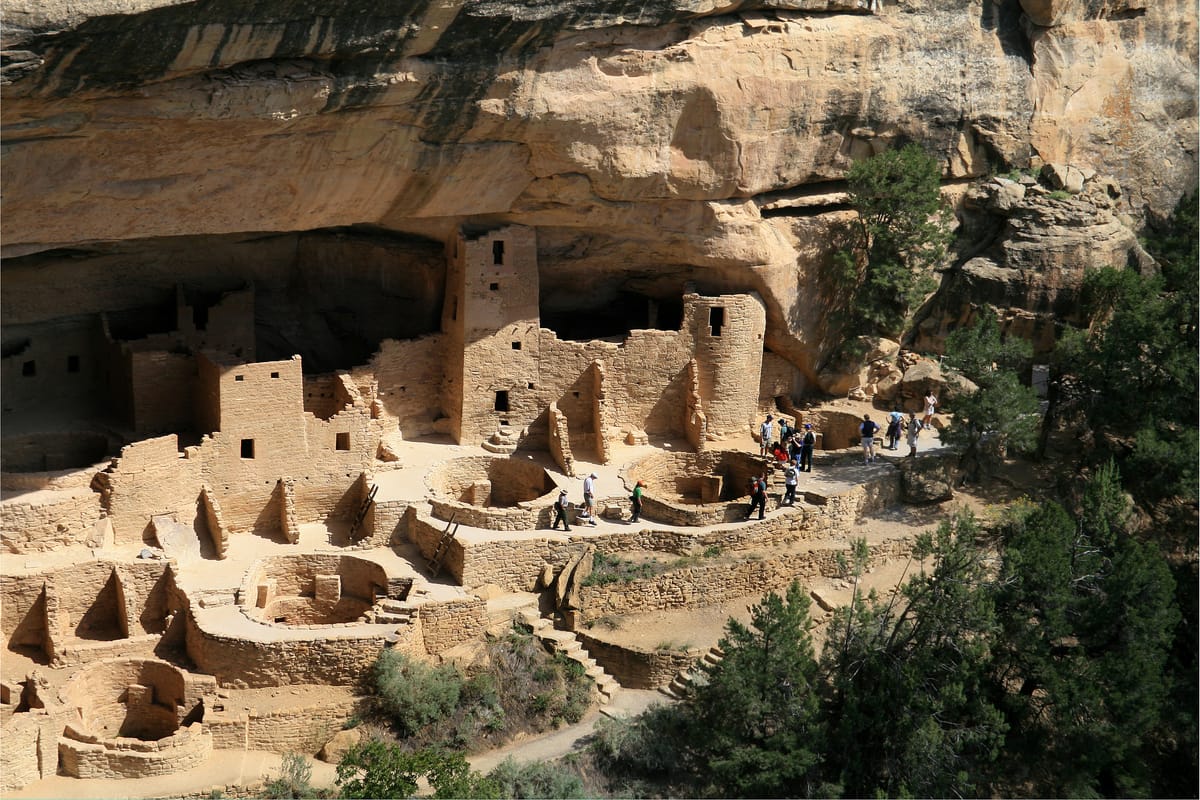
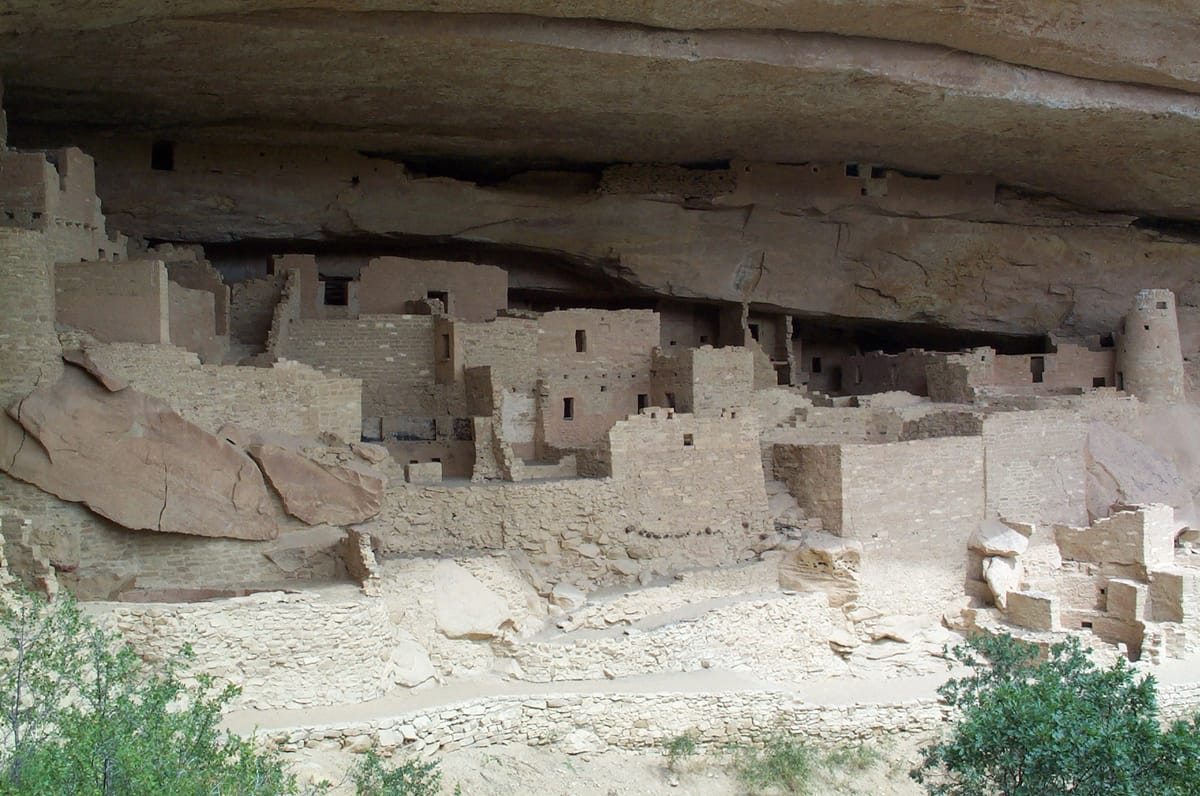
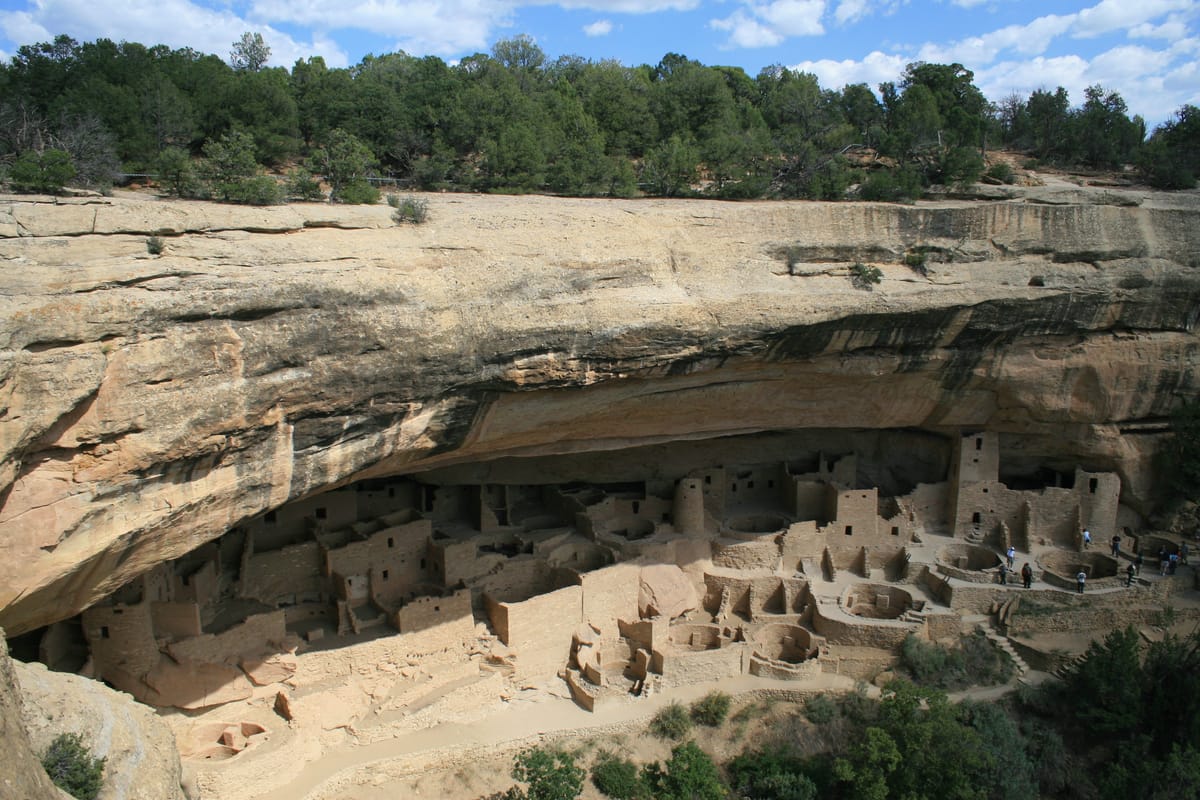
Cliff Palace is the largest cliff dwelling in North America — a compact stone town of roughly 150 rooms and 23 circular kivas that Ancestral Puebloan builders fitted into a natural sandstone alcove high in a canyon wall at Mesa Verde, in southwestern Colorado. Most of it was raised in a concentrated burst of building between about 1190 and 1260 CE, with tree-ring dates showing construction and remodeling continuing across that span. Its builders were the Indigenous ancestors of many of today’s Pueblo nations — the Hopi, the Zuni, and the Rio Grande Pueblos among them — and they worked entirely with stone and wooden tools: no metal, no wheeled vehicles, and no draft animals. The whole settlement sits under a single great arch of overhanging rock, sheltered from rain and snow, and in its day was reached not by any road or stair but by ladders and by shallow hand-and-toe holds pecked directly into the cliff face. Today Cliff Palace is the centerpiece of Mesa Verde National Park, part of a UNESCO World Heritage Site inscribed in 1978. It is a story of sophisticated Indigenous planning, masonry, and adaptation to a vertical landscape — not an unexplained anomaly — even as real questions remain about why its people moved into the cliffs, how the town was organized, and why they left it within roughly a century of building it.
The Structure
Cliff Palace occupies a broad, arching alcove eroded into the Cliff House sandstone that forms the canyon walls of Mesa Verde — a natural cavity opened over vast spans of time as water seeping through the porous rock loosened and spalled it away. Into that sheltered pocket the builders packed roughly 150 rooms on multiple levels: living quarters, storage rooms and granaries, and open work spaces, many of them small — typical living rooms run only about six by eight feet with low ceilings. Woven among the room blocks are 23 kivas: round, sunken, stone-lined chambers, entered from the roof, that served as gathering and ceremonial spaces and remain central to Pueblo life today. The settlement rises in places into square and round towers, one of them standing several stories tall with internal floors, and the two southernmost kivas are linked by an underground tunnel — a detail that has invited speculation about ritual staging. Population estimates put roughly 100 people living here, a striking figure given that Cliff Palace is unusually large: most of the more than 600 cliff dwellings scattered through Mesa Verde contain only a handful of rooms. Its relatively high ratio of kivas to living rooms has led archaeologists to read Cliff Palace less as an ordinary village and more as a social, administrative, and ceremonial hub for the surrounding community. The site went unrecorded by outsiders until December 1888, when local ranchers Richard Wetherill and Charlie Mason came upon it while searching for stray cattle on the mesa above; two decades of unregulated visiting and artifact-collecting followed before the archaeologist Jesse Walter Fewkes excavated and stabilized the dwelling in 1909, after Mesa Verde was made a national park in 1906.
How Was It Built?
The building method itself is well understood. Cliff Palace was raised from three simple, locally sourced materials: blocks of sandstone shaped by pecking and grinding with harder hammerstones, mortar made from a mix of soil, water, and ash, and wooden beams cut from junipers and pines on the mesa above. Builders laid the shaped stones in courses bound with the mud mortar, then jammed the gaps with small “chinking” stones for stability, and finished many interior walls with earthen plasters tinted pink, red, brown, yellow, or white — some of which still cling to the rooms. Roofs and upper floors were framed with the wooden beams, overlaid with smaller poles, brush, and packed earth. None of this required tools or techniques the Ancestral Puebloans did not already possess; the same masonry tradition built their earlier villages on the open mesa tops. What made Cliff Palace demanding was where they chose to build it. Every stone, every roof beam, every basket of mortar and jar of water had to be carried into an alcove partway up a sheer canyon wall, and daily life meant moving between the dwelling below and the farm fields on the mesa above. The Ancestral Puebloans solved this the way they solved access all over Mesa Verde: with wooden ladders and with rows of shallow finger- and toe-holds painstakingly pecked into the bare rock, hand-cut ledges and foot-holes that turned a vertical cliff into a usable route. Some of those pecked holds survive in the sandstone and can still be traced today — the literal handholds of a community that chose, for a few generations, to live on the face of a cliff.
The Mainstream View
Archaeologists agree, without serious dispute, that Cliff Palace was designed, built, and lived in by Ancestral Puebloan people, and that it is the product of an established, well-documented building tradition rather than any lost or borrowed technology. Tree-ring dating — the same dendrochronological method pioneered in the American Southwest — ties the beams in its walls to specific decades, showing that the Mesa Verde communities lived for centuries in dispersed pit houses and mesa-top pueblos and only moved down into the cliff alcoves during roughly the last century of their time in the region, in the 1200s. Why they did so is debated but reasonably framed: the alcoves offered natural shelter, defensible positions, cooler summers and warmer winters, and proximity to seep springs, all while keeping the mesa-top fields close at hand. The move into the cliffs, in other words, looks like a rational response to a changing world rather than a mystery. That world then turned against them. Beginning in 1276, a prolonged drought — sometimes called the “Great Drought” — settled over the Four Corners for more than two decades, and combined with soil depletion, dwindling resources, and likely social strain to make the region untenable. By around 1300 CE the Ancestral Puebloans had left Mesa Verde entirely, migrating south into what is now New Mexico and Arizona, where their descendants live in the Pueblo communities of today. Cliff Palace was not destroyed or lost; it was deliberately left behind.
The Open Case
What still draws real debate at Cliff Palace is less the “how” than the “why.” The masonry is plain enough, but the human decisions around it are not. Why, after centuries of living comfortably on the open mesa tops, did these communities move into the labor-intensive, awkward, vertically stacked alcoves in the 1200s — was the driver defense against rivals, climate, water, ritual, social change, or some braid of all of them? How, exactly, did a 150-room town with an unusually high concentration of kivas function socially: as an ordinary residence for a hundred people, as a ceremonial and administrative center serving a wider scattered population, or as something that shifted over its short life? The two tunnel-linked kivas hint at ceremony we cannot fully reconstruct. And the deepest question is the abandonment: drought is firmly established as a major driver, but researchers continue to weigh how far resource depletion, warfare, and social or religious realignment compounded the climate pressure to push an entire region’s population to walk away — within only a few generations of raising its most ambitious cliff dwelling — and never return. None of this points toward outside intervention or vanished technology. It is the ordinary, unresolved texture of archaeology at a place whose builders left behind stone, timber, and pecked handholds in the rock, but no written account of their own reasons — and whose living descendants still regard Mesa Verde as an ancestral home.
Sources
Connected findings
- Where No Building Should Hold — In a Colorado canyon, a whole town was fitted into a hole in a cliff. On a Shanxi rock face, a temple was hung off beams hammered into bare stone. Seven centuries and half a world apart, two peoples committed their architecture to the vertical — and it held.
- cliff-dwelling
- ancestral-puebloan
- masonry
- colorado
- mesa-verde
- unesco-world-heritage
- kiva
- pre-columbian
- indigenous-engineering
Gallery