Barabar Caves
How did Mauryan-era masons, working with Iron Age tools roughly 2,250 years ago, hollow chambers out of solid granite — one of the hardest rocks masons ever cut — and then polish the interior walls to a mirror-grade finish so fine it still throws a sharp reflection today?
Why this rating?
- Construction difficulty
- 4/5
- Method uncertainty
- 3/5
- Capability gap
- 3/5
- Open questions
- 3/5
Cutting and mirror-polishing chambers out of solid granite with Iron Age tools was a formidable undertaking even by the standards of Mauryan royal patronage, and the exact abrasives and polishing sequence used to reach this finish have never been experimentally reconstructed in full. But the technique sits within a securely attested Mauryan tradition — the same polish appears on dated Ashokan pillars and statuary — so the puzzle is one of lost craft detail and unresolved influence (indigenous versus Achaemenid-inspired), not of an unexplained capability.
Overview
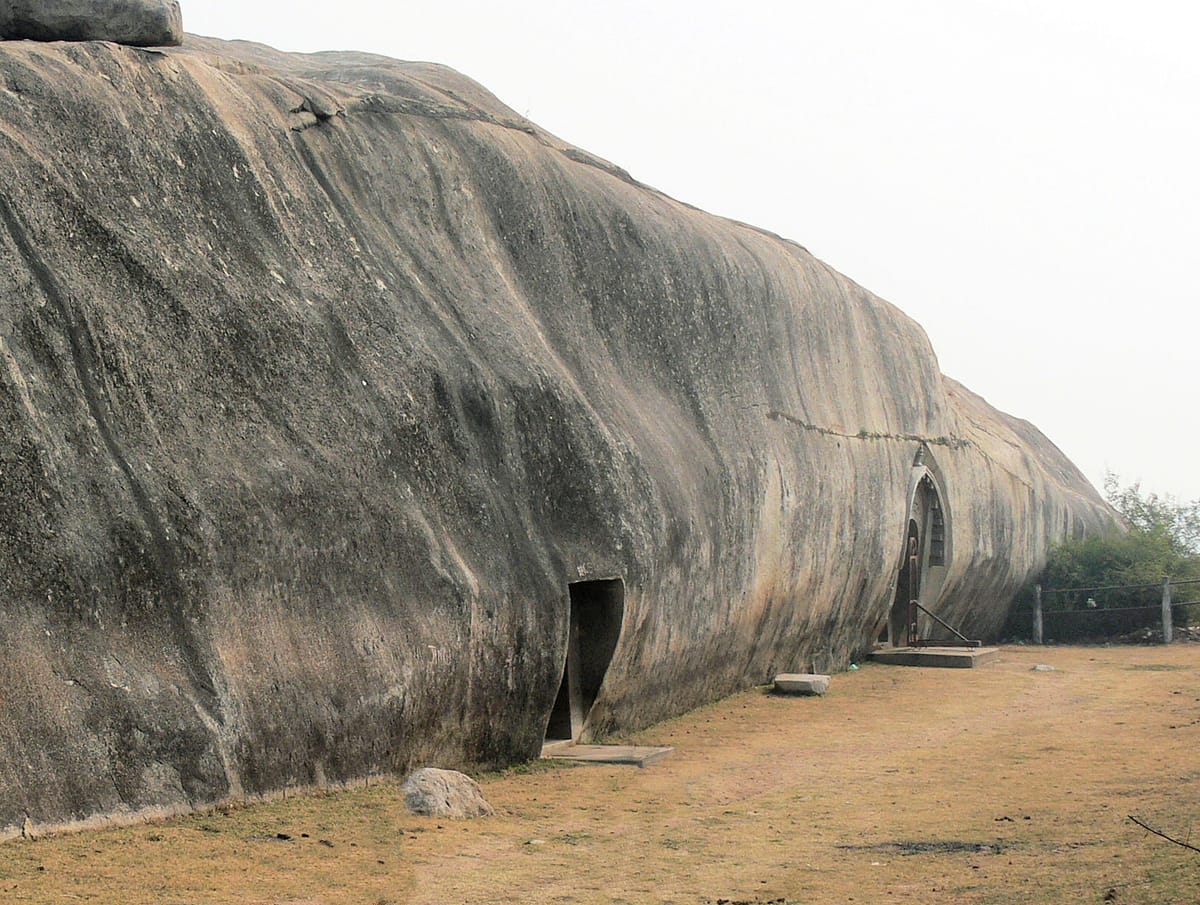
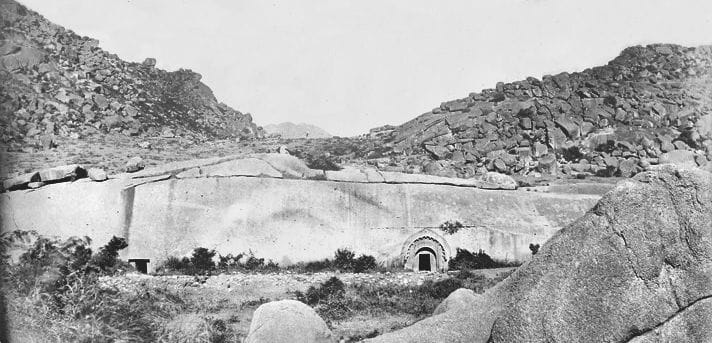
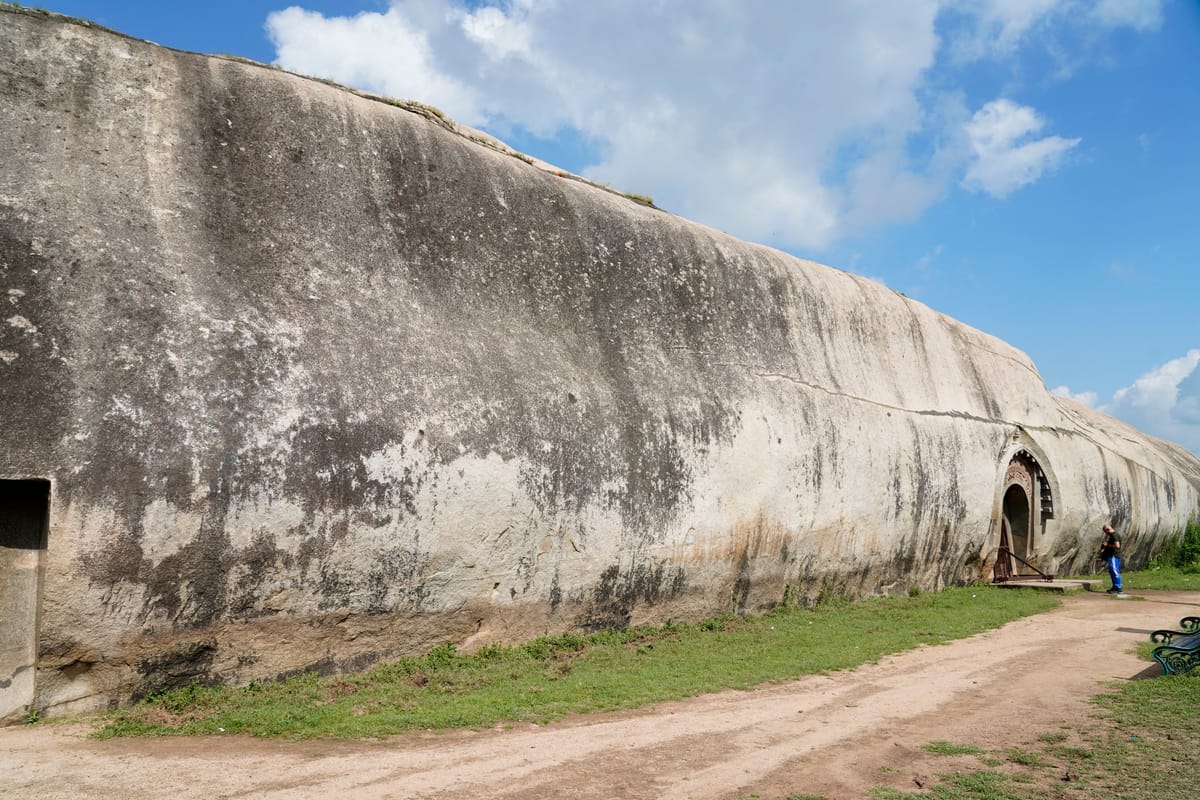
In the Barabar and Nagarjuni Hills of Jehanabad district, Bihar, about 24 kilometers north of Gaya, seven small chambers are cut directly into granite outcrops: four in the Barabar group and three in the adjoining Nagarjuni group roughly 1.6 kilometers away. Excavated in the 3rd century BCE under the Maurya Empire, they are the oldest surviving rock-cut caves in India, predating the much larger and more famous cave complexes at Ajanta and Ellora by several centuries. Several of the caves carry dedicatory inscriptions from Emperor Ashoka and his grandson Dasaratha, granting them to the Ajivikas, an ascetic religious sect that flourished alongside early Buddhism and Jainism but did not survive as an organized tradition into the modern era. The caves are modest in size — single or double chambers, none large enough to be called a hall — but what draws archaeologists and visitors alike is the interior finish: walls of hard granite polished to a glassy, almost mirror-like sheen, paired at the Lomas Rishi cave with a facade carved to imitate timber-and-thatch architecture in stone, the earliest known example of the ogee-shaped “chaitya arch” that would go on to define Buddhist rock-cut architecture for centuries afterward.
The Structure
The Barabar group comprises the Lomas Rishi, Sudama, Karna Chaupar, and Vishwakarma (Vishwa Zopri) caves; the Nagarjuni group comprises the Gopika, Vadathika, and Vapiyaka caves. The Sudama cave carries an inscription dating its dedication to the 12th year of Ashoka’s reign, roughly 257 BCE, recording that “King Priyadarsin” (Ashoka’s formal title) offered “this cave of Banyans…to the Ajivikas.” It consists of a rectangular outer chamber roughly 10 by 6 meters and a smaller domed inner chamber about 6 meters across, connected by a short passage — a plan echoed, with variations, across the other Barabar caves. The Karna Chaupar cave carries a second Ashokan inscription from his 19th regnal year, around 250 BCE, while inscriptions on Nagarjuni Hill record dedications by Dasaratha roughly two decades later, around 230 BCE, showing that patronage of the site continued for at least a generation after Ashoka’s death. The Ajivikas themselves were a renunciant order, contemporaries and rivals of the early Buddhist and Jain communities, whose teachings centered on strict determinism; they did not survive as a distinct tradition much beyond the first millennium CE, and on several Barabar inscriptions the word “Ajivikas” was later deliberately chiseled out, evidently by adherents of a rival faith, though it remains legible. The Lomas Rishi cave, the site’s best-known chamber, received no dedicatory inscription and was left unfinished — its floor still shows uncut rock, and some scholars argue construction was interrupted by the Maurya Empire’s collapse around 185 BCE. Centuries later, in the 5th or 6th century CE, a Maukhari king named Anantavarman added a Sanskrit inscription in one of the Nagarjuni caves recording the installation of a Hindu icon, showing the site’s continued sacred use long after its Mauryan origins.
How Was It Built?
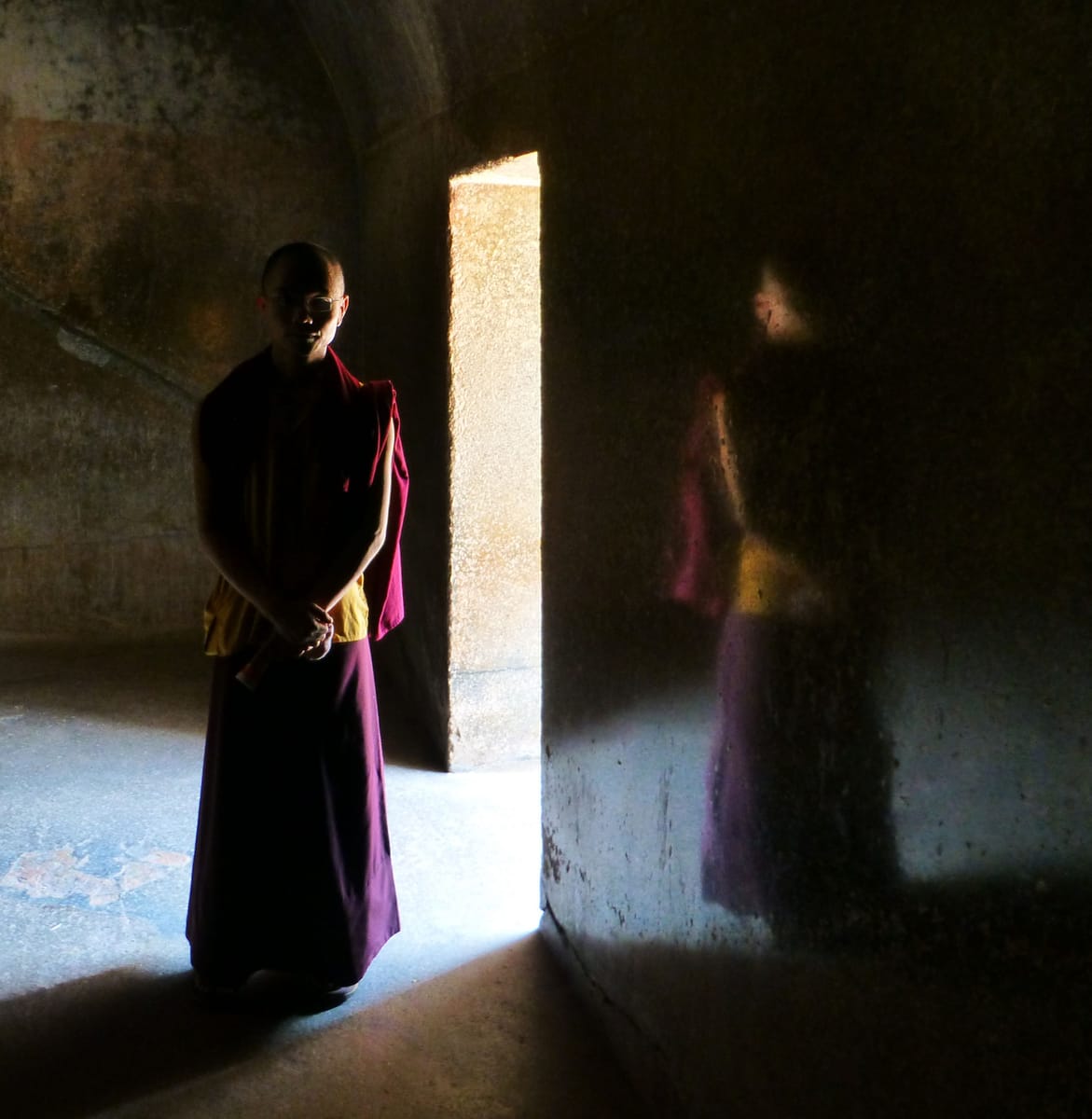
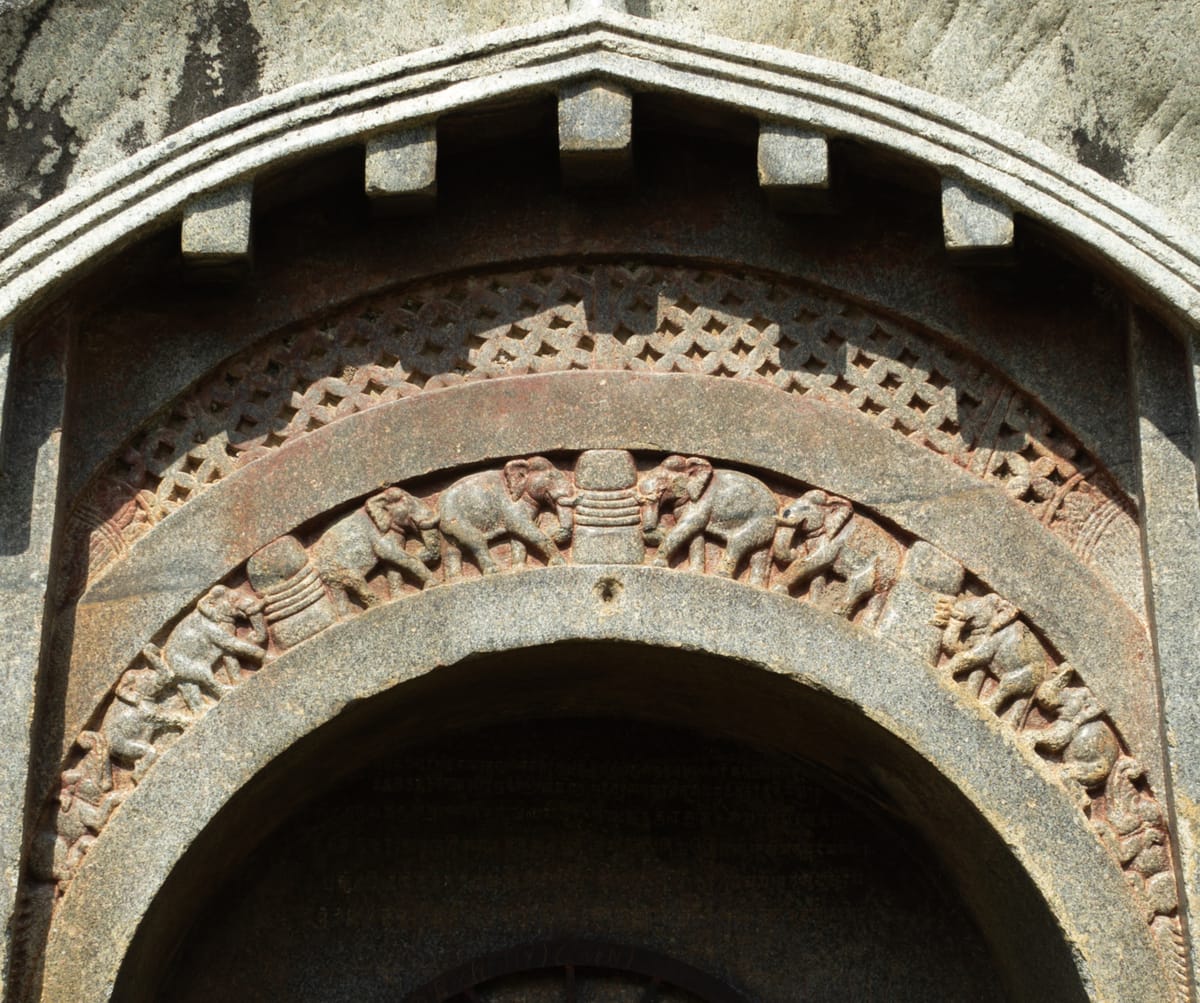
Unlike the softer sandstone used at many later Indian rock-cut sites, the Barabar and Nagarjuni caves are cut into granite gneiss, a coarse, extremely hard igneous rock, making the excavation itself a significant technical undertaking with the copper, bronze, and iron tools available to Mauryan-era masons. Each chamber was carved as a single continuous excavation, chiseled inward from an entrance opening rather than assembled from separate blocks, meaning any error in the chamber’s geometry could not be corrected by adding material — only by cutting away more. The signature feature is the interior wall finish, known to archaeologists as “Mauryan polish”: a lustrous, almost glass-smooth surface achieved on both the flat rectangular chambers and the curved, hemispherical inner rooms, so fine that in places it still returns a visible reflection today. The same polish appears on securely dated Mauryan monuments elsewhere — the Ashokan pillars erected across the empire, the Lion Capital at Sarnath, and other royal statuary — and archaeologist John Marshall, among the first to survey the caves systematically, described it as reflecting “the extraordinary precision and accuracy which characterizes all Mauryan works.” The Lomas Rishi facade adds a further layer of craftsmanship: its ogee-shaped arch and carved roofline reproduce, in unforgiving granite, the curved wooden beams, thatch, and bamboo lashings of a vernacular timber structure, right down to a frieze of elephants processing along the curved architrave toward stupa emblems — decorative details that would have been comparatively simple to render in wood but required painstaking, irreversible stone-carving here.
The Mainstream View
Historians and archaeologists agree, on the strength of the Ashokan and Dasarathan inscriptions plus corroborating epigraphic and stylistic comparison with other dated Mauryan monuments, that the Barabar and Nagarjuni caves were state-sponsored excavations of the 3rd century BCE, commissioned by the Mauryan court for Ajivika ascetics. The chronology, patronage, and religious purpose are not seriously disputed. The polish itself is understood as a real, attested Mauryan stoneworking technique, not a later addition or a misreading of the rock’s natural grain: it appears consistently across independently dated Ashokan-era monuments in different materials (the sandstone pillars, the granite caves), which rules out any one-off fluke and points to a deliberate, transferable workshop skill — most likely achieved through prolonged abrasive grinding and burnishing with increasingly fine stones or grit, a laborious but well-precedented method used in other ancient stone-polishing traditions. Mainstream scholarship treats the achievement as a product of skilled, organized craft labor under strong imperial patronage: Mauryan masons had access to durable metal tools, abrasive materials, and — crucially — the time and manpower a royal building program could supply, allowing repetitive, painstaking finishing work to be carried out over a period of years per chamber. The Lomas Rishi facade is likewise read as a straightforward, well-understood act of translation from a familiar building tradition (timber-and-thatch huts) into stone, a documented pattern seen at rock-cut sites across the ancient world whenever a new material tradition emerges from an older one.
The Open Case
What remains genuinely open is less whether Mauryan masons could achieve this finish — the dated inscriptions and the recurrence of matching polish on other Ashokan monuments settle that — and more exactly how they did it, and where the technique came from. No Mauryan text describing the polishing process survives, and scholars have not experimentally reconstructed the precise sequence of abrasives, burnishing tools, and time investment that would reproduce the Barabar finish on granite specifically, a notably harder and more crystalline stone than the sandstone used for the Ashokan pillars. Some researchers connect the technique to Achaemenid Persian stone-working traditions, noting stylistic parallels to Persian statuary and monuments and proposing that craft knowledge migrated into India in the aftermath of Alexander’s campaigns; others argue for an indigenous origin, pointing to a long prior Indian tradition of polishing stone tools and beads stretching back to the Neolithic and Indus Valley periods. Neither position has been settled to consensus. Separately, the caves’ acoustic behavior — their flat, hard, polished surfaces produce pronounced, sustained echoes inside the Sudama and Lomas Rishi chambers, an effect visitors and researchers alike have long noted as strikingly well suited to chant or resonant speech — is generally treated as a plausible incidental consequence of the chambers’ shape and finish rather than a demonstrated design goal, though whether Mauryan builders anticipated or intended the effect is not something the archaeological record can currently answer. None of this amounts to a case for “lost” technology: every line of evidence — dated inscriptions, matching Mauryan polish elsewhere, comparable ancient abrasive-polishing traditions — places the Barabar caves squarely within known Mauryan capability. The open questions are about craft transmission and technique detail, the kind of gaps ordinary archaeological research keeps narrowing, not evidence of something beyond what Iron Age masons, given enough skill, time, and royal backing, could do.
Sources
- Wikipedia — Barabar caves
- Wikipedia — Lomas Rishi Cave
- Wikipedia — Sudama Cave
- Wikipedia — Mauryan polish
- Internet Archive — Cunningham, Archaeological Survey of India, Vol. 1 (1871)
- Internet Archive — Fergusson & Burgess, The Cave Temples of India (1880)
- World History Encyclopedia — Barabar Caves Interior
- Digital Commonwealth (Boston Public Library) — Sudama & Lomas Rishi Caves at Barabar, 1870
Gallery