Same Staircase, Opposite Plumbing
Ifugao rice farmers and Inca stonemasons carved identical stone staircases into opposite sides of the Pacific — one built to hold water in, the other to force it out.
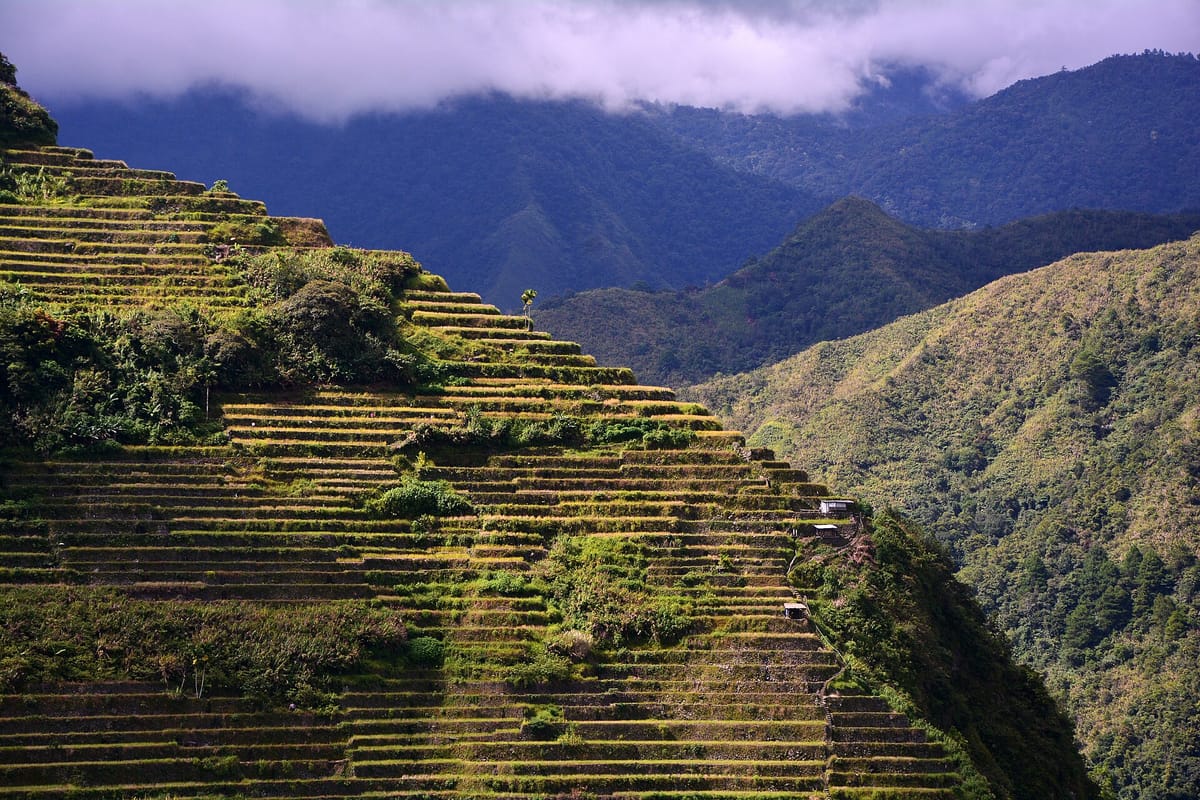
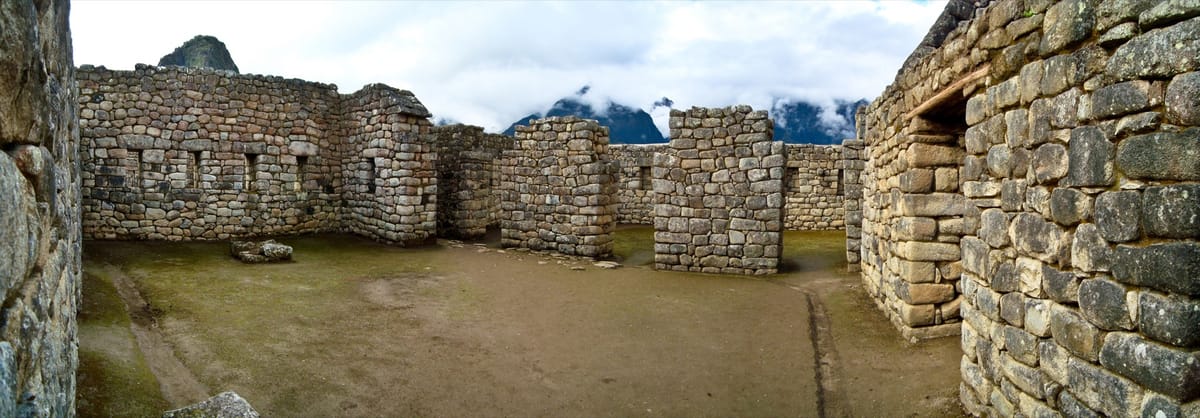
Look at a mountainside in northern Luzon and a mountainside above Peru’s Urubamba gorge and you see, unmistakably, the same drawing: a staircase of stone-walled steps climbing ground too steep to stand on, water arriving from somewhere higher up without a single pump. One is the Philippines, farmed by the Ifugao people for generations. The other is Machu Picchu, an Inca royal estate perched at 2,430 meters. No ship, no trader, no shared ancestor ever carried the idea between them — they are separated by the entire Pacific Ocean and, depending on whose dating you trust, by centuries of history besides. And yet each answered the same brutal problem — how do you live and grow food on a slope this steep — with the identical physical shape.
Open the terraces up, though, and the resemblance ends. The Ifugao wall a terrace, then puddle its floor with clay until it holds standing water, because wet rice must stand in a flooded paddy to grow; a forest reserve called the muyong, kept deliberately intact on the ridge above, acts as a sponge, releasing water slowly into a web of hand-dug canals and bamboo pipes that keep every paddy full. At Machu Picchu the goal is the reverse: keep the mountain dry. Inca builders layered each terrace like a sandwich — big stones, then gravel, then sand, then soil — engineered specifically to drain rainwater through and away, while a stone canal fed by a captured spring supplied drinking water to sixteen fountains, never the fields. One culture built a wall to hold a lake in place on a cliff face. The other built a wall to make sure a lake could never form there at all.
That is the twist worth sitting with: the same silhouette, arrived at from opposite hydraulic logic, by people who never met and, if the newest Ifugao radiocarbon dates are right, may have been terracing in active defiance of the very empire — Spain — that had just finished conquering the Inca an ocean away. Two mountains, one shape, cut for entirely opposite reasons. Once you know which is which, you can never look at a terraced hillside the same way again.
Read the full studies: Rice Terraces of the Philippine CordillerasMachu Picchu
Sources
- UNESCO World Heritage Centre — Rice Terraces of the Philippine Cordilleras (#722)
- Wikipedia — Rice Terraces of the Philippine Cordilleras
- Rappler — The Ifugao Rice Terraces are 400 years old. That matters.
- UNESCO World Heritage Centre — Historic Sanctuary of Machu Picchu
- Wikipedia — Machu Picchu
- Kenneth R. Wright & Alfredo Valencia Zegarra — Machu Picchu: A Civil Engineering Marvel (Water Supply and Drainage)