The Hills That Were Carved Into People
Ten thousand years and sixteen thousand kilometres apart, two peoples with no metal reached the same conclusion: don't move the stone to carve it. Carve it where it lies.
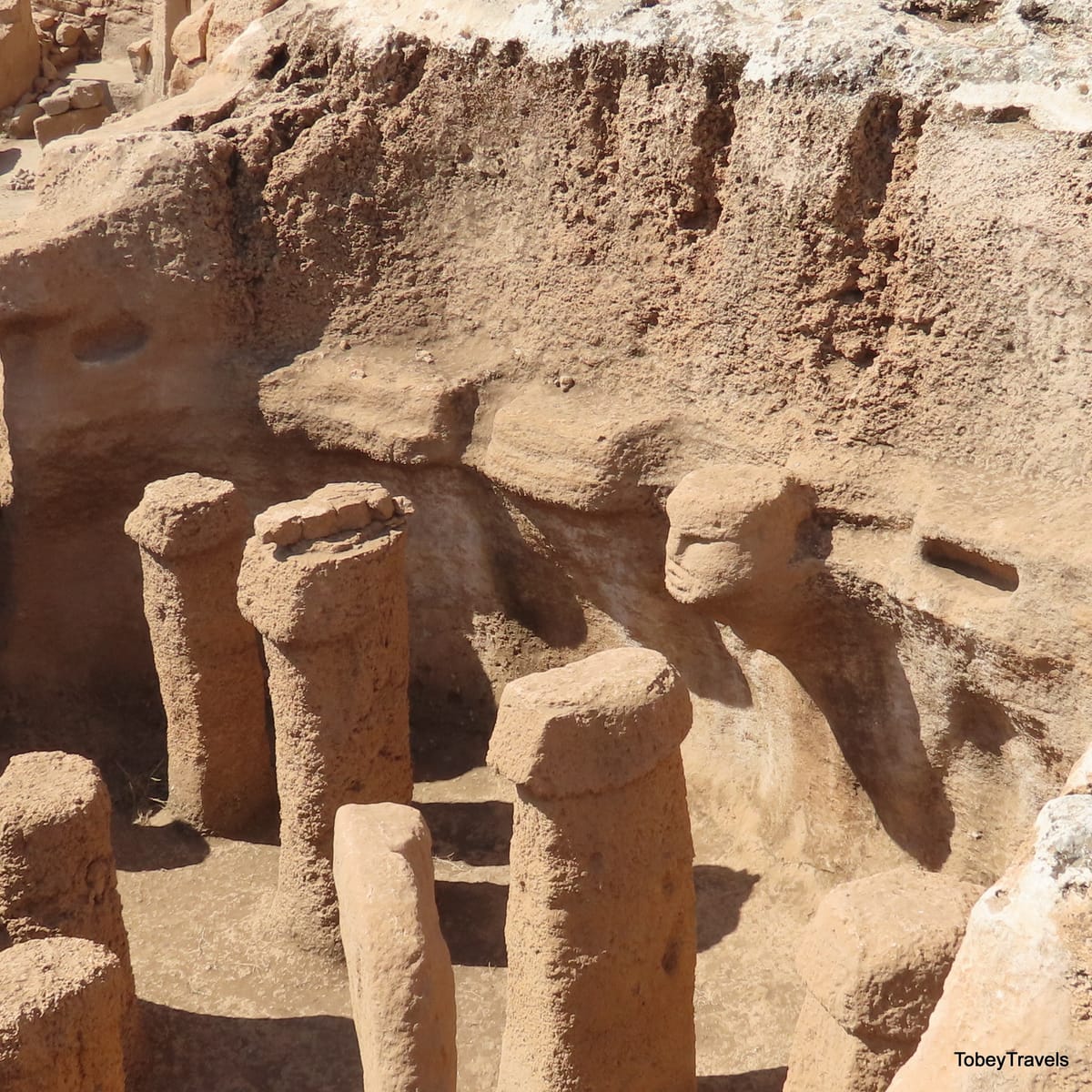
Go down into Structure AB at Karahan Tepe and eleven pillars stand around you, waist-high to shoulder-high, rising from the floor like stalagmites. Ten of them were never carried in. They were cut out of the floor and left attached to it. On the western wall a human head watches the room — heavy brow, long neck, carved in place so it can never be moved without breaking the hill.
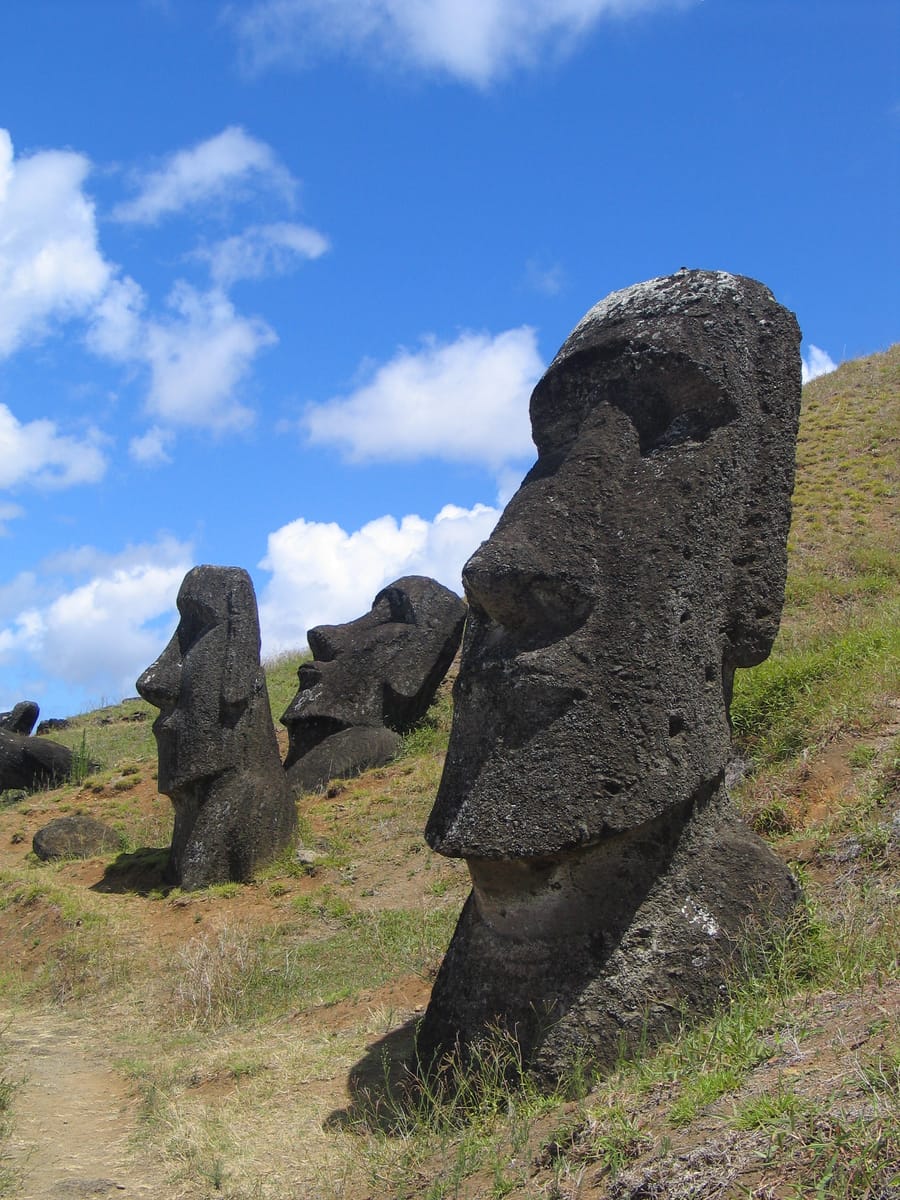
Sixteen thousand kilometres away, in the wall of a volcanic crater on Rapa Nui, a man lies on his back. He is twenty-one metres long and unfinished, and he has been lying there for five hundred years. Around him, on the slopes of Rano Raraku, roughly half of all the moai ever carved are still at the quarry that made them.
The two hillsides had the same problem and reached the same answer. Karahan Tepe’s builders had flint, obsidian, hammerstones and antler picks, and no metal at all; they excavated the space around a column of living limestone, shaping it while it stayed rooted, then carved the detail by hand. Rapa Nui’s sculptors, eleven thousand years later, cut into compressed volcanic ash with basalt picks called toki, working each figure face-up where it lay, leaving a narrow keel of stone joining its spine to the bedrock so the rock itself held the statue steady while they worked. Neither had a way to grip a multi-tonne block. So neither tried. The hill was the workbench, and the hill was the vice.
And then they part on one cut. The Rapa Nui severed the keel, tipped their ancestors upright, and walked them to the sea. Karahan Tepe never cut. Its figures stay joined to the ground they came out of — the room is not a room full of sculpture, the room is the sculpture.
They never met. Ten thousand seven hundred and fifty years lie between them, and an ocean, and no possible thread of contact. What they share is only what the stone allows. Both hills are still holding people who were never let out.
Read the full studies: Karahan TepeThe Moai of Rapa Nui