The Gate You Walk Through
In Assassin's Creed Odyssey, you can ride straight up to the citadel of Mycenae and walk beneath the same lionesses that convinced later Greeks only giants could have built it.
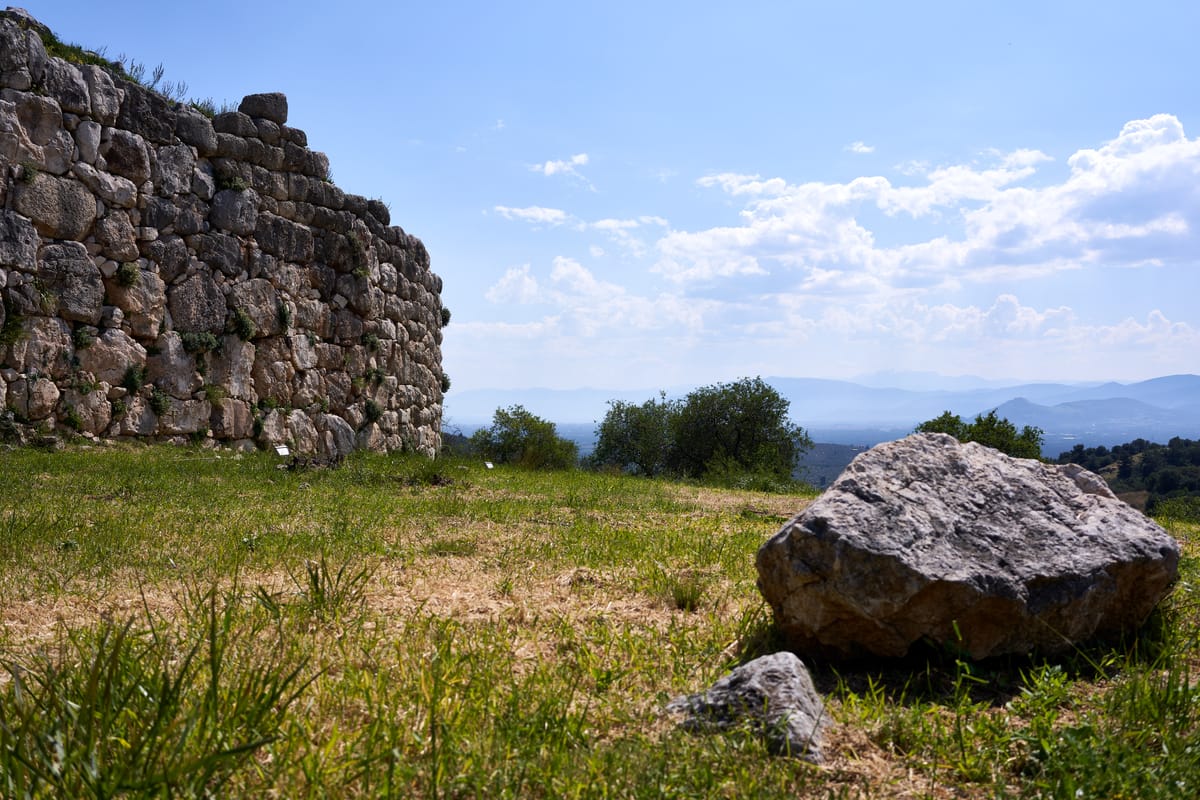
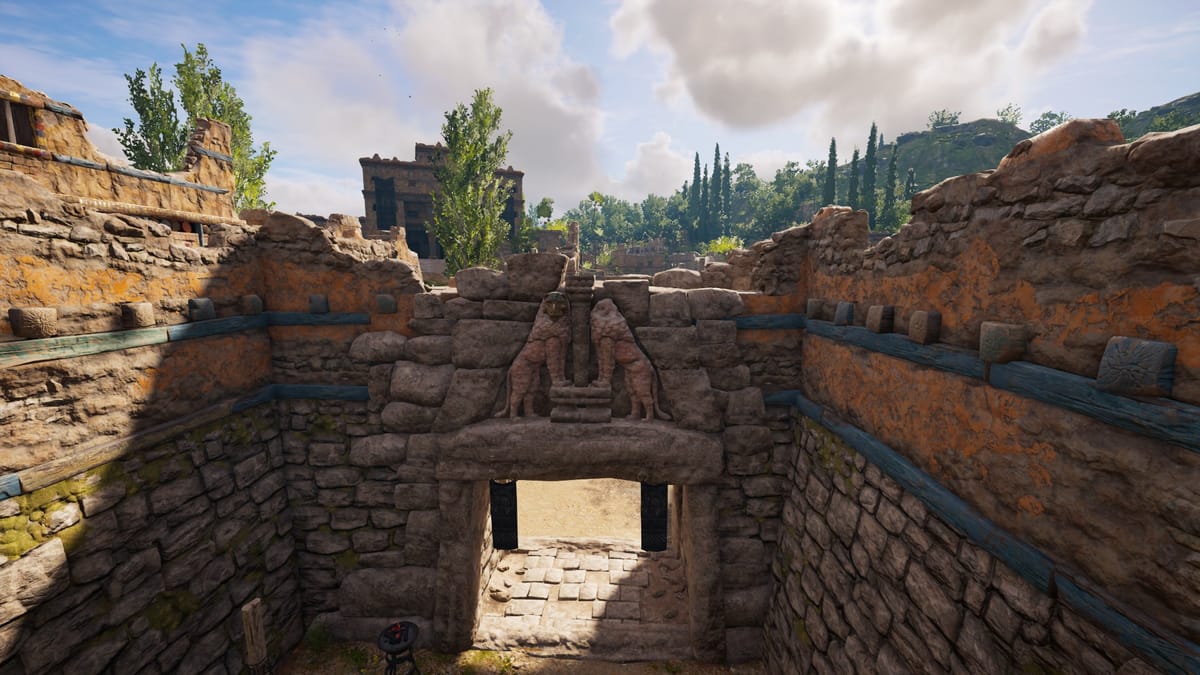
Assassin’s Creed Odyssey dropped players into 431 BCE Greece with a map big enough to hold entire regions as open, rideable terrain, and Argolis — Mycenae’s home ground — is one of them. Head south from Corinth and the citadel rises on its hillside exactly where it should, ringed by the same oversized, roughly-fitted boulders that gave “Cyclopean masonry” its name, with the Lion Gate standing watch at the entrance the way it has for over three thousand years.
Walk through it and the game’s version holds up under scrutiny: two facing lionesses above the lintel, a triangular relieving slab diverting the wall’s crushing weight around the stone below it, and jambs cut clean while the boulders around them stay deliberately rough — the same structural logic real Bronze Age masons used, modeled block by block for players riding through on horseback between quests. Ubisoft even folded the site into a separate Discovery Tour segment, turning a combat-driven open world into an occasional, unhurried history lesson.
It is a strange kind of second life for a myth: Iron Age Greeks invented the Cyclopes because they could no longer imagine the builders who actually raised these walls, and now a video game has rebuilt those same walls for players who ride up, dismount, and walk through the gate without a second thought — never noticing they’ve just passed under three-thousand-year-old stone that once looked, to the people who lived among its ruins, like the work of giants.
Read the full study: Cyclopean Walls and the Lion Gate of Mycenae